
How to Care for a Pocket Watch in Australia’s Climate
TL;DR
Caring for a pocket watch in Australia means managing heat, humidity, coastal salt air, and dust — conditions that age a timepiece far faster than gentle indoor use. A few simple habits — proper storage, regular cleaning, and timely servicing — will keep both quartz and mechanical pocket watches running beautifully for decades.
In This Guide
- Why Australia’s Climate is Tough on Pocket Watches
- Quartz vs Mechanical Pocket Watches: Care Requirements Compared
- Daily Care Habits That Make a Difference
- How to Store a Pocket Watch in Australian Conditions
- Cleaning Your Pocket Watch: The Safe Way
- Servicing Intervals: When to See a Watchmaker
- Travel Tips for Aussie Owners (FIFO, Road Trips, Coastal Holidays)
- Displaying and Gifting Pocket Watches
- Frequently Asked Questions
- References & Sources
Pocket watch care australia isn’t just about wiping down a case once in a while. Australia’s climate — from the humidity of Queensland to the dry outback heat of the Territory, and the salt air along our long coastline — creates a unique set of challenges that owners in cooler, more stable climates simply don’t face. Whether you’ve just received a pocket watch as a gift or you’re a seasoned collector, understanding how our environment affects these precision instruments is the first step to preserving them.
Why Australia’s Climate is Tough on Pocket Watches
Australia’s extremes — coastal humidity above 80%, outback temperatures exceeding 45°C, UV exposure among the highest on Earth, and fine dust that infiltrates almost any gap — combine to accelerate corrosion, dry out lubricants, and cloud crystal faces. No other developed country presents quite the same combination of stressors for mechanical and quartz pocket watches.
Most pocket watches were designed and manufactured in Europe or Asia, where average temperatures and humidity levels are considerably more moderate than what we experience across much of Australia. When a watch lubricant dries out prematurely due to heat, or a case seal deteriorates from UV exposure, the result is increased wear, reduced accuracy, and in worst cases, irreparable damage to movement components.
The key environmental threats in Australia:
- Humidity and salt air (coastal areas): Accelerates oxidation of brass, steel, and silver components. Even the slightest opening in a case back allows moisture to reach the movement.
- Extreme heat (QLD, NT, WA, outback): Causes watch lubricants to thin out and evaporate far sooner than the standard 3–5 year service interval assumes. Temperatures inside a car or bag in direct sun can exceed 70°C — damaging for any watch.
- UV exposure: Fades watch dials, degrades rubber seals and gaskets, and can cause discolouration on certain case finishes over time.
- Fine dust: Particularly in inland and rural Australia, airborne particulates find their way into case joints and can act as an abrasive on movement components.
According to the National Museum of Australia’s conservation guidelines, environmental conditions — particularly humidity and temperature fluctuations — are the primary factors in the deterioration of metal and mechanical artefacts. The same principles that conservators apply to museum pieces apply directly to your pocket watch collection.
Quartz vs Mechanical Pocket Watches: Care Requirements Compared
Quartz pocket watches are sealed battery-powered movements with fewer moving parts, making them more resistant to dust and humidity. Mechanical and automatic pocket watches rely on intricate oiled gear trains that require periodic servicing — and in Australia’s heat, those service intervals should be shorter than European recommendations.
Quartz Pocket Watches
Quartz movements use a battery-powered oscillating crystal to keep time. The FOB & Co Classique range of Swiss pocket watches are quartz-powered, offering excellent accuracy and reliability with minimal maintenance. For Australian owners, the main care points for quartz watches are:
- Replace batteries every 1–2 years to avoid leakage (which can corrode the movement)
- Keep the crown pushed in or screwed down to maintain moisture resistance
- Store away from direct sunlight to protect the dial
Mechanical and Automatic Pocket Watches
Mechanical pocket watches — including the hand-wound movements in FOB & Co’s own branded skeleton pocket watches — are driven by a coiled mainspring and a series of precisely fitted gear trains. These movements need lubricating oils to function correctly. In Australia’s heat, those oils degrade faster than in temperate climates.
Where a watchmaker in the UK might service a mechanical watch every 5 years, Australian owners in warmer or coastal regions should consider a 3-year service cycle. A mechanical watch that skips regular servicing may continue to run but is doing so with degraded lubricants — significantly increasing wear on pivots, jewels, and escapement components.
Daily Care Habits That Make a Difference
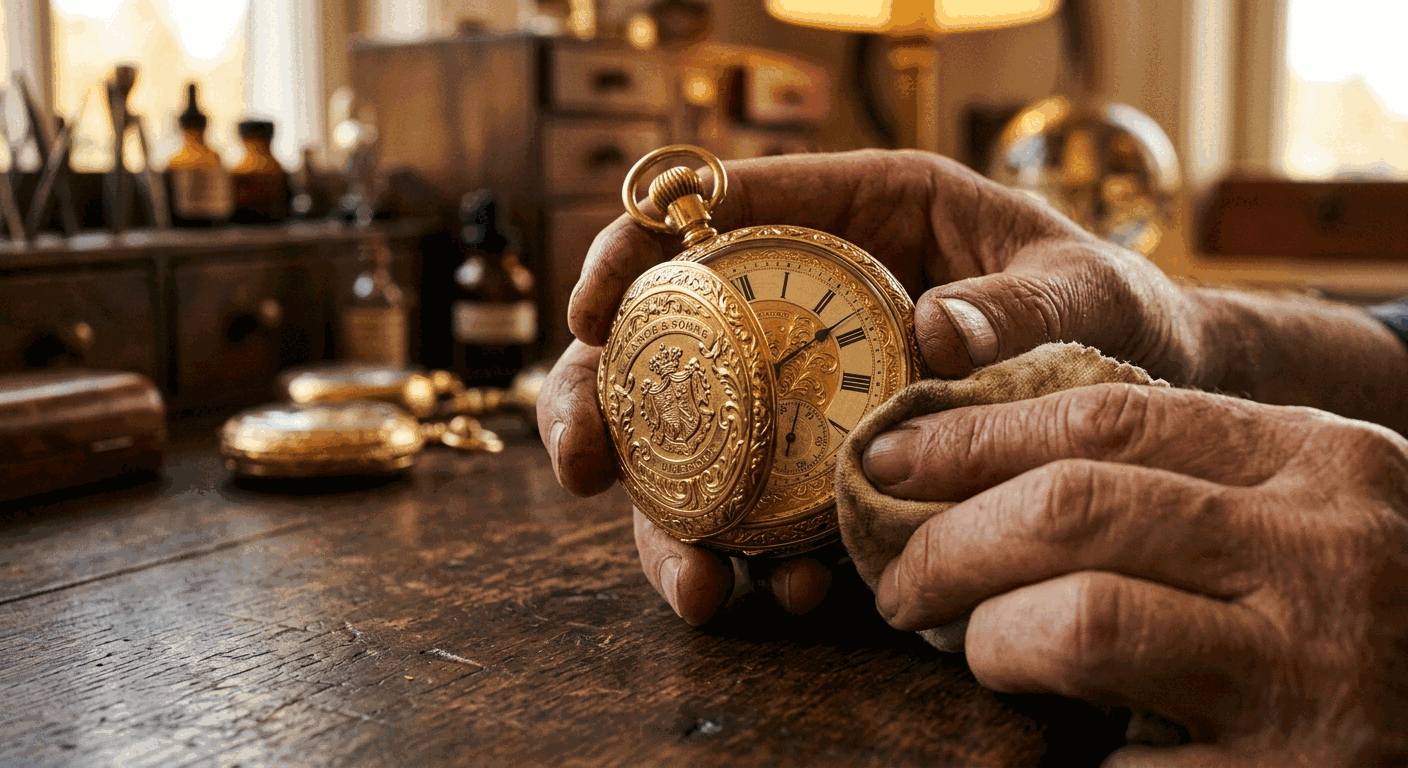
The most effective pocket watch care habits are the simplest: handle with clean, dry hands; wipe down the case after every use; wind mechanical watches at the same time each day; and keep them away from heat, direct sun, and damp. Consistent daily habits prevent 80% of common damage.
- Always handle with dry, clean hands. Natural skin oils and perspiration are acidic and will react with silver and brass finishes over time. This is especially relevant in Australia’s warmer months when hands sweat more readily.
- Wipe down after use. A soft microfibre cloth takes five seconds and removes perspiration, dust, and fingerprints before they can cause surface damage.
- Wind at the same time each day. For hand-wound mechanical watches, consistent winding reduces strain on the mainspring. Wind gently until you feel resistance — never force it.
- Keep away from magnets. Electronics, speakers, and bag clasps can magnetise a mechanical movement, causing it to run fast or erratically.
- Avoid thermal shock. Moving a pocket watch rapidly from air-conditioned cold to outdoor heat — common in Australian summers — can cause condensation inside the case. Let the watch acclimatise gradually when possible.
How to Store a Pocket Watch in Australian Conditions
Store pocket watches in a cool, dry location away from direct sunlight — ideally between 15–25°C with relative humidity around 40–50%. In humid coastal regions, silica gel sachets in watch boxes absorb excess moisture effectively. A padded watch box also protects against bumps and vibration.
Storage is arguably the single most important factor in Australian pocket watch care. A watch sitting in a hot car glovebox, a windowsill that receives direct sunlight, or a bathroom cabinet (humid) is ageing at an accelerated rate every day.
Best Storage Practices by Australian Region
- Tropical north (QLD, NT, WA north coast): Humidity is the main enemy. Use silica gel desiccant sachets in your watch box and replace them every few months. Consider a small airtight display case.
- Coastal south-east (Sydney, Melbourne, Adelaide): Salt air and moderate humidity. Keep watches stored inside rather than on display near windows or verandahs. A quality bamboo watch box provides cushioning and some humidity buffering.
- Dry inland and outback: Heat and UV are the primary concerns. Never store watches in direct sunlight. A drawer or cabinet away from exterior walls (which heat up) is ideal.
For watches kept on display, keep them out of rooms that experience significant temperature swings — garages, garden sheds, and sunrooms are poor environments. A bedroom or study with consistent climate control is ideal.

Cleaning Your Pocket Watch: The Safe Way
For external cleaning, use a dry or very slightly damp soft cloth — never spray cleaners, ultrasonic baths, or running water on a pocket watch unless it carries an explicit water resistance rating (most don’t). For internal cleaning, take the watch to a qualified watchmaker rather than attempting it yourself.
External Case Cleaning
For the case exterior — whether silver, gold-tone, brass, or black finish — the safest approach is a dry microfibre cloth. For more persistent marks, a cloth very slightly dampened with water (not soaking) works well. Always dry the case immediately and thoroughly, paying attention to joints, hinges, and the area around the crown.
Avoid:
- Alcohol wipes or hand sanitiser — these strip protective lacquers and age certain finishes
- Silver polish creams near joins and hinges — they can work their way into movement joints
- Running water or immersion — pocket watches are not designed for water exposure
- Compressed air directly into the case opening — can push dust further in
Crystal and Dial Cleaning
The watch crystal (the clear cover over the dial) can be gently polished with a dry cotton cloth for mineral crystals, or a specialist plastic scratch remover for acrylic crystals. Sapphire crystals, found on higher-end pieces, are highly scratch resistant but should still be wiped with care.
Watch Chain Care
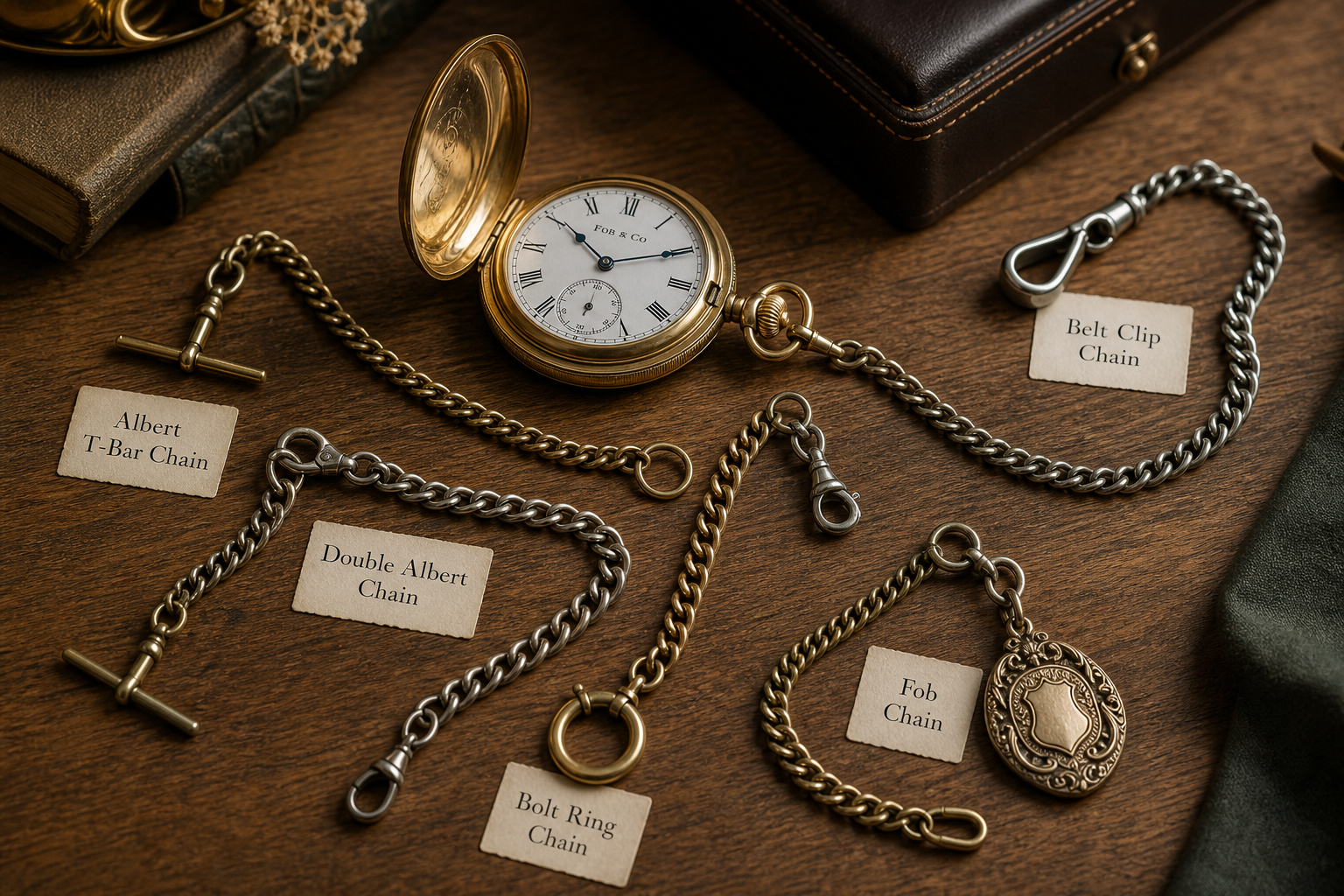
Australian conditions — particularly coastal humidity and perspiration — affect watch chains too. Albert chains and fob chains in silver or brass should be wiped down after wear and stored separately from the watch case to prevent scratching. A soft pouch is ideal for chain storage.
Servicing Intervals: When to See a Watchmaker
Mechanical pocket watches should be serviced by a qualified watchmaker every 3–5 years in general, but Australian owners — especially those in tropical or outback regions — should aim for the 3-year end of that range due to accelerated lubricant degradation in heat. Quartz pocket watches need battery replacement every 1–2 years and a full service every 7–10 years.
A professional service for a mechanical pocket watch involves disassembly, ultrasonic cleaning of all components, inspection of worn parts, replacement of seals and gaskets, re-lubrication, and regulation (timing adjustment). This process costs approximately $80–$200 depending on the watchmaker and watch complexity — a worthwhile investment to protect a watch that may be worth far more, or that holds significant personal or sentimental value.
Signs Your Pocket Watch Needs Servicing
- Gaining or losing more than 2–3 minutes per day
- Stopping unexpectedly despite being wound
- Visible condensation or fogging inside the crystal
- The crown feels stiff or gritty to wind
- The case snap or hinge is loose or not sitting flush
- An unusual ticking sound or irregular beat
Don’t wait until the watch stops to have it serviced — by that point, the movement may have been running “dry” for years, causing measurable wear. Regular, preventive servicing extends the life of the movement considerably.
Travel Tips for Aussie Owners (FIFO, Road Trips, Coastal Holidays)
Travelling in Australia — whether it’s a FIFO fly-in/fly-out work roster, a Queensland coastal holiday, or a long road trip through the Kimberley — creates specific risks for pocket watches: temperature extremes, vibration, humidity changes, and increased dust exposure. A hard-sided travel case and consistent storage habits make all the difference.
FIFO and Work Travel
For those working on FIFO rosters in WA or Queensland mine sites, a pocket watch is often a meaningful personal item rather than a daily-wear piece. Store your watch in your accommodation — not in the mine bag or on-site locker where temperature extremes and fine mineral dust can cause damage. A small hard-sided watch case or even a zip-lock bag with a silica sachet provides practical protection.
Road Trips
Never leave a pocket watch on a car dashboard or in a glove compartment in Australian summer. Internal car temperatures can exceed 70°C in direct sun — enough to melt lubricants and damage dials. If the watch must travel with you, keep it in an insulated bag, in the coolest part of the vehicle.
Coastal Holidays
Salt air and humidity accelerate corrosion noticeably on case exteriors and watch chains. If you’re taking a pocket watch to the beach or on a boat trip, wipe it down thoroughly when you return. Don’t wear it in or near the water.

Displaying and Gifting Pocket Watches
Displaying a pocket watch correctly preserves it while showing it off. Use a dedicated watch stand in a location away from direct sunlight and humidity. For gifting, choose a watch that comes with a quality presentation box — it protects the piece from the moment of purchase through long-term storage.
Pocket watches make exceptional gifts for milestones — retirements, weddings, graduations, and significant birthdays. FOB & Co’s engravable pocket watches allow you to personalise the case back with a name, date, or meaningful message, turning a beautiful timepiece into a lasting heirloom.
For display at home, a quality pocket watch stand keeps the piece upright and open, allowing the dial and case detail to be appreciated. Position display pieces:
- Away from direct window light (UV fades dials over time)
- In a room with stable temperature — not a sunroom or garage
- Off the top of electronics (which can magnetise movements)
If you’re gifting a pocket watch for an Australian groomsman or as a groomsmen gift set, consider including a care card with basic maintenance tips — especially for mechanical watches that the recipient may not be familiar with. A thoughtful gift that includes guidance is a gift that lasts.
For those looking to start a collection or find a display-worthy piece, the skeleton pocket watch range at FOB & Co offers an open view of the movement — beautiful on a stand and a wonderful conversation piece in any home.
Frequently Asked Questions
How often should I service a mechanical pocket watch in Australia?
In Australian conditions — particularly in tropical or outback areas — a mechanical pocket watch should be serviced every 3 years. In milder southern climates with stable humidity, 4–5 years is acceptable. Regular servicing replaces degraded lubricants, inspects worn components, and keeps the movement running accurately.
Can I wear my pocket watch to the beach?
No. Almost all pocket watches, including fashion and dress pieces, are not water-resistant. Salt water, sand, and high humidity near the ocean can all cause significant damage — corrosion of metal parts, fogging of the crystal, and contamination of the movement. Keep your pocket watch safely stored when you’re near the water.
What’s the best way to store a pocket watch in a humid climate like Queensland?
Use a padded watch box with silica gel desiccant sachets placed inside to absorb excess moisture. Keep the box in a cool, stable location away from direct sunlight. Replace the silica sachets every 2–3 months in tropical regions, or when the indicator (if present) changes colour to show saturation.
Does Australia’s heat affect quartz pocket watches as much as mechanical ones?
Quartz watches are more tolerant of heat than mechanical ones since they have fewer moving parts and require less lubrication. However, extreme heat (above 60°C, such as inside a parked car) can still damage the battery, movement circuit, and dial. Store quartz watches away from heat sources just as you would a mechanical piece.
How do I clean the outside of my pocket watch safely?
Use a dry or very slightly damp soft microfibre cloth. Wipe the case, crystal, and chain gently after every few uses. Do not use alcohol, chemical cleaners, or abrasive cloths. Never immerse a pocket watch in water or place it near running water unless it has an explicit water resistance rating, which most pocket watches do not.
Is engraving a pocket watch safe — does it affect the case integrity?
Professional engraving on the case back of a pocket watch does not affect the watch’s movement or structural integrity. The case back is a separate sealed cover. Engraving is a popular personalisation option for milestone gifts. FOB & Co’s engravable pocket watches are specifically designed for this purpose, with suitable case back surfaces for crisp personalised inscriptions.
What’s the ideal storage temperature for a pocket watch?
Between 15–25°C with 40–50% relative humidity is ideal for long-term pocket watch storage. Avoid storing watches in rooms that reach extreme temperatures — avoid garages, sheds, and rooms with poor insulation in Australian summer. Consistent, moderate temperature is far better for watch lubricants and seals than cycling between hot and cold.
References & Sources
- National Museum of Australia — How to care for personal adornment and accessories. Provides conservation guidelines for metal artefacts including timepieces.
- National Archives of Australia — Storing and Preserving Artefacts and Objects. Guidance on temperature and humidity standards for metal and mechanical objects in Australian conditions.
- Horological Society of New York — Horological Society of New York. Industry-standard guidance on mechanical watch servicing intervals and lubrication requirements.