
Pocket Watch Chains Explained: Albert, Double Albert and Fob
Why Pocket Watch Chain Types Matter
Most people buying their first pocket watch spend weeks agonising over the case, the dial colour, the movement, and then grab whatever chain happens to be in the box. That’s backwards. The chain is what everyone actually sees. Your watch lives in a pocket, the chain is the bit hanging out across the waistcoat, and it’s doing the visual work of the whole outfit.
There’s also a practical side. A chain isn’t just decoration, it’s what stops your pocket watch from ending up on the floor of a pub or down a storm drain. The T-bar or swivel clasp anchors to a buttonhole, belt loop, or waistcoat buttonhole, and the chain does the rest. Get the wrong length or the wrong style and you’ll either be fishing the watch out awkwardly every time you check it, or it’ll swing around and knock into things.
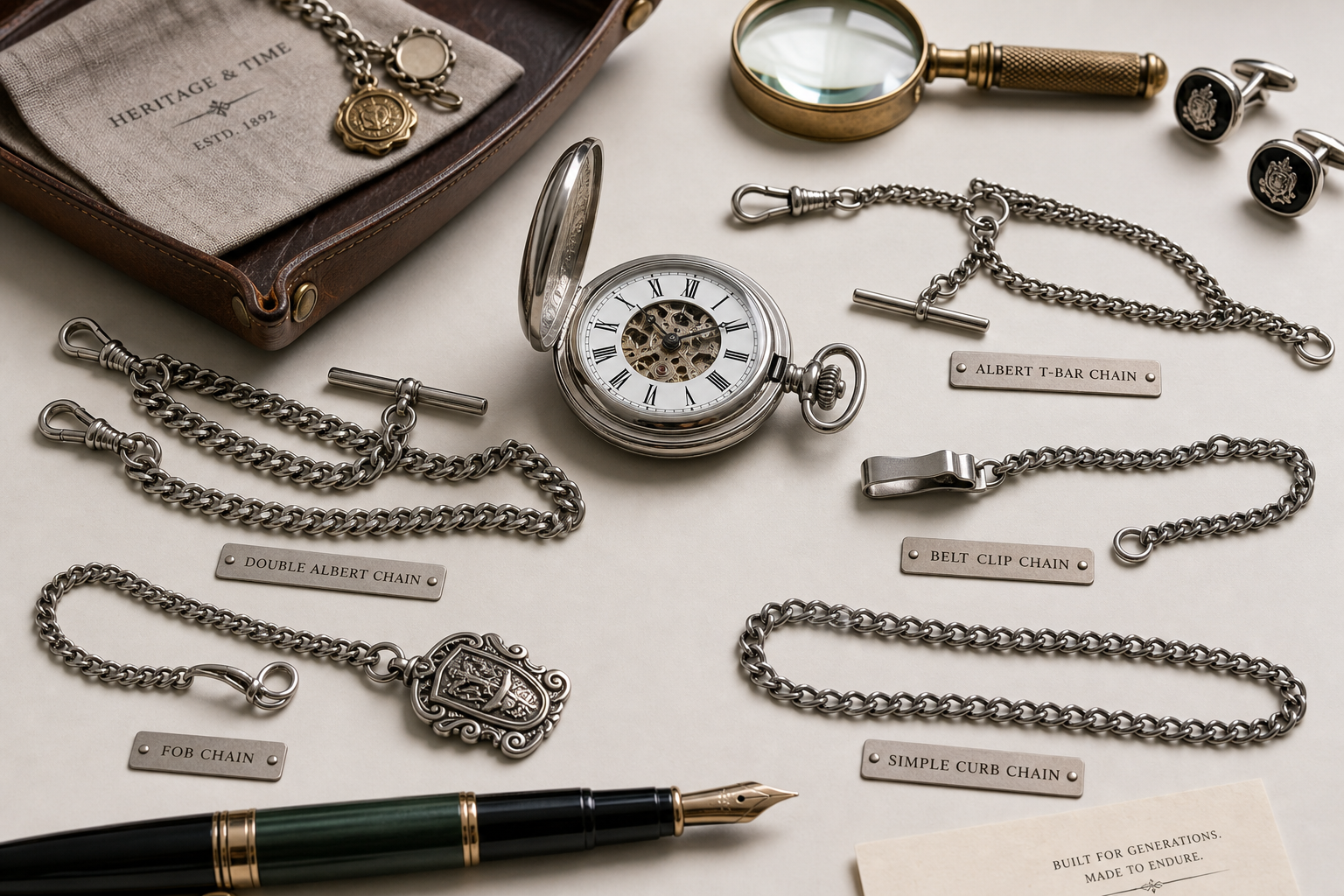
Three chain families cover about 90% of what people actually wear: the single Albert, the Double Albert, and the plain fob chain. Each one has a different history and a different job, and we’ll go through all three properly below.
How to Choose Your Chain Type
Start with where the watch is actually going to live. If you’re wearing a waistcoat, a single Albert threaded through the middle buttonhole with the watch in one pocket and a fob or T-bar sitting on the outside is the classic setup, and it’s been done that way since the Victorian era for a reason: it’s simple and it stays put. If you don’t own a waistcoat (most of us don’t, most days), a belt loop or trouser pocket with a shorter fob chain does the same job with less flourish.
Next, think about the case. A full hunter pocket watch with its hinged front cover reads as more formal, so it tends to suit a heavier Double Albert or a chunkier curb-link chain. A half hunter, with its little glazed window, sits nicely with something in between, not too plain, not too showy. Open-face and classique-style watches often look best with a slim, understated fob chain, since the watch itself is already the focal point.
Metal matters more than people expect. A gold pocket watch paired with a mismatched silver chain looks like an afterthought, and vice versa. Match tones where you can, or at least pick a chain finish that’s close enough that nobody clocks the difference from across the room. Brass and bronze cases are more forgiving here because they age and warm up over time, so a chain a shade off in tone will settle in after a few months of wear anyway.
Finally, be honest about how often you’ll actually wear the thing. If this is a special-occasion piece for weddings and formal dinners a few times a year, you can afford to go bolder with a Double Albert. If it’s an everyday carry, you want something the clasp on which won’t fight you every morning, and a lighter fob chain wins on comfort every time.
Top Chain Styles to Consider
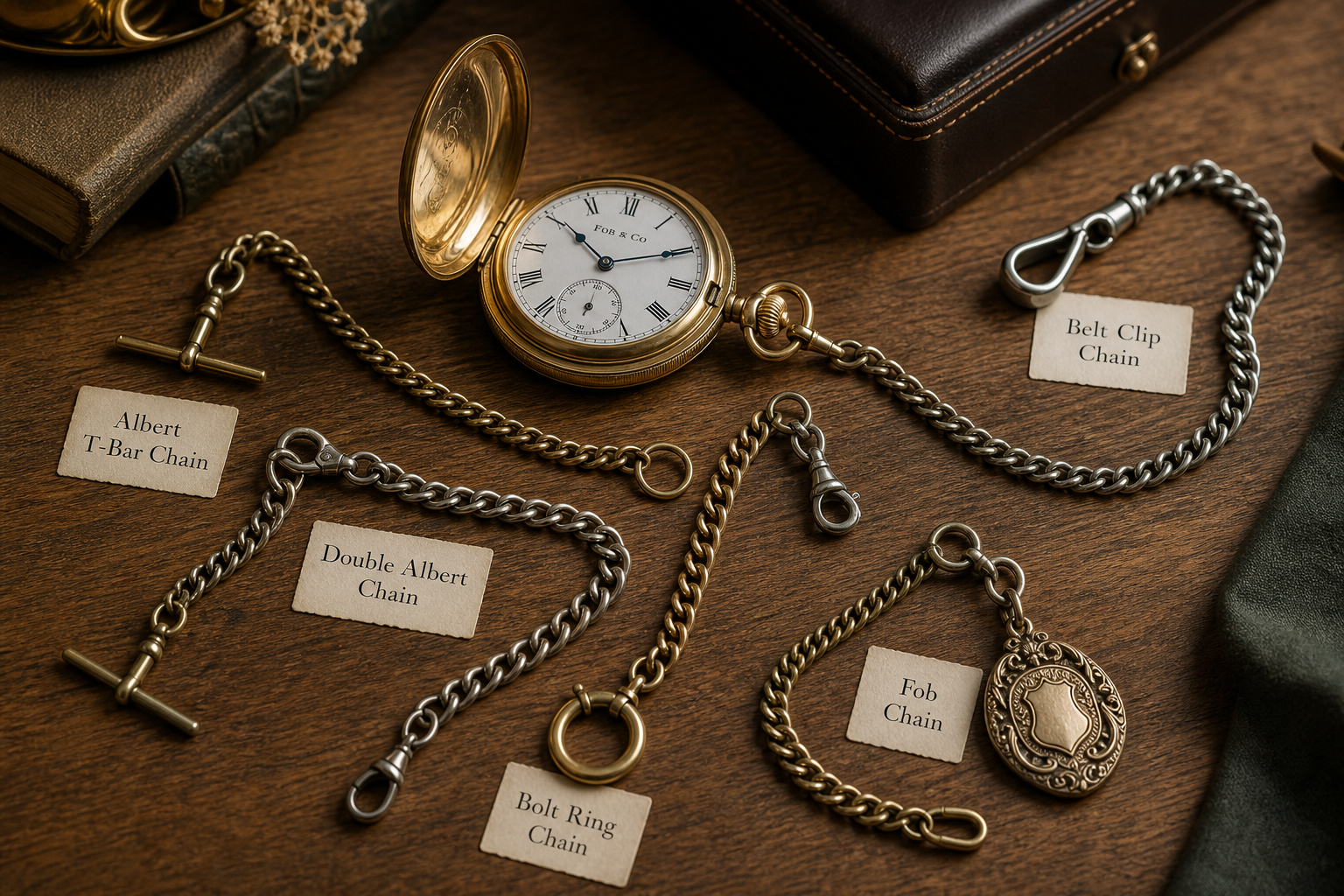
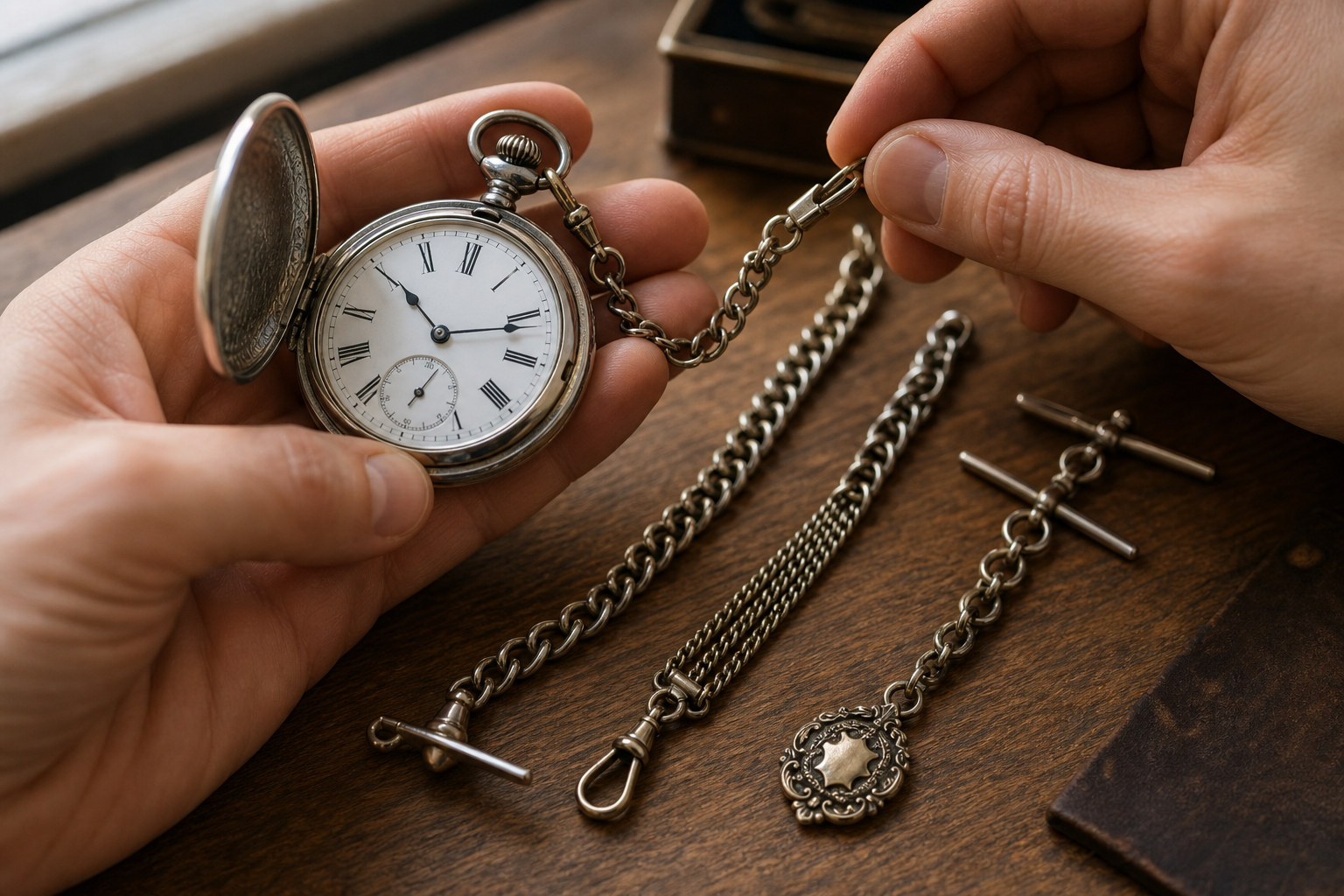
The single Albert chain is named after Prince Albert, Queen Victoria’s husband, who apparently popularised the style in the 1840s after having one made for his own watch. It’s one length of chain with a T-bar at one end (which slots through a buttonhole) and a clasp or swivel hook at the other (which attaches to the watch). Simple, sturdy, and it’s the style most people picture when they think “pocket watch chain.”
The Double Albert takes the same idea and doubles it: two chains run off a central T-bar, one going to the watch and the other typically ending in a fob, a small decorative charm, or a second pocket. It’s a heavier look and it takes up more waistcoat real estate, which is exactly why some people love it for weddings and formal events and others find it a bit much for a Tuesday at the office. There’s no wrong answer here, it genuinely comes down to how much presence you want.
A plain fob chain is shorter again, usually just long enough to run from a belt loop or trouser buttonhole to the watch in your pocket, often finished with a lobster clasp or spring ring rather than a T-bar. This is the style most nurses and medical staff use, since a nurses fob watch needs to clip onto a uniform pocket or lanyard rather than thread through a waistcoat that doesn’t exist on scrubs.
You’ll also come across curb chains (flat, interlocking links that lie neatly against fabric rather than twisting) and rope or fancy-link chains, which are more decorative and generally paired with dress watches rather than everyday ones. None of these are better in an absolute sense, they’re just built for different jobs, and that’s really the whole point of this article.
What to Check Before You Buy
Length is the thing people get wrong most often. Measure roughly from the buttonhole or belt loop you’ll be using to where your watch pocket actually sits, and add a bit of slack, maybe 3 to 5 centimetres, so the chain doesn’t sit pulled taut across your stomach. Too long and it sags and swings, too short and you’ll be tugging the watch out with your fingers pinched.
Clasp type is next. Spring rings are fine for lighter chains and lower-stress use. Lobster clasps are sturdier and easier to operate one-handed, which matters if you’re taking the watch in and out all day. Swivel hooks let the watch rotate freely, which is handy if you’re checking the time a lot and don’t want to be untwisting the chain constantly.
Think about engraving too, if it’s a gift. Many engravable pocket watches have a matching fob or clasp that can take initials or a short date, which turns a nice chain into a proper keepsake for a groomsman or a retirement present. It’s a small detail, but it’s usually the bit people remember years later.
Budget matters as much here as anywhere else. A well-made chain in stainless steel or brass will outlast a flimsy gold-plated one that flakes within a year, so don’t assume the cheapest option is the best value. That said, if you’re after something that looks the part without the full price tag, it’s worth checking the clearance range before you commit to full retail, since chains and watches both rotate through there regularly and the quality doesn’t drop just because the price does.
Tips from the Experts
Anyone who’s worked a watch counter for more than a year will tell you the same thing: buy the chain after you’ve tried the watch on with the outfit you’ll actually wear it with, not in isolation under shop lighting. A Double Albert that looks perfect draped over a mannequin can look completely different once it’s competing with a waistcoat pattern or a tie.
Keep the chain clean and dry. Pocket lint and skin oils build up in the links faster than people expect, especially with curb-link styles where the flat surfaces trap grime. A soft cloth wipe every few wears keeps brass and bronze chains looking sharp rather than dull, and it’s a lot easier than a deep clean six months down the track.
If you’re buying for a groomsman or a best man, go slightly heavier than you’d choose for yourself. Wedding photos are unforgiving of anything too delicate, and a Double Albert or a solid curb chain reads better in group shots than a fine fob chain that basically disappears against a dark waistcoat.
And don’t overlook the accessory side of things entirely. Cufflinks, tie bars, and other small accessories in a matching metal finish tie the whole look together far better than the chain doing all the work on its own.
Frequently Asked Questions
What is the best pocket watch chain type?
There isn’t one “best” chain for everyone, it depends on how you’re wearing the watch. A single Albert is the safest all-rounder for waistcoats, a Double Albert suits formal occasions where you want more presence, and a plain fob chain is the most practical for everyday or belt-loop wear.
How do I know which chain type is right for me?
Work out where the watch will actually attach, whether that’s a waistcoat buttonhole, a belt loop, or a uniform pocket, and match the chain length and clasp to that. Then match the metal tone to your watch case so the two don’t clash.
What should I look for when buying a chain?
Check the clasp quality first, since that’s the part that fails on cheap chains. Then look at length, metal match to your case, and whether the finish (gold, brass, bronze, or steel) will hold up to how often you’ll actually wear it.
Are there budget-friendly chain options?
Yes, brass and steel chains cost a fraction of solid gold options and hold up just as well day-to-day. It’s also worth checking the clearance range regularly, since well-made chains and watches rotate through there at reduced prices without any drop in quality.