
Vintage vs Antique vs Modern Reproduction Pocket Watches: How to Tell the Difference
Vintage vs Antique: What’s the Difference
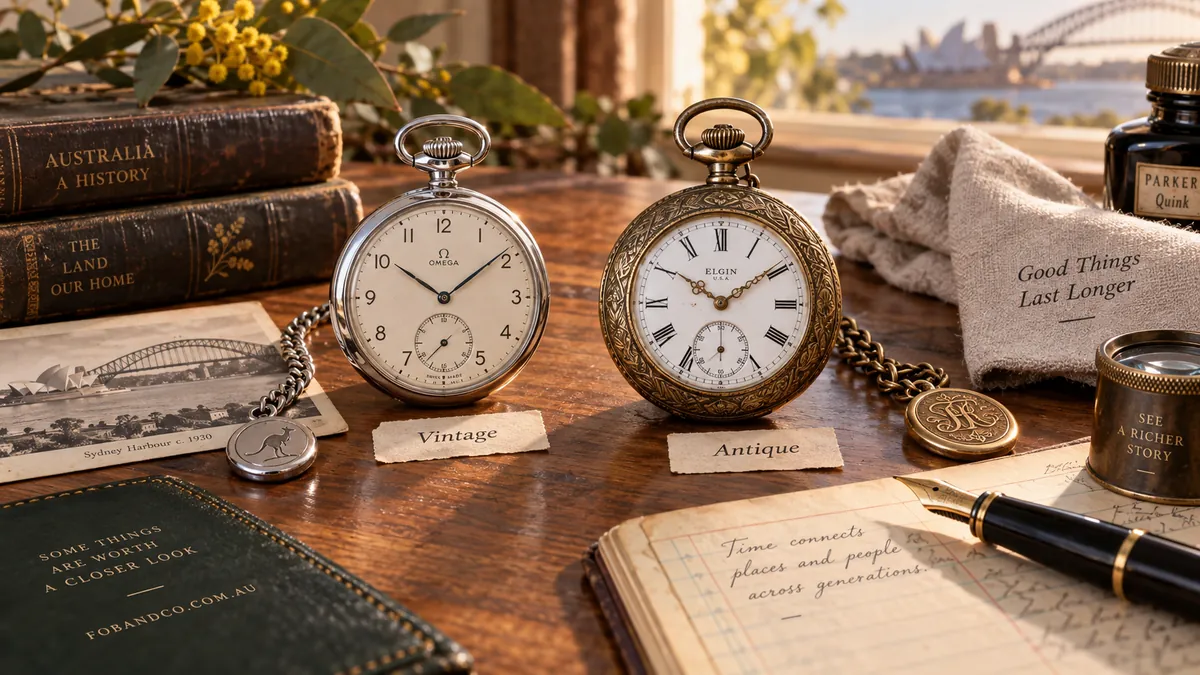
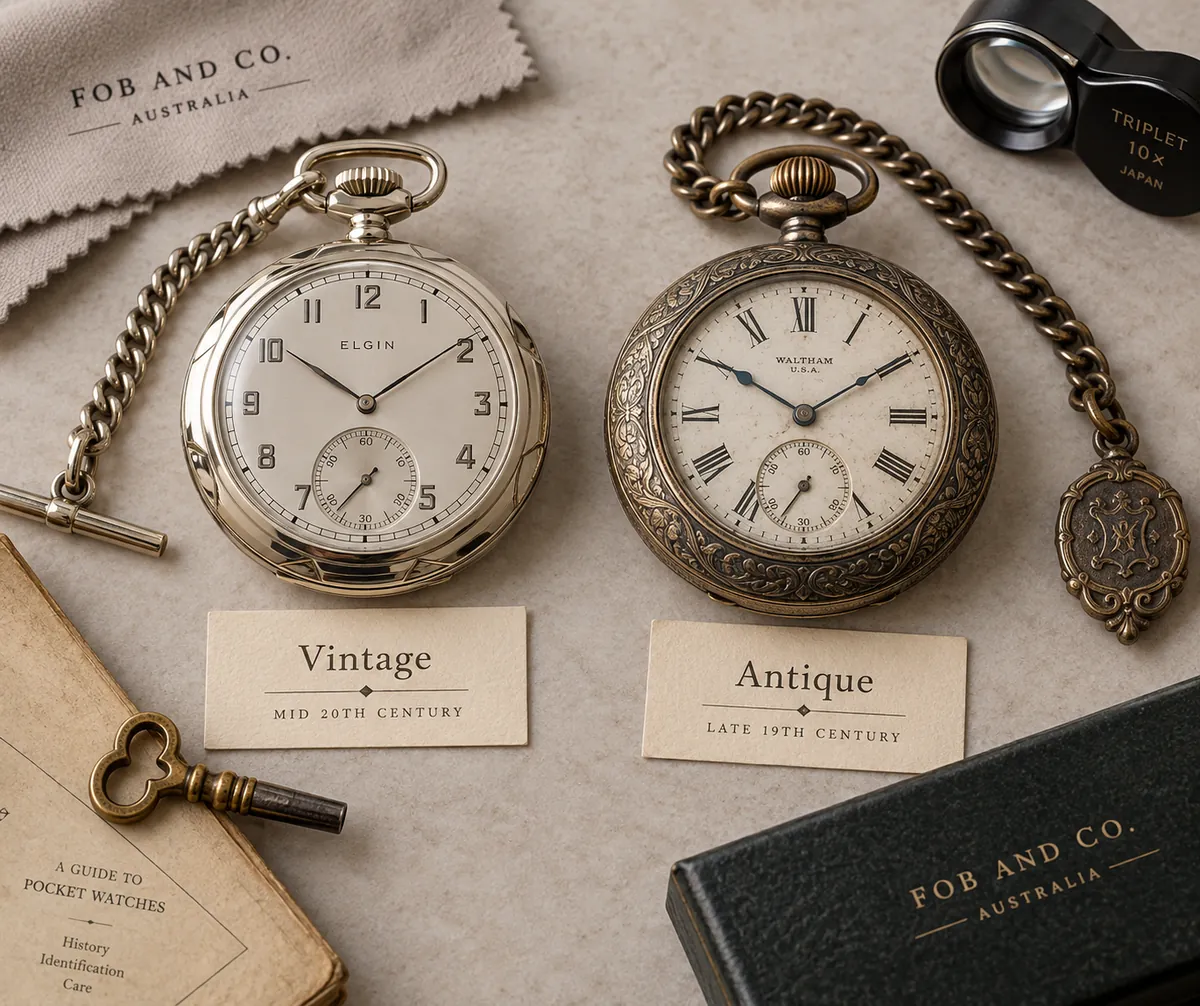
People throw “vintage” and “antique” around interchangeably, but in the watch trade they mean specific things, and getting it wrong is how you end up overpaying. The convention most dealers and auction houses work to, antique means genuinely 100 years old or more. A pocket watch made before roughly 1926 qualifies. Vintage covers the gap between that and about 20 years old, so a watch from the 1950s through to the early 2000s. Anything newer than 20 years, no matter how old-fashioned it looks, is contemporary, not vintage.
Then there’s the third category this article is really about: modern reproduction. These are brand new watches, manufactured this year or last, deliberately styled with a hunter case, roman numerals and a chain to evoke the 1890s. Nothing wrong with that, plenty of our own customers want exactly this look for a groomsman gift or a present for dad, but it’s a different product to an antique with a genuine hallmark and a name on the movement.
The fastest way to tell them apart is the movement. Watches made before the 1950s were almost always key-wind or early keyless stem-wind mechanical movements, hand-assembled with visible jewels and a balance wheel you can watch tick over if you open the back. Genuine vintage pieces from the mid-century onward moved to keyless winding as standard. Modern reproductions typically run a quartz movement (battery-powered, dead accurate, no servicing) or a simple mechanical movement manufactured in bulk, which looks similar at a glance but doesn’t have the hand-finishing collectors pay for.
Hallmarks are the second giveaway. Genuine antique and vintage cases made from precious metal carry assay marks, in Britain a lion passant for sterling silver or a crown and number for gold carat, stamped into the inside of the case back. Reputable makers also stamped their name and a serial number onto the movement itself, which you can often look up against production ledgers to pin down a manufacture year within a couple of years either side. A modern reproduction has none of this, or it has a decorative stamp that mimics the look without meaning anything legally. If a seller calls something “antique gold” but there’s no hallmark inside the case, that’s gold-coloured, not gold.
Choosing the Right Watch for You
The right answer depends entirely on what you actually want the watch to do. If you’re after a family heirloom with a documented history, a serial number you can trace, and the satisfaction of owning something that survived a century, go genuine antique. Be ready to pay for it, budget for a full service before you wear it daily, and buy from a dealer who’ll put the age and provenance in writing.
If you want the aesthetic, the heft, the chain swinging from a waistcoat pocket, without the ongoing maintenance bill or the anxiety of dropping something irreplaceable, a modern reproduction is the more practical choice for most occasions. This is especially true for gifts. A watch bought as a gift for dad or for a groomsman on a wedding day needs to survive being handled by someone who’s never owned a mechanical watch before, and a new movement with a warranty handles that far better than a 90-year-old balance wheel.
Engraving is another deciding factor. Genuine antique cases are thin and the metal underneath a century-old plating job can be unpredictable to engrave without cracking. If personalisation matters to you, a purpose-built engravable pocket watch designed for exactly that job is the safer bet, and you avoid ruining something irreplaceable in the process.
Think honestly about how often it’ll actually get worn too. A genuine vintage or antique mechanical watch needs winding daily and a service every three to five years even sitting in a drawer, because the oils inside dry out and gum up the movement whether it’s used or not. If it’s coming out for the odd wedding or formal event, that’s a lot of upkeep for occasional wear. A quartz-movement reproduction just sits there until you need it.
Top Styles and Options
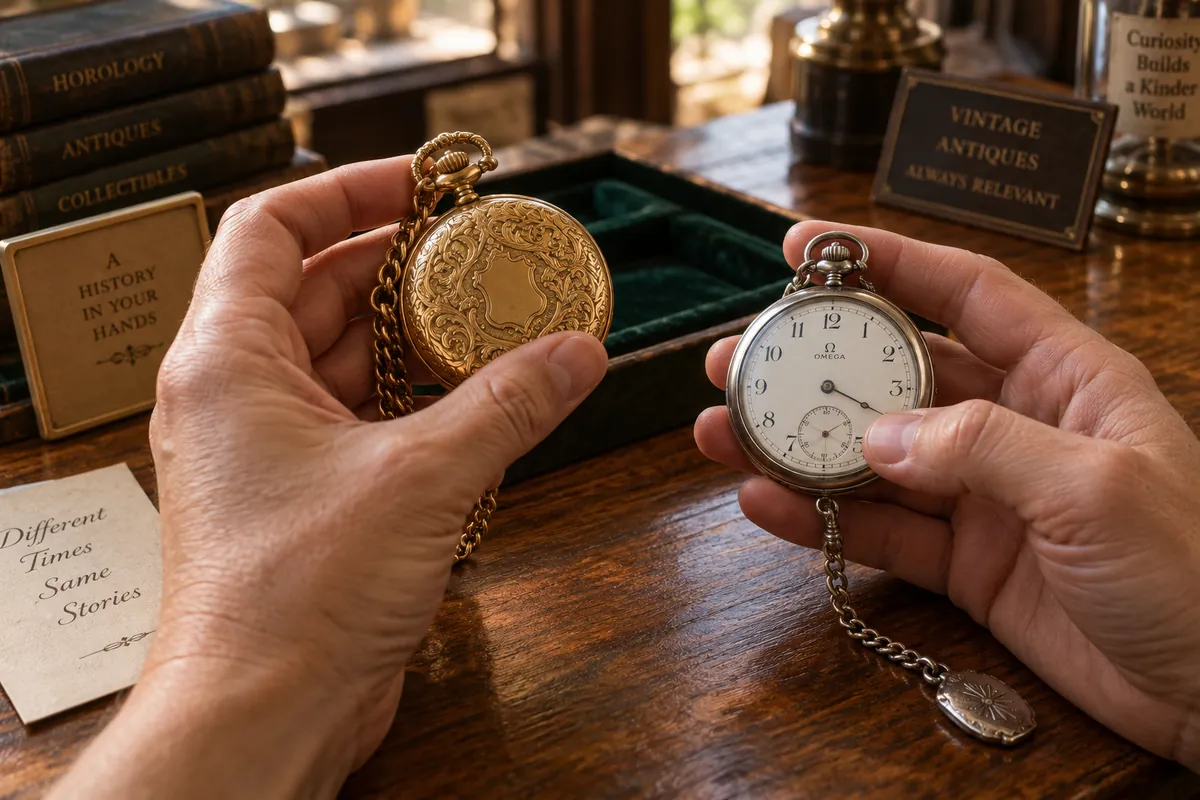
Once you’ve settled on genuine versus reproduction, the case style is the next decision, and it matters more than most buyers expect. A full hunter has a hinged metal cover over the whole dial that snaps open at the push of the crown, which was originally there to protect the glass from scratches and knocks in a working man’s pocket. It’s the classic silhouette most people picture when they hear “pocket watch.” A half hunter keeps the hinged cover but cuts a small glass window into it, so you can check the time at a glance without opening the case fully, a genuinely clever compromise that was popular with Victorian gentlemen who needed to check the hour discreetly.
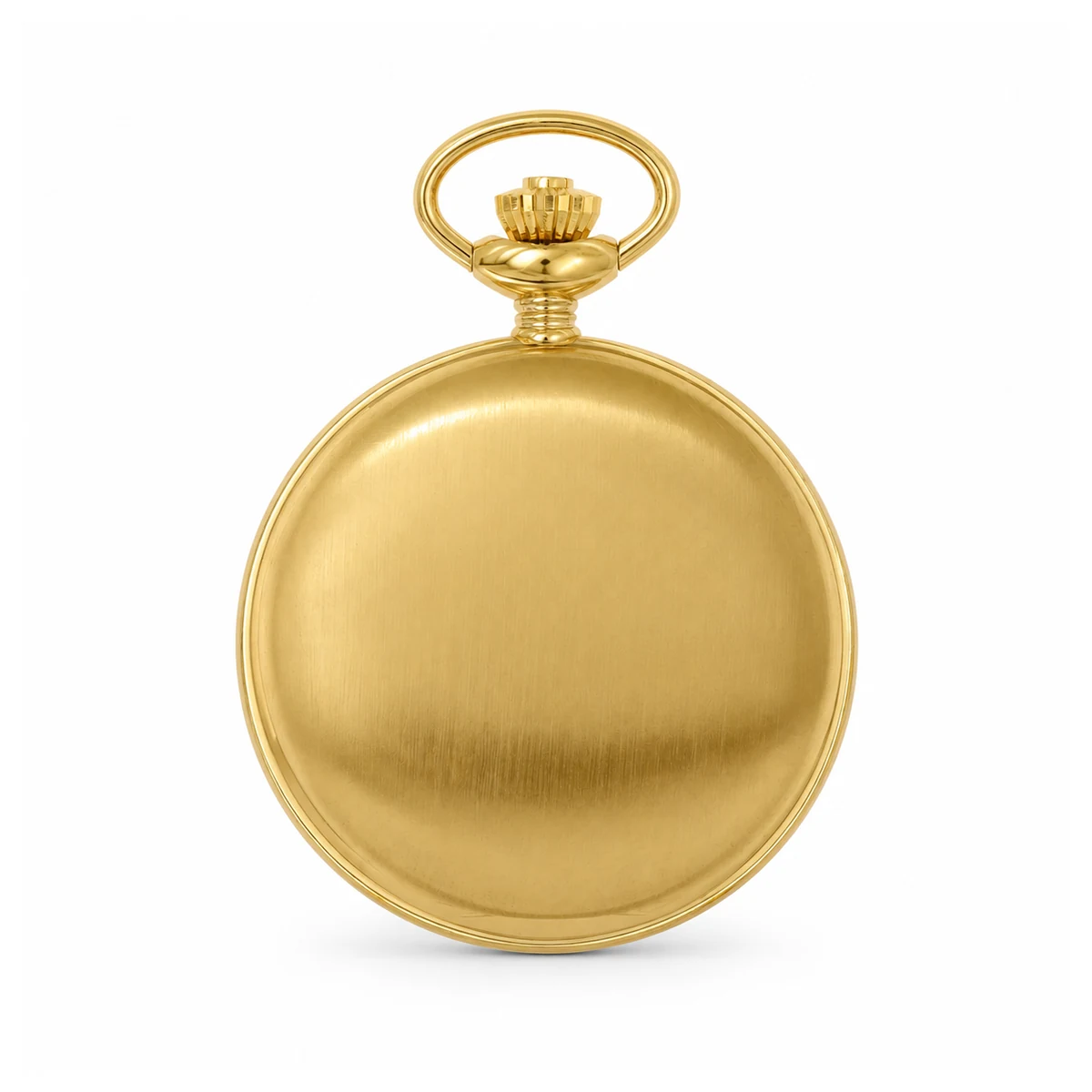
Metal finish is where genuine antiques and reproductions diverge most in price and character. True solid gold pocket watches from the antique era are heavy, expensive, and carry hallmarks worth verifying before you pay a premium for the metal alone. On the reproduction side, brass pocket watches give you that warm antique-gold look at a fraction of the cost, and they age with a patina of their own if you let them. For something with a bit more edge, black-finished pocket watches have become popular for groomsmen sets and modern formal wear, a style genuine Victorian pieces never really offered.
If budget is the deciding factor rather than authenticity, it’s worth checking a maker’s final stock and clearance ranges before you go hunting through antique dealers. You get the same hunter-case styling and solid movement, just at a price that doesn’t punish you for buying new rather than 100 years old.
What to Check Before You Buy
Before you hand over money for anything claiming to be genuinely old, run through this checklist. First, ask what the movement is and whether it currently runs. A seller who can’t tell you if a “running order” watch actually keeps time is either inexperienced or hoping you won’t ask. Second, ask for photos of the inside of the case back and the movement itself, that’s where hallmarks and maker’s marks live, and any honest seller will have these on hand already.
Third, watch out for what collectors call a “frankenwatch,” a case from one watch paired with a movement from a completely different one, sold as original. It’s more common than people think, because cases and movements were often separated when a watch was repaired decades ago and the parts got mixed up in old stock. A mismatched serial number between the case and the movement is the tell.
Fourth, be realistic about condition versus price. A genuine antique gold pocket watch in full working order with box and papers costs meaningfully more than one with a cracked crystal, a stopped movement, and no history attached, and that’s fair, but the gap should be reflected honestly in the asking price. If it isn’t, walk away.
Finally, if authenticity isn’t the point for you and you just want the look without the research, say so and shop accordingly. There’s a full accessories range including pocket watch chains built to pair with reproduction pieces, and nobody’s going to pretend the watch is 130 years old when it’s clearly a considered, honest new purchase.
Tips From the Experts
Watchmakers who service antique pieces for a living tend to repeat the same handful of warnings. Don’t force a stiff crown on an old key-wind or stem-wind watch, if it won’t turn smoothly the mainspring or gear train is likely gummed up, and forcing it can snap a part that’s no longer manufactured. Get it serviced first.
Keep any mechanical pocket watch, genuine or reproduction, away from strong magnets. Phone cases, speaker magnets and fridge doors can magnetise the hairspring and throw the timekeeping out badly enough that only a watchmaker with a demagnetiser can fix it.
Service intervals matter more than people expect. A genuine antique or vintage mechanical movement should see a watchmaker every three to five years even if it’s barely worn, because the lubricating oils break down on a schedule regardless of use. Store it somewhere with stable humidity, not a bathroom cabinet or a damp shed, and the movement will outlast you.
Before buying anything described as antique, check comparable sale prices through a recognised collector body rather than trusting the listing price alone. The National Association of Watch and Clock Collectors maintains identification resources and serial number references that make it possible to sanity-check a maker’s claimed date of manufacture in a few minutes.
Frequently Asked Questions
What is the best vintage vs antique pocket watch?
There’s no single “best” answer, it depends on what you value. If provenance and history matter to you, a hallmarked antique from a documented maker like Waltham or Elgin is the gold standard. If you want the same look with reliable, everyday timekeeping and no servicing headaches, a well-made modern reproduction is usually the better real-world choice.
How do I know which vintage vs antique pocket watch is right for me?
Start with how you’ll actually use it. A daily-wear or gift piece for a wedding suits a reproduction with a solid warranty, while a collector’s piece for display or investment calls for a genuine antique with verified hallmarks and paperwork. Match the watch to the occasion rather than chasing age for its own sake.
What should I look for when buying vintage vs antique pocket watch?
Check the movement type and whether it currently runs, look for hallmarks and a maker’s name inside the case back, and confirm the case and movement serial numbers match so you’re not buying a mismatched “frankenwatch.” Ask for close-up photos of the inner case before you commit to anything sold as genuinely antique.
Are there budget-friendly vintage vs antique pocket watch options?
Genuine antiques with solid provenance rarely come cheap, but modern reproductions give you the same full hunter or half hunter styling for a fraction of the price. Checking a maker’s clearance or final stock range is usually the quickest way to a good-looking piece without paying antique prices.