
How to Clean and Polish a Pocket Watch Without Damaging It
Why Cleaning Your Pocket Watch Matters
A pocket watch spends most of its life somewhere fabric touches metal. It’s riding in a waistcoat pocket picking up lint, sitting against a shirt collecting a bit of skin oil off your fingers every time you check the time, or living in a drawer gathering dust between wears. None of that sounds dramatic, but over months it builds a fine film that dulls the case, works its way into the hinge on a hunter case, and can eventually creep past the crown into the movement itself.
That last part is the one that actually costs you money. Dust and grit inside a mechanical movement act like sandpaper on tiny brass gears. A watch that’s just cosmetically grubby is an easy fix. A watch that’s had grime sitting on the pivots for a couple of years is a job for a watchmaker, not a cloth. So cleaning isn’t really about vanity, it’s cheap maintenance that keeps you out of the repair shop.
If you’re the kind of person who bought a piece from our pocket watch range because you liked that it felt like an object built to last generations, this is the bit that actually makes that true. A watch that gets wiped down after every second or third wear and serviced occasionally will genuinely outlive you. One that gets ignored won’t.
Choosing the Right Cleaning Method
The method depends entirely on what you’re cleaning and how dirty it actually is, so let’s split it into three levels rather than treating every watch the same way.
Level one: the weekly wipe
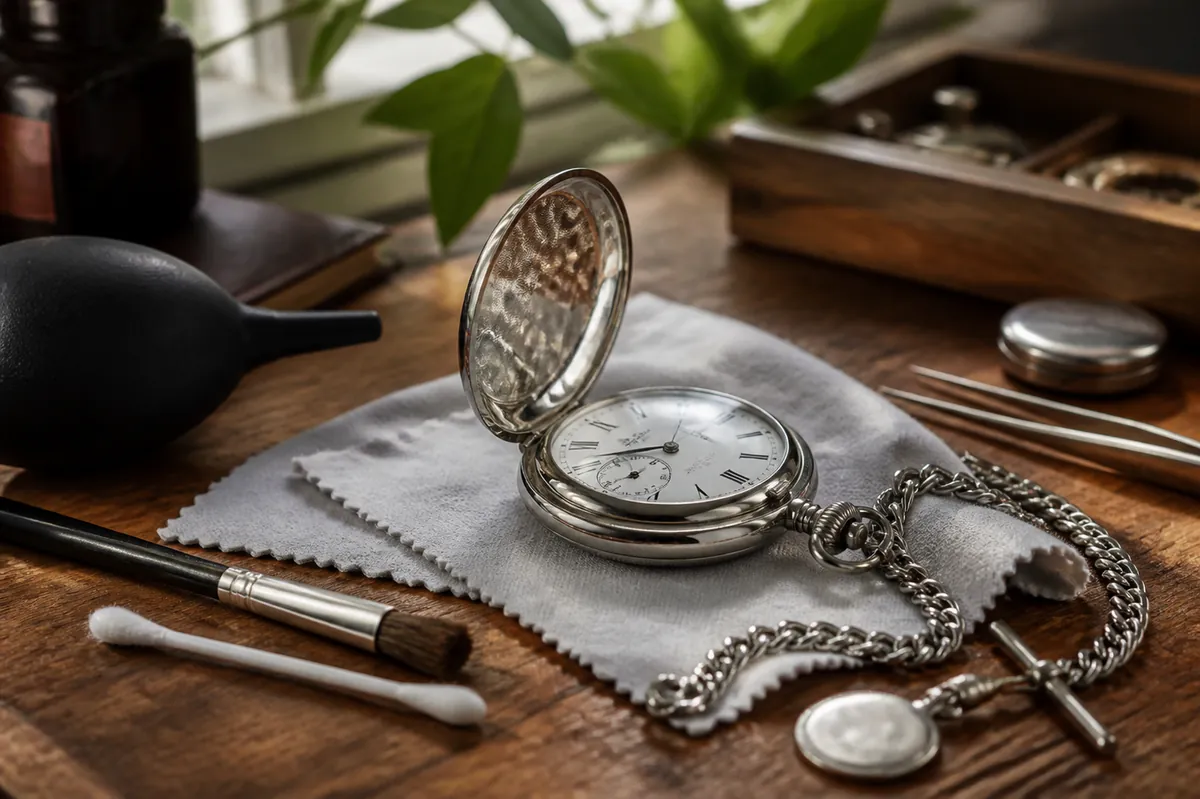
This is the one that matters most because it’s the one you’ll actually do. A dry, lint-free microfibre cloth (the kind sold for glasses or camera lenses works fine) run over the case, chain and crystal takes thirty seconds and stops grime building up in the first place. Do this every few wears and you’ll almost never need anything stronger.
Level two: the proper clean
When the case has visible smudges or a bit of tarnish, dampen a cloth (not the watch) with lukewarm water and a drop of mild soap, wring it out hard so it’s just faintly damp, and wipe the case only. Never dunk the watch, never run it under a tap, and keep water well away from the crown, the winding stem and any seams around the case back. Pocket watches, even modern quartz ones, are not built to the same water resistance standard as a dive watch. Dry it immediately with a second dry cloth afterwards.
Level three: get it professionally serviced
If the movement’s running slow, the crystal has fogged up on the inside, or you can feel grit when you wind it, that’s not a cleaning job anymore, that’s a service job. A watchmaker will open the case, strip the movement, clean each part in a proper solution and re-oil it. Expect to pay for this every three to five years on a mechanical piece that gets regular wear. It’s the same logic as servicing a car: cheaper to do it on schedule than to wait for something to seize.
One thing worth saying plainly: skip the ultrasonic cleaner unless you actually know what you’re doing. They’re brilliant for cleaning a case once the movement’s been removed by someone qualified, but run one with the movement still inside and you risk shaking lubricant off the pivots or loosening a jewel. Leave that step to a watchmaker.
Cleaning Different Case Finishes
Not every case is metal treated the same way, and using the wrong approach on the wrong finish is where most damage actually happens.
Gold and gold-plated cases
Solid gold is forgiving, it’s soft but doesn’t tarnish the way base metals do, so a soft cloth and the occasional damp wipe is usually enough. Gold-plated cases need more restraint. The plating is a thin layer over a base metal, and any polish with grit in it, even a “gentle” jewellery polish, will wear through the plating over time and expose the metal underneath. If you’re after that finish, our gold pocket watches are worth a look, and the same soft-cloth-only rule applies to whichever one you end up with.
Brass and antiqued finishes
Brass develops a patina on purpose in a lot of designs, and that slightly aged look is part of the appeal, not a fault. Scrub it with metal polish and you’ll strip the patina unevenly and end up with a blotchy watch instead of a uniformly aged one. Stick to a dry cloth, and if you genuinely want to remove tarnish from a brass pocket watch, do it gradually with the mild soap method rather than trying to fix it in one go.
Black and matte finishes
Matte black cases are usually PVD or a similar coating, and they show fingerprints more than any other finish, which is almost funny given they’re the ones people buy to look understated. Microfibre only here, and avoid anything with alcohol in it, since some coatings can react to solvents over time. If that’s your style, our black pocket watches hold up well as long as you’re wiping rather than scrubbing.
Chains and fobs
People forget the chain entirely and just clean the watch head. The chain picks up just as much oil from your hands, arguably more since you’re touching it every time you pull the watch out. Wipe it link by link with the same dry cloth, and if it’s got a lot of detail in the links, an old soft toothbrush (bone dry, no water) worked gently along the chain will get into the grooves without scratching anything. Have a browse of our accessories range if yours needs replacing rather than rescuing.
What to Check Before You Buy Supplies
You don’t need much to keep a pocket watch clean, but the few things you do buy are worth getting right, because the wrong product is how cases get scratched.
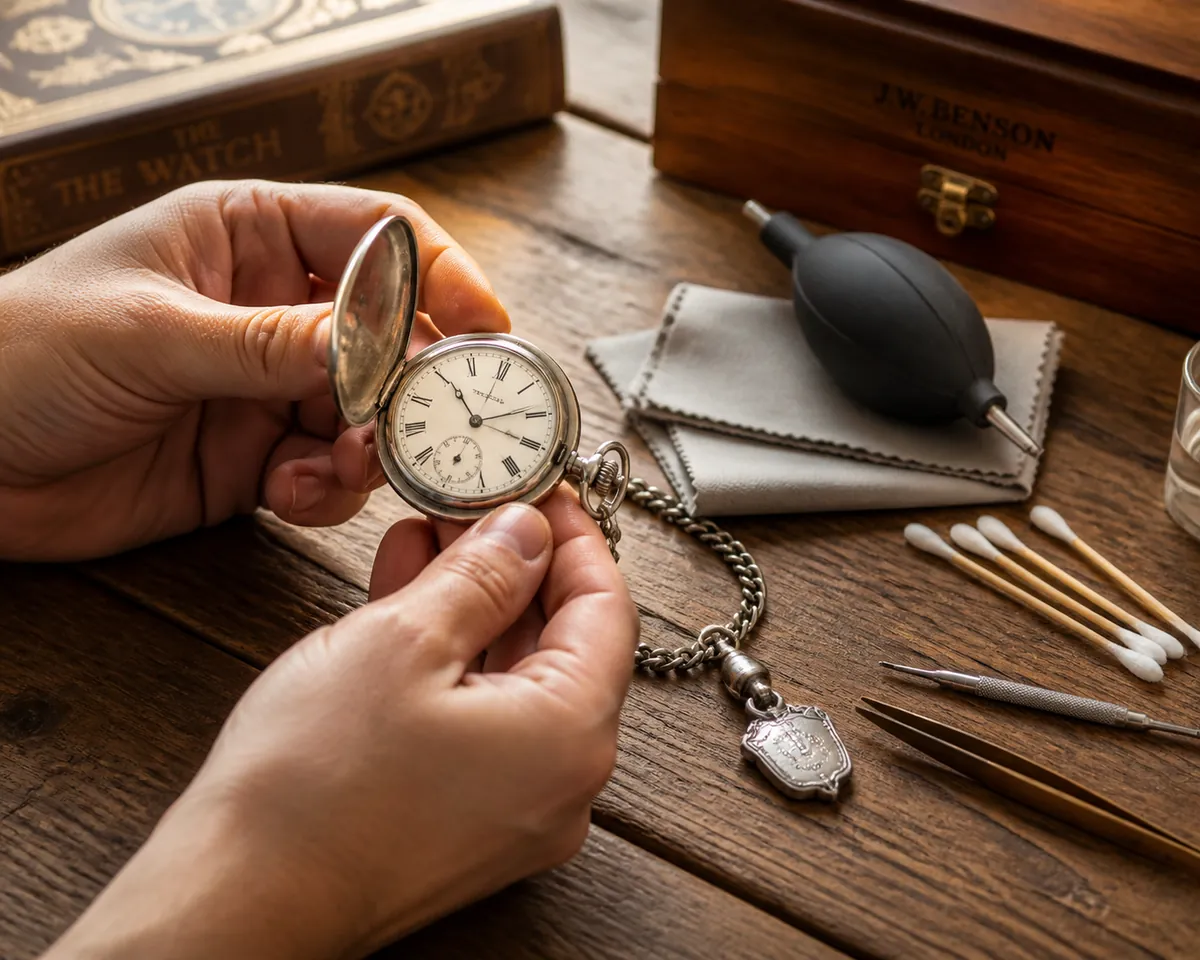
- Cloth quality: Buy a proper microfibre cloth, not a paper towel or an old t-shirt. Cotton fibres and paper both contain tiny abrasive particles that leave micro-scratches on polished cases over years of use, even though you won’t notice it happening.
- No all-purpose metal polish: Anything marketed for silverware or brass ornaments is too aggressive for a watch case, especially plated ones. If you want a polish specifically, buy one labelled for jewellery, and even then patch-test it on the case back first.
- A soft-bristled brush: Useful for chains and engraved detail, but only ever used dry. Get one meant for cameras or jewellery, not a hard toothbrush.
- Somewhere dry to store it: A watch box or pouch beats a bare drawer. Humidity is the enemy of a mechanical movement, and a lot of “why is my watch tarnishing” questions trace back to storage, not wear.
If you’re shopping for a first pocket watch and want something that’s genuinely easy to keep looking sharp, cases with an engravable or sealed cover, like a full hunter case, protect the crystal from the day-to-day scuffs an open-faced watch picks up. It’s one less surface to worry about. There’s also a good selection currently in our clearance range if you want to practise your cleaning routine on something before you commit to a pricier piece.
Tips From the Experts
A few habits that watchmakers mention again and again, worth adopting even if you’re not fussy about most things:
- Wind it the same time each day if it’s mechanical. Consistent winding keeps the mainspring under even tension and the oils moving through the movement, which actually reduces wear compared to letting it run down and starting again.
- Open the case back sparingly. Every time the case is opened there’s a chance of dust getting in or the gasket (if it has one) getting nicked. Leave case-back access to service visits.
- Wipe it before you put it away, not after you take it out. Grime sits and hardens overnight. A quick wipe at the end of the day means you’re never cleaning off anything that’s had time to set.
- Keep it away from magnets. Phones, speaker magnets and some bag clasps can magnetise a mechanical movement and throw off the timekeeping. It won’t damage the watch permanently, but a demagnetise service is an annoying extra cost for something entirely avoidable.
- Don’t wear it in the shower or the rain without knowing its rating. Most pocket watches, including anything in our gift range for dads, aren’t rated for submersion the way a dive watch is. A splash of rain on a quick dash to the car is fine. Standing in a downpour is not.
None of this is complicated. It’s the same principle as looking after a good pair of boots or a leather jacket: a little bit of care often beats a lot of care occasionally.
Frequently Asked Questions
What is the best way to clean a pocket watch?
Start with a dry microfibre cloth for regular upkeep, and only move to a slightly damp cloth with mild soap when there’s visible grime, keeping water well away from the crown and case seams. For anything inside the movement, that’s a job for a professional watchmaker rather than a home clean.
How do I know which cleaning method suits my watch?
It comes down to the case finish. Solid metal and glass tolerate a light damp wipe, while gold plating, brass patina and matte black coatings should stick to dry cloths only, since polish or moisture can wear through or dull those finishes over time.
What should I look for in cleaning supplies?
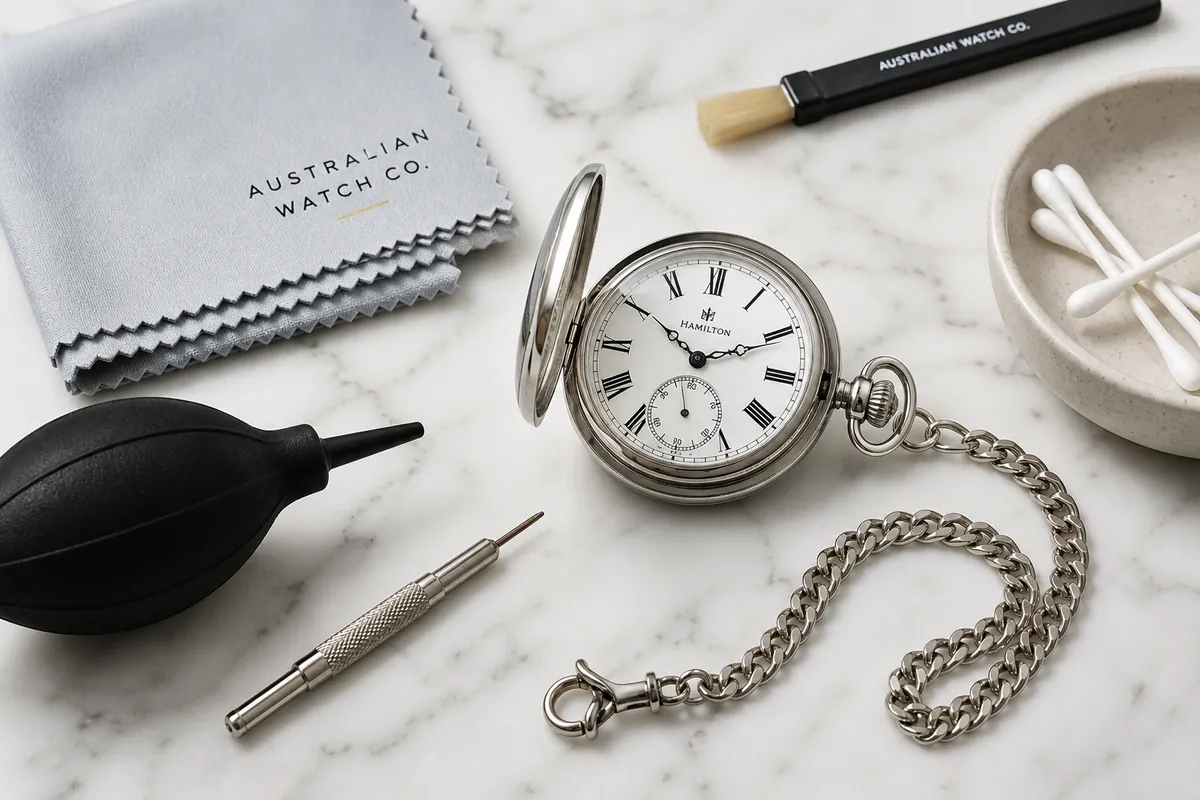
A genuine microfibre cloth and a soft dry brush cover almost everything you need. Avoid generic metal or silverware polish, since it’s usually too abrasive for plated or antiqued watch cases and can strip the finish faster than tarnish ever would.
Are there budget-friendly cleaning options?
Yes, a microfibre cloth costs next to nothing and handles most day-to-day cleaning on its own. The only real expense is an occasional professional service for a mechanical movement, and even that’s only needed every few years with regular light maintenance in between.