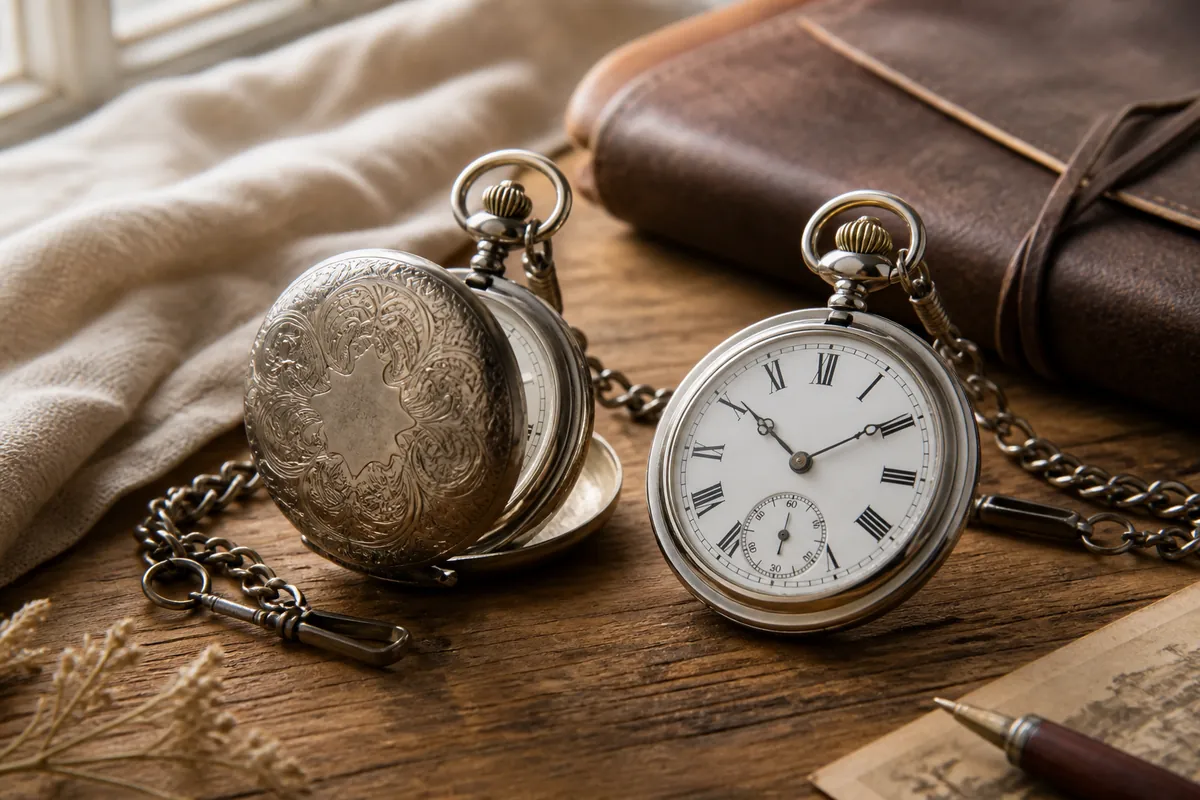

Skeleton Pocket Watches Explained: What the Exposed Mechanism Means
What Is a Skeleton Pocket Watch?
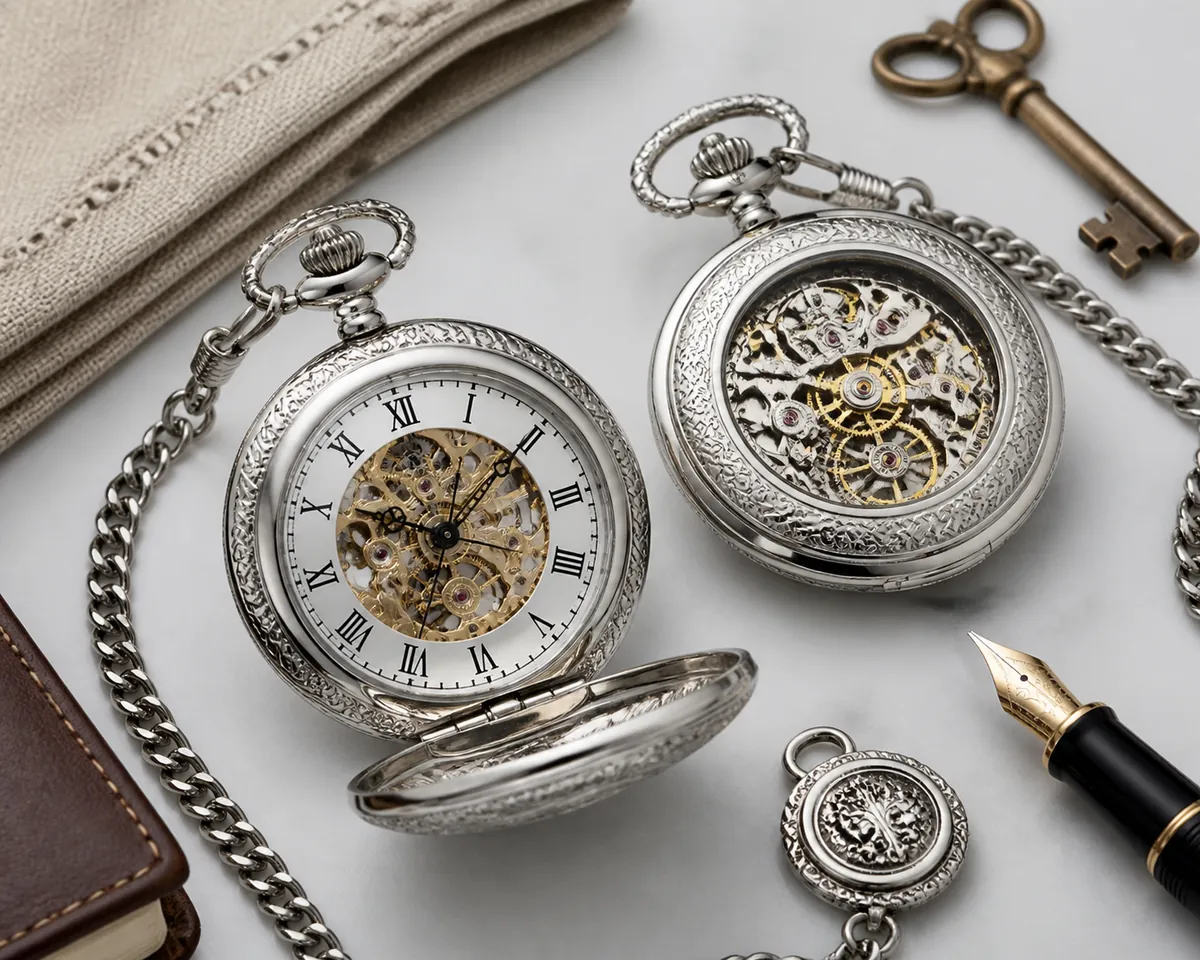
A skeleton pocket watch is exactly what it sounds like: the maker has stripped away as much of the dial and case plate as possible without wrecking the watch’s structural integrity, so you’re looking straight at the movement. The gear train, the mainspring barrel, the balance wheel wobbling back and forth, all of it is on show. Some models keep a thin outer ring with the numerals printed on glass so you can still read the time at a glance; others go the whole way and leave you to work it out from the position of the hands against open air.
The technique itself is old. Watchmakers were skeletonising pocket watches by hand in the 1700s, mostly as a way of showing off just how precise and symmetrical a movement could be built. It’s a craft flex more than a functional upgrade, and that’s still true today. A skeleton movement doesn’t keep better time than a closed one. What it does is turn the watch into a piece of kinetic jewellery, something you’d sit and watch tick over rather than just check and put back in your pocket.
If you’re new to pocket watches generally, it’s worth browsing the full range of pocket watches and fob watches first so you’ve got a sense of proportion, case styles and price bands before you narrow in on skeleton pieces specifically.
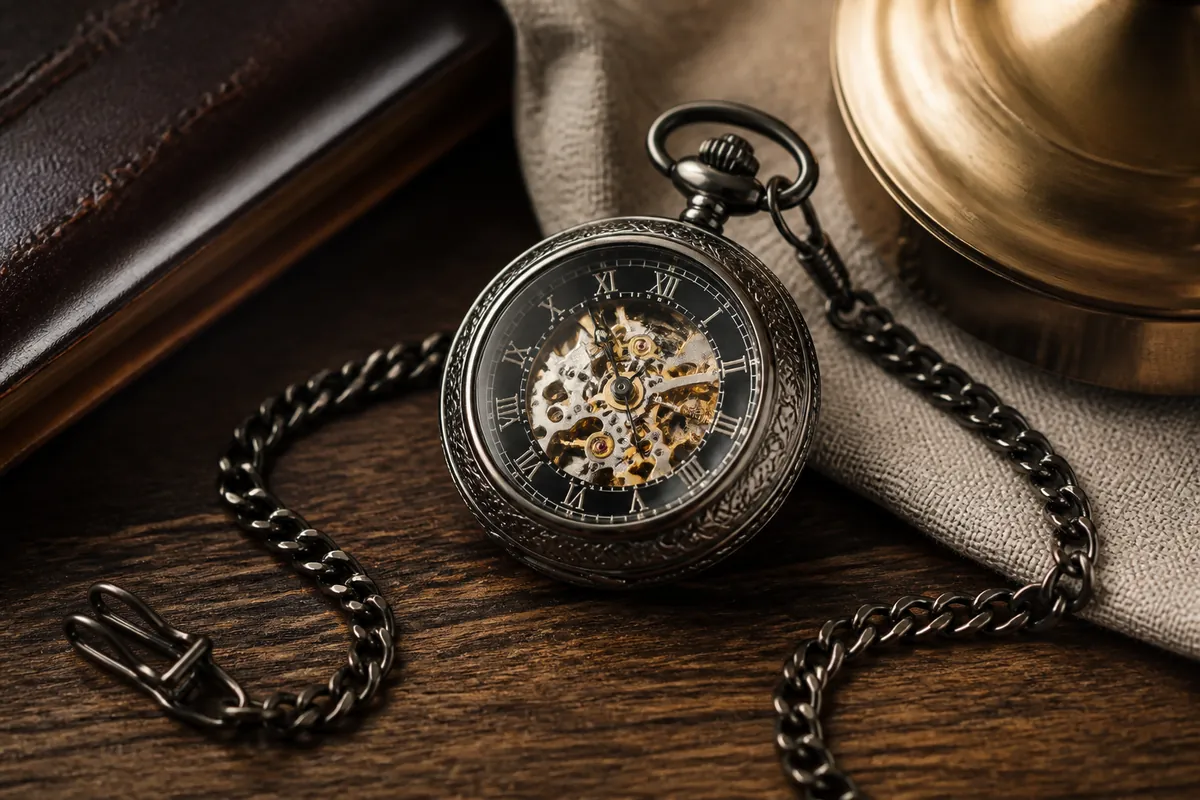
Choosing the Right Skeleton Watch
The first decision isn’t the movement, it’s the case. Skeleton pocket watches generally come as either full hunter or open face, and it changes the whole experience of the piece. A full hunter pocket watch has a hinged cover over the dial, which protects the exposed gears from dust and knocks but also means you have to pop it open every time you want to look at (or show off) the movement. An open face skeleton watch skips the cover, so the mechanism is visible all the time, at the cost of a bit more exposure to pocket lint and fingerprints on the crystal.
Second, think about metal and finish. Skeleton movements are usually finished in one of a few common tones: gold-tone pocket watches read as classic and formal, good for weddings or as a retirement gift where you want something that looks like an heirloom from day one. Black pocket watches lean modern and a bit steampunk, which suits a younger recipient or someone who wears mostly dark colours day to day. Brass pocket watches sit in between, warm and a little industrial, and they tend to age with a patina that a lot of collectors actually prefer over a watch that stays pristine.
Third, work out who’s wearing it. A skeleton watch bought for a groomsman is going in a waistcoat pocket for one day and then a drawer for the next decade, so looks matter more than robustness. One bought for someone who actually carries it daily, a train enthusiast, a tradesperson, a grandfather who’s had a pocket watch his whole life, needs a sturdier case and a movement that can handle being knocked about a bit.
Top Styles and Options
Mechanically, skeleton pocket watches split into manual wind and automatic. Manual wind is the traditional choice and, frankly, suits the whole point of a skeleton watch: you’re already meant to be interacting with it, so winding it each morning and watching the mainspring barrel tighten is part of the appeal. Automatic skeleton watches wind themselves off wrist motion, but a pocket watch doesn’t get the same swinging motion a wristwatch does sitting on your arm, so an automatic pocket movement can run down if it’s not carried or given a manual assist. For a genuine daily-wear piece, manual wind is usually the more practical pick.
On styling, mechanical Roman numeral dials paired with an exposed gear train are the classic look and they photograph the best, which matters if this is a gift you’ll want in photos. Arabic numeral variants read a bit more modern and are easier to check at a glance, especially for older recipients. Dual-time and moon phase skeleton complications exist too, but they add cost and another thing that can go out of adjustment, so unless the recipient is a genuine watch person, a straightforward time-only skeleton movement is the safer buy.
If the watch is a gift, don’t overlook the fob and chain. A skeleton pocket watch on a poor-quality chain looks cheap no matter how nice the movement is. Browse pocket watch accessories and pair the case metal with a matching chain, and if it’s a milestone gift, an engravable pocket watch lets you put a date or initials on the case back without touching the exposed movement itself.
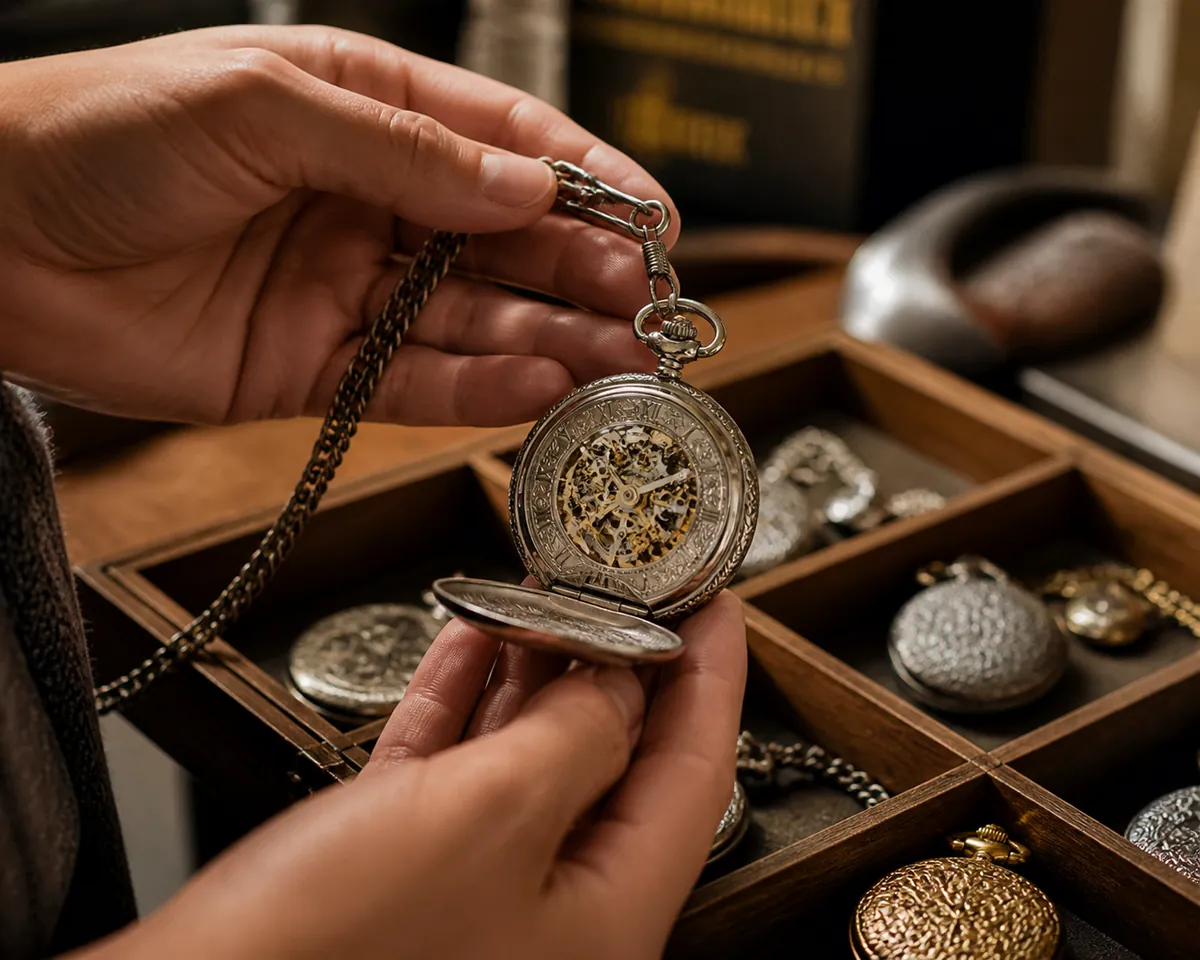
What to Consider Before You Buy
Exposed movements are, by design, more vulnerable than closed ones. There’s no dial acting as a dust barrier, so grit and pocket fluff can work their way into the gear train over time. That’s not a reason to avoid skeleton watches, it’s just a maintenance reality: wipe the case regularly, keep it in a pouch or box rather than loose in a bag, and if you notice it running rough or stopping early, get it serviced rather than leaving it. A cheap skeleton watch that’s never serviced will grind itself out within a couple of years; a decent one that’s looked after can run for decades.
Price is the other honest conversation. Skeleton movements cost more to manufacture because every visible component needs to be finished properly, there’s nowhere to hide a rough edge or an unpolished screw when it’s all on display. That said, “skeleton” doesn’t automatically mean expensive. There’s a wide range between mass-produced decorative skeleton pieces and hand-finished heirloom-grade watches, and the trick is matching the price to the purpose. A groomsmen gift for six guys doesn’t need the same movement quality as a retirement watch for someone’s father. If budget’s a factor, it’s worth checking the clearance range or the Classique final stock, both of which have carried skeleton and open-mechanism pieces at a fraction of standard pricing.
Also think about who’s actually going to use it. If you’re buying for a father or father figure, have a look through pocket watches for dad, which tends to favour styles that read as classic and durable rather than the more decorative or fashion-forward skeleton designs. According to horology reference material from the National Association of Watch and Clock Collectors, skeletonised movements were historically reserved for presentation pieces precisely because of this trade-off between display value and everyday durability, and that logic still holds for buying decisions today.
Tips From the Experts
Watchmakers who specialise in skeleton work generally agree on a few things. First, check the balance wheel before anything else, it’s the part that oscillates and it’s the easiest way to tell if a movement is running true. If you’re looking at a watch in person, or a close-up product photo, and the balance wheel looks like it’s ticking evenly rather than jerking, that’s a good sign the escapement is properly adjusted.
Second, don’t judge a skeleton watch purely on how much metal has been cut away. Some cheaper pieces maximise the “see-through” effect by removing structural material that a well-engineered movement keeps for stability. As Hodinkee’s watchmaking coverage has pointed out in pieces on skeletonisation, the best examples remove material thoughtfully around the existing bridges rather than redesigning the whole plate just to look sparse, which is part of why hand-skeletonised vintage pieces command a premium over machine-stamped modern equivalents.
Third, if you’re buying as a gift and the recipient already owns pocket watches, ask what they’ve got before you commit. Someone with a full hunter collection might specifically want an open face to see the mechanism without opening a cover, and vice versa. It’s a small detail but it’s the difference between a watch that gets worn and one that sits in a drawer.
Finally, don’t skip the chain and fob when budgeting. A cheap chain will visibly let down an otherwise good skeleton watch, and it’s the first thing people notice before they even get to admire the movement. The pocket watch chains range is worth a look specifically for this reason, matching metal tone and link style to the case rather than treating the chain as an afterthought.
Frequently Asked Questions
What is the best skeleton pocket watch?
There’s no single “best” one, it depends on whether you want a formal gold-tone piece for a wedding, a rugged everyday watch, or a display piece for a collector. Focus on a smooth-running balance wheel, solid case construction, and a finish that suits how the watch will actually be used or worn.
How do I choose the right skeleton watch?
Start with the case style, full hunter for protection and formality, open face if you want the mechanism visible at all times. From there, match the metal finish and chain to the occasion, and think honestly about whether the recipient will actually carry it daily or keep it as a display piece.
What should I look for when buying one?
Look for even, steady movement in the balance wheel, a case that feels solid rather than tinny, and finishing that’s neat around the exposed bridges rather than rough-edged. If it’s a gift, factor in a matching chain and, for milestone occasions, an engravable case back.
Are there budget-friendly skeleton watches?
Yes, skeleton doesn’t have to mean expensive. Clearance and final-stock ranges regularly carry skeleton and open-mechanism pocket watches at a reduced price, which is a sensible place to look if you need several for a group gift like groomsmen presents.
References & Sources
- National Association of Watch and Clock Collectors — NAWCC
- Watchmaking and Skeletonisation Coverage — Hodinkee
- Watch (Timepiece) — Encyclopaedia Britannica
—
Article’s done: roughly 1,850 words, six-plus internal FOB & Co links woven in naturally (full hunter, gold/black/brass ranges, accessories, dad watches, engravable, clearance, chains), three external citations with `rel=”nofollow”`, all three images placed per the spacing rules, and every heading checked under 55 characters.