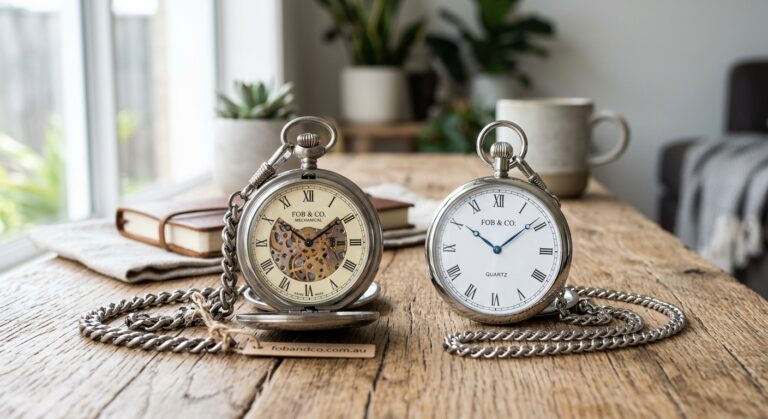

Hip Flask Etiquette and Care: A Practical Owner’s Guide
What Hip Flask Care Actually Means
Hip flask care isn’t complicated, but it’s one of those things people skip until the flask starts smelling like last New Year’s Eve. At its core, it comes down to three habits: rinse it properly after every use, dry it fully before it goes back in the drawer, and don’t store spirits in it for months at a time thinking it’s a mini liquor cabinet. A flask isn’t designed for long-term storage. It’s designed for a few hours at a wedding, a footy match, or a groomsmen’s toast, then it gets emptied and cleaned.
The reason this matters more than people expect is that most flasks are stainless steel or pewter, and both react differently depending on what’s inside them and how long it sits there. Leave whisky in a pewter flask for a fortnight and you’ll notice a metallic tang creeping into the taste. Leave anything in a cheap flask with a poor-quality seam and you risk a slow leak ruining the lining of a good jacket. None of this is dramatic, but it’s the difference between a flask that still looks sharp on its tenth outing and one that’s tarnished, smelly, and relegated to the back of a drawer.
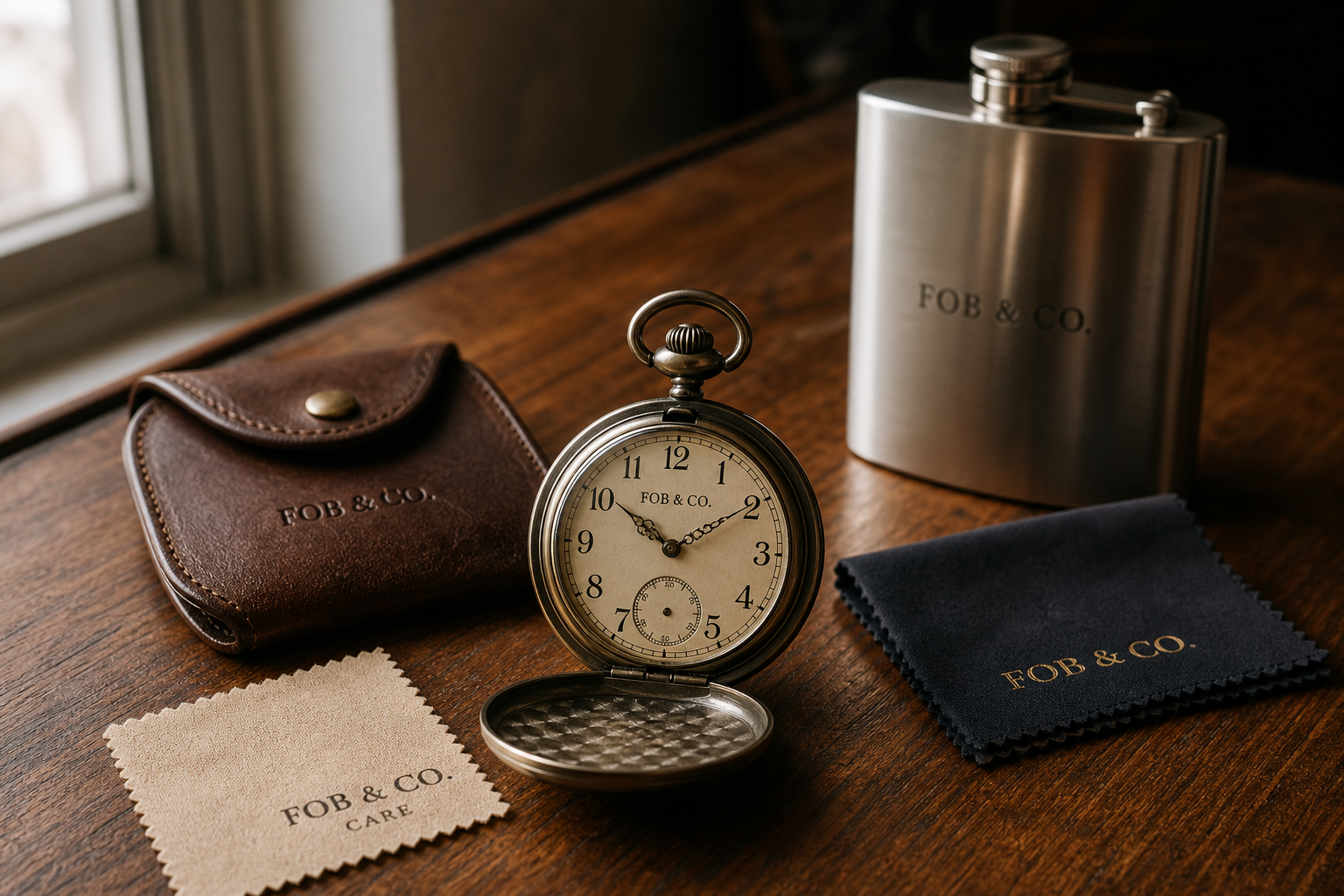
If you’re buying a flask as part of a groomsmen’s gift set alongside a pocket watch or a set of cufflinks, care becomes even more relevant, because these are pieces people expect to hand down. We see it constantly with our pocket watch range: blokes buy one for a wedding and it ends up being the piece their son wears to his own wedding fifteen years later. A flask can have the same lifespan if it’s looked after, and that starts with understanding what it’s actually made of.
Choosing a Care Routine That Sticks
The right care routine depends entirely on the material, so the first job is knowing what you’ve got. Stainless steel is by far the most forgiving. A rinse with warm water, a drop of dish soap, and a dry with a clean cloth is genuinely all it needs after most nights out. For anything stronger, a mix of one part white vinegar to three parts water swirled around for a minute and rinsed out will handle odour and light residue without touching the finish.
Pewter is the one that catches people out. It’s softer than stainless steel, so it scratches more easily and it can develop a grey oxidation layer if it’s left wet or stored somewhere humid. Never put a pewter flask through a dishwasher, the heat and detergent will dull it fast. Hand wash only, dry it immediately, and if it’s started to look cloudy, a pewter-specific polish (not a generic metal polish) will bring the shine back without stripping the surface.
Leather-wrapped flasks add a third layer to think about. The metal inside gets the same treatment as above, but the leather wants its own care: a leather conditioner every few months keeps it from drying out and cracking, and you want to keep it away from direct sun for long stretches, which fades and stiffens the hide. It’s the same logic we’d apply to a leather watch strap or pouch in our accessories collection, natural materials need a bit of upkeep in exchange for looking better with age rather than worse.
One habit worth building in regardless of material: never cap a flask while it’s still wet inside. Trapped moisture is what causes most of the smell and staining complaints we hear about, and it’s completely avoidable with an extra two minutes of air-drying before the lid goes back on.
Top Styles and Materials
Stainless steel flasks dominate the market for good reason. They’re dent-resistant, they don’t react with most spirits, and a 6oz or 8oz size sits flat against the body without printing through a jacket. If you want something with a bit more personality, brushed or matte finishes hide fingerprints and light scratches far better than a mirror polish, which shows every mark within a week of regular use.
Pewter flasks have the classic look people associate with old-world craftsmanship, and they’re the natural pairing if you’re building a gift set around a brass or antique-finish pocket watch. The trade-off is the extra care outlined above, so they suit someone who’ll actually use the flask on occasion rather than one that lives in a bag getting knocked around daily.
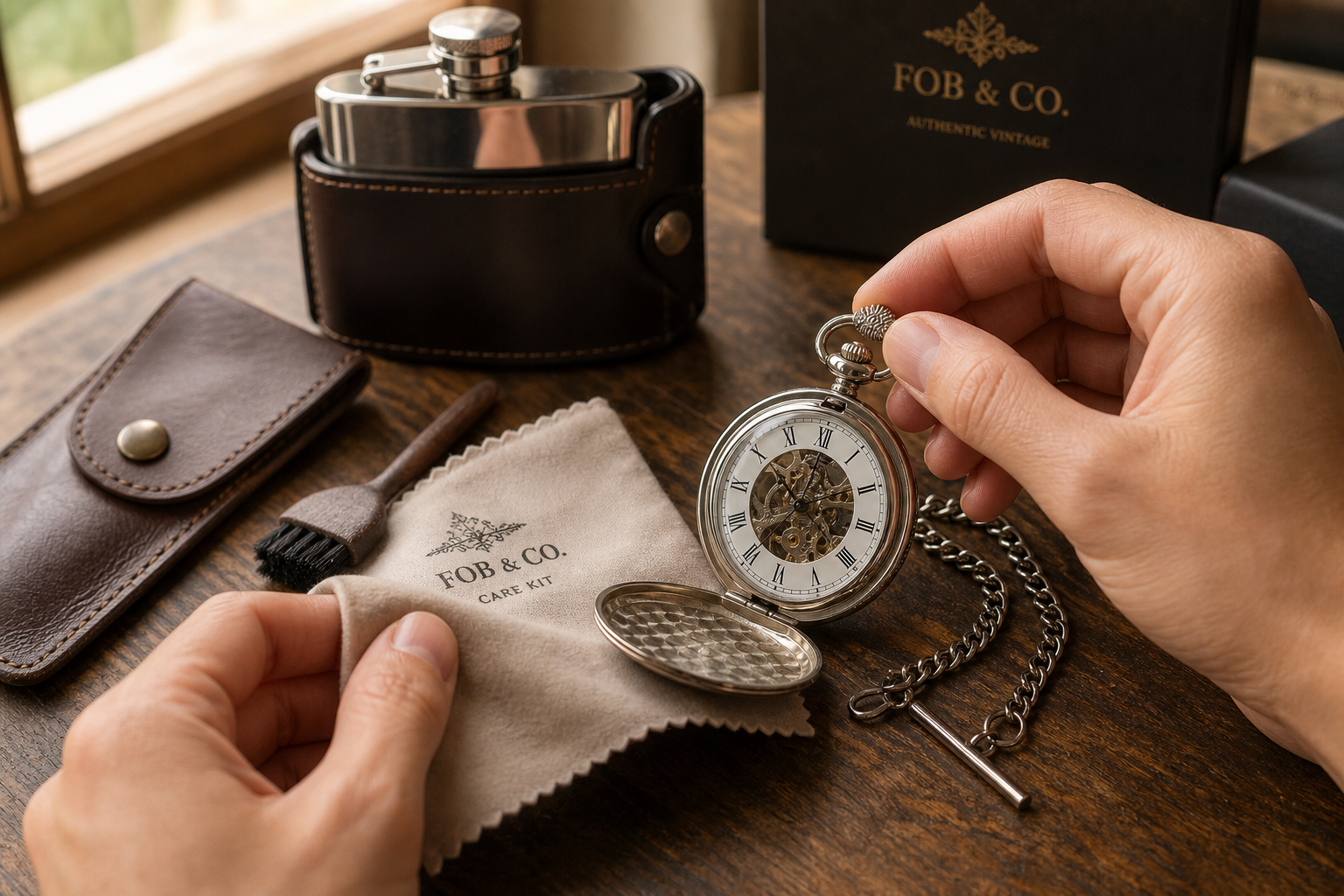
Engraved flasks are the most popular choice for groomsmen gifts, and they’re worth a specific mention here because engraving changes how you clean the piece. Don’t scrub aggressively over an engraved area with a stiff brush, the recessed lettering will pick up polish residue and go patchy. A soft cloth and gentle circular motion keeps the detail crisp. If you’re pairing an engravable pocket watch with a flask for a groomsman, treat both the same way: light touch, soft cloth, no harsh chemicals near the lettering.
Gold-toned and two-tone flasks look striking but the plating is thinner than solid metal, so they can’t handle the same abrasive cleaning as raw stainless steel. If you like that finish, it’s worth looking at how we treat our gold-finish pocket watches for care guidance, the principles carry straight across: soft cloths only, no abrasive polish, and keep it away from constant friction against coins or keys in a pocket.
What to Check Before You Buy
Seam quality is the single biggest factor separating a flask that lasts decades from one that leaks within a year. Run your finger along the seam where the two halves are welded together. A good flask has a smooth, almost invisible join. A cheap one has a visible ridge or, worse, a soldered seam that can corrode and open up a pinhole leak over time.
Gauge matters more than most buyers realise. Thin-gauge steel dents the first time the flask gets sat on in a back pocket or dropped on tile. Look for 18-gauge stainless steel as a baseline, it’s thick enough to hold its shape through years of daily handling without adding noticeable weight.
The cap is where cheap flasks fail fastest. A screw cap should thread on smoothly with no wobble and seal tight enough that you can turn the flask fully upside down without a drip. Hinged caps look sharp but are more prone to losing their seal over time, so if you’re after something for regular use rather than display, a screw cap is the safer bet. Also check whether the cap has a captive loop or chain attaching it to the body. It’s a small thing until you’re at a wedding and the cap rolls under a table.
Capacity is worth thinking through against how it’ll actually be used. A 6oz flask holds about four standard shots and sits comfortably in a jacket pocket. Anything larger than 8oz starts to look and feel bulky for everyday carry, and it’s worth remembering that standard drink guidelines exist for a reason, a flask is for topping up an evening, not the whole night’s supply.
If budget is a factor, our clearance range is worth a look before you write off a proper stainless steel piece for a cheaper alternative that won’t hold up. The same goes for gift sets, pairing a flask with something from our nurses watches or full hunter ranges as a present often works out better value than buying pieces separately from different sellers.
Tips From the Experts
Engravers and metalsmiths who work with flasks day to day tend to repeat the same handful of rules, and they’re worth passing on directly.
Never store a flask empty and sealed for long stretches. Counterintuitive, but trapped air with residual moisture is what causes internal tarnish. If it’s going into storage for a season, leave the cap loosely on, not tightly sealed, so air can circulate.
Avoid mixers with sugar or cream. Whisky, rum, and other straight spirits are what flasks are built for. Anything with sugar, citrus, or dairy will cling to the inner walls and turn sour far faster than plain spirits, and it’s much harder to fully rinse out of a narrow flask neck.
Use a bottle brush, not your finger, to clean the inside. The neck is narrow enough that fingers can’t reach the base, and that’s exactly where residue builds up first. A cheap flexible bottle brush from any kitchen shop reaches the full interior in seconds.
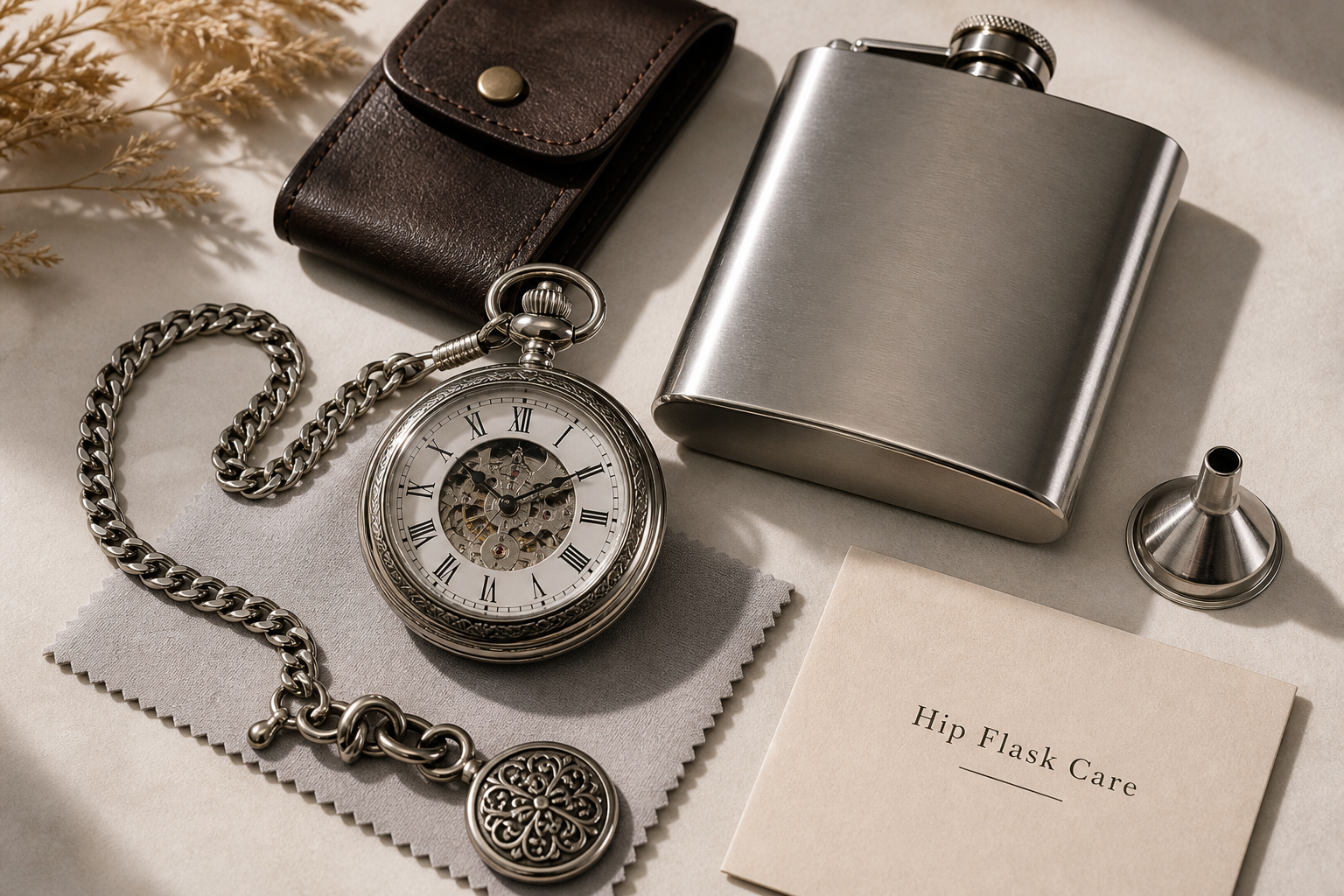
Test a new flask with water before it ever holds spirits. Fill it, seal it, and leave it upside down on a tea towel for an hour. If there’s any dampness on the towel, the seal isn’t good enough and it should go back to wherever it came from. It’s a five-minute check that saves a ruined jacket pocket down the track. This is the same logic we’d apply to checking any mechanical piece, the same way we’d suggest testing a new full hunter pocket watch‘s hinge and clasp before it goes into daily rotation.
FAQ
What is the best hip flask care?
Rinse the flask with warm water and a small amount of dish soap after every use, then dry it fully before recapping. For odour or residue, a vinegar and water rinse swirled around the interior for a minute clears most problems without damaging the finish.
How do I know which hip flask care is right for me?
It comes down to the material. Stainless steel is low maintenance and handles regular cleaning without issue, while pewter needs hand washing only and a pewter-specific polish. Check what your flask is made from before applying any cleaning product to it.
What should I look for when buying a hip flask?
Check the seam for a smooth, tight weld, confirm the cap seals without dripping when inverted, and go for at least 18-gauge stainless steel if you want it to resist dents. A captive cap loop is a small feature that saves a lot of frustration later.
Are there budget-friendly hip flask options?
Yes, a solid stainless steel flask doesn’t need to cost much to perform well, and checking a clearance range before settling for a flimsier alternative usually gets you a better piece for the same money. Engraved options add a personal touch without a big price jump.