
How to Set and Wind a Mechanical Pocket Watch Correctly
What Is Winding and Why Does It Matter?
A mechanical pocket watch doesn’t run on a battery. It runs on a coiled strip of steel called the mainspring, and winding the crown (or the key, on older pieces) is how you store energy in that spring. As the spring slowly unwinds over the following 24 to 40 hours, depending on the movement, it releases that energy through the gear train to the balance wheel, which ticks back and forth and keeps time. No wind, no power, no ticking. It’s a genuinely simple system, which is part of why these watches keep working for a hundred years when a lot of quartz watches from the 1990s are long dead in a drawer somewhere.
Here’s the bit people get wrong most often: they either don’t wind it enough and the watch stops mid-afternoon, or they crank the crown like they’re starting a lawnmower and strip the winding mechanism. Both are avoidable. A full wind on most pocket watch calibres takes somewhere between 15 and 25 turns of the crown, applied with your fingertips, not pliers. You’ll feel the resistance build gradually and then firm up near the end. That firming is your cue to stop, not a hurdle to push through.
If you’ve just bought your first piece from our pocket watch collection, wind it fully before you wear it the first time. A watch that’s been sitting in a box for weeks or months will have a fully relaxed mainspring, and starting it cold with a partial wind can make the balance wheel behave erratically for the first hour or so.
How Do You Choose the Right Winding Method?
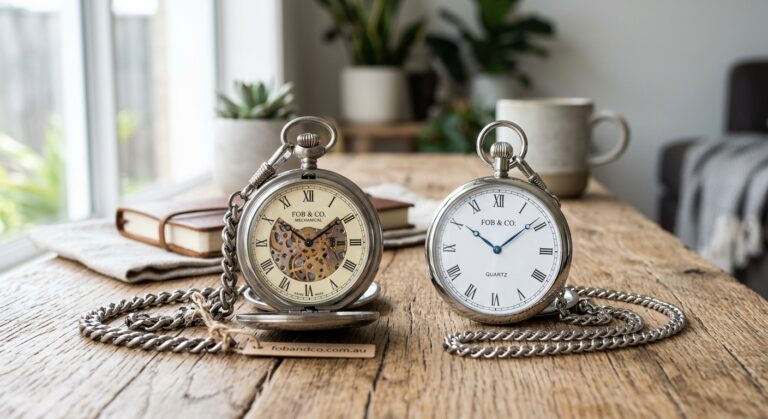
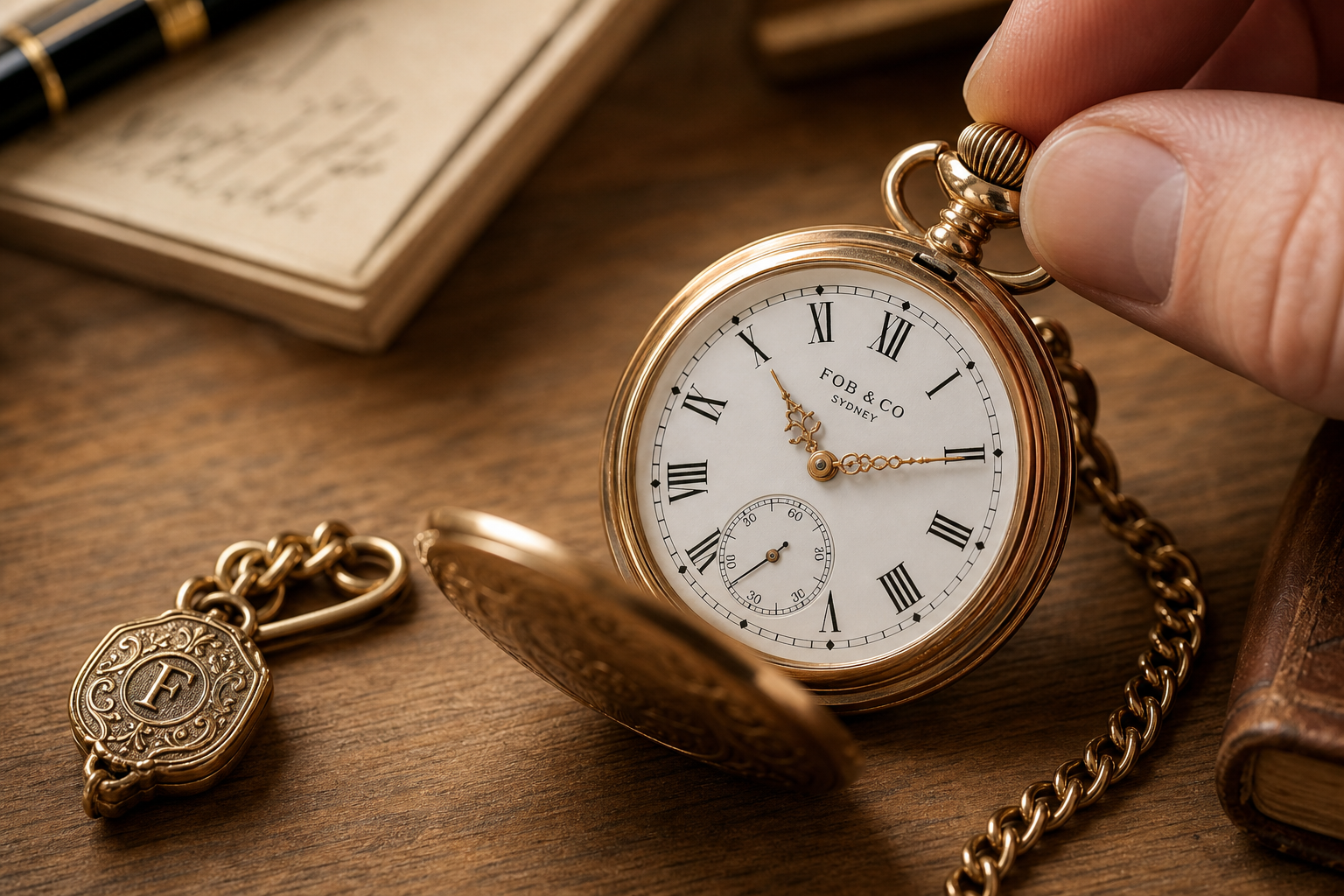
Most mechanical pocket watches you’ll find today use stem winding, and that includes the mechanical pieces we sell. (Our Classique range is the exception — those run on Swiss quartz movements, so they’re battery-powered and never need winding at all.) On a mechanical watch you’ll find a small crown at the top of the case (12 o’clock position on an open face watch, or on the spine near the hinge on a hunter case). Turn it clockwise, and you’re winding the mainspring. Turn anticlockwise on most modern movements and you’ll just spin freely, since the ratchet only engages one way. That’s normal and it isn’t damaging anything.
To set the time, pull the crown out. On most pocket watches this is a single click to the “set” position, at which point turning the crown moves the hands instead of winding the spring. Push it back in flush against the case when you’re done and it returns to winding mode. Some older or antique pieces use a lever-set system instead, where you need to open the case back and flip a small lever before the hands will move. If you’ve inherited an antique or picked one up secondhand and the crown won’t turn the hands, check the case back before assuming something’s broken.
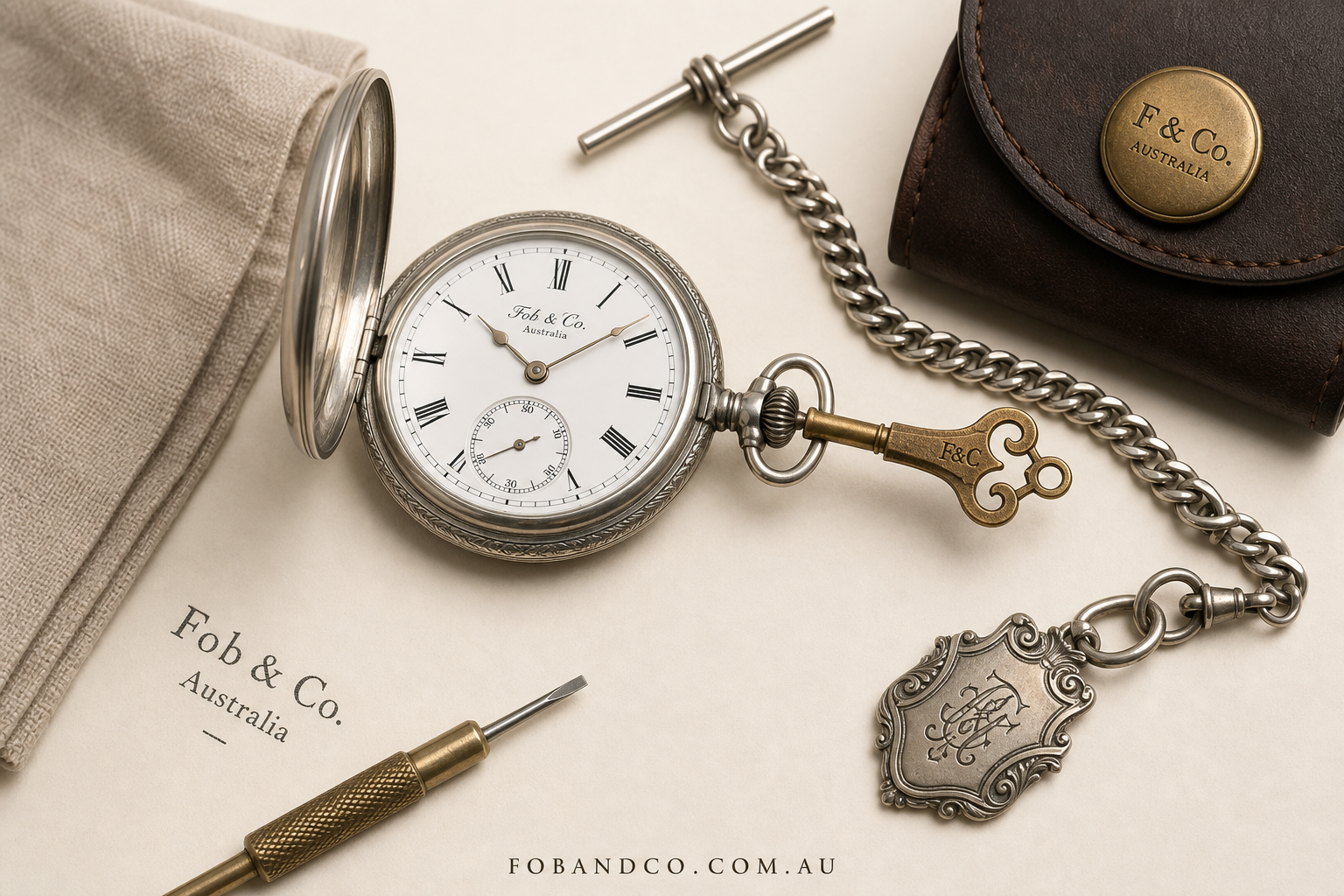
Key-wind watches are rarer these days but you’ll still see them in antique and reproduction pieces. These use a separate winding key that fits over a square arbor, usually accessed from the back of the case or occasionally the front. If you’re set on that older style, our classique pocket watch range includes several models that nod to that traditional look while keeping modern stem-wind reliability, which is honestly the easier way to live with one day to day.
One thing that trips people up with hunter case watches specifically: the crown you’re winding is the same crown you press to pop the front cover open. Make sure you’re not accidentally winding when you meant to open the case, or vice versa, since the two actions use the same stem but different amounts of pressure and angle. Our full hunter pocket watches make this distinction pretty intuitive after a day or two of handling one, but it’s worth knowing before you’re fumbling with it at a wedding.
| Step | What to do | Mistake to avoid |
|---|---|---|
| Wind fully before first wear | Wind a new or long-idle watch fully before you wear it. | Starting a relaxed mainspring on a partial wind, which can make the balance wheel behave erratically for the first hour or so. |
| Wind the crown | Turn the crown clockwise with your fingertips. Most pocket watch calibres need about 15 to 25 turns. | Cranking the crown hard or using pliers, which can strip the winding mechanism. |
| Stop at firm resistance | Stop the moment the crown feels firm and stops turning. | Pushing through the resistance. |
| Set the time | Pull the crown out one click to the set position, turn it to move the hands, then push it back in flush. | Leaving the crown pulled out, or assuming the watch is broken when it is a lever-set antique (check the case back first). |
| Move the hands carefully | To change the time significantly, run the hands forward through a full 24-hour cycle. | Forcing the hands between 9pm and 3am, or backwards, which can damage the internal gearing. |
| Wind on a routine | Wind at the same time each day, such as first thing in the morning. | Winding at random, which lets the watch stop mid-afternoon or overnight. |
| Wind a hunter case | Use a slightly firmer, deliberate turn of the crown. | Popping the front cover open mid-wind, because the same crown opens the case. |
How Do You Wind Popular Pocket Watch Styles?
The winding mechanism doesn’t change much between styles, but the case design affects how easily you can get at the crown, and that’s worth knowing before you buy.
Open Face Watches
These have no cover over the dial, so the crown sits right at 12 o’clock and is the easiest style to wind without thinking about it. If you want the simplest daily experience, start here.
Full Hunter Watches
A hinged metal cover protects the dial and springs open when you press the crown. Winding still happens by turning that same crown, you just need a slightly firmer, more deliberate turn to avoid accidentally popping the case open mid-wind.
Brass and Bronze Cased Watches
Popular for their warm, aged look, our brass pocket watches and bronze pocket watches wind exactly the same way as any other stem-wind piece. The metal is just the case material, the movement underneath is standard.
Gold and Formal Dress Watches
If you’re after something for a wedding, graduation, or a genuinely special gift, our gold pocket watches tend to have finer, more delicate crowns. Wind these with a gentler touch and shorter turns, since the components are built to a more refined tolerance and don’t need the same force as a heavier field-style piece.
What Should You Check Before You Buy?
If you’re buying your first mechanical pocket watch, or buying one as a gift for someone who’s never owned one, there are a few practical things worth thinking about beyond how it looks on the chain.
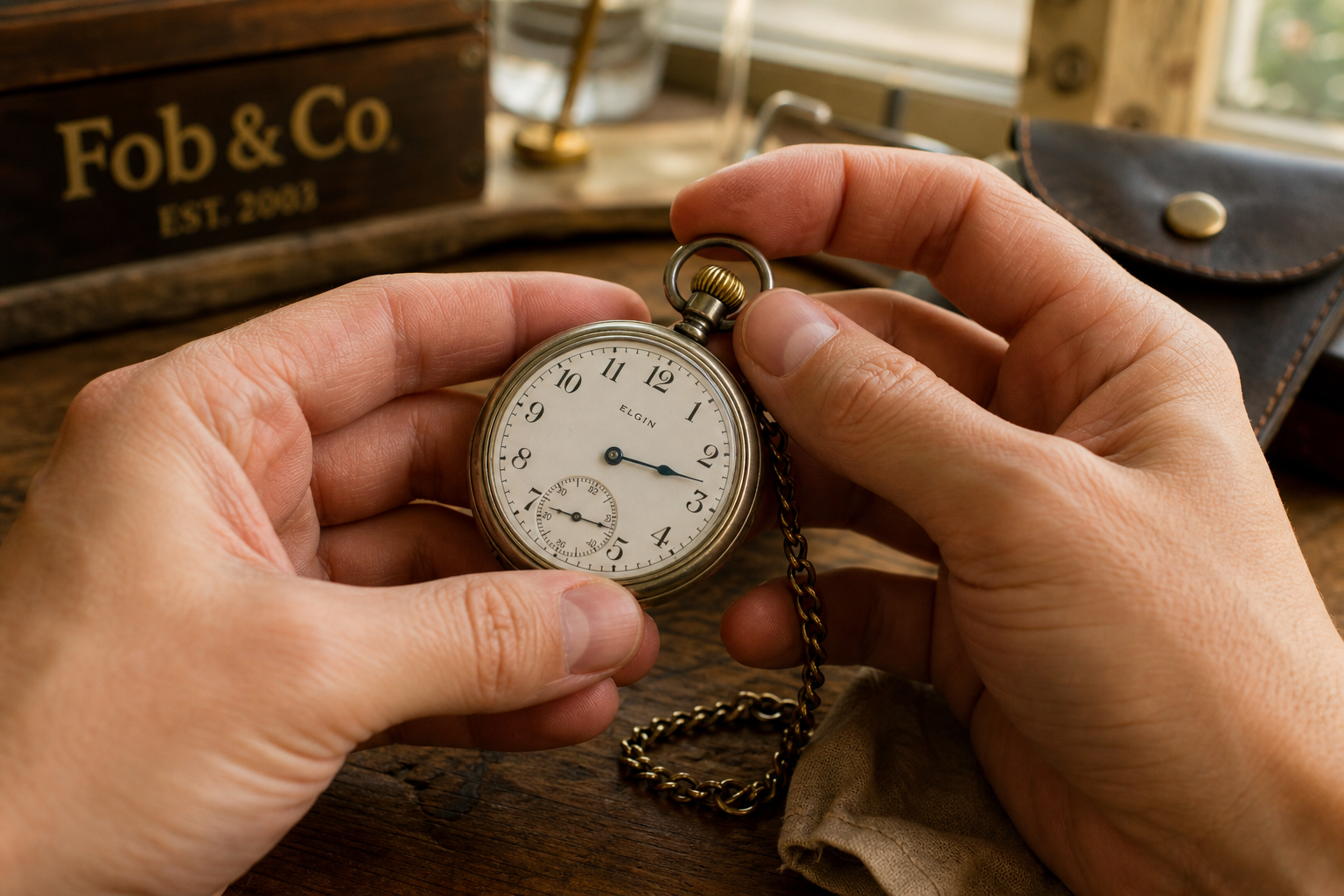
Power reserve. Cheaper movements often run 24 to 30 hours on a full wind, meaning you need to wind at roughly the same time every day or it’ll stop overnight. Better movements stretch to 36 or 40 hours, which gives you a bit of a buffer if you forget one evening.
Crown size and grip. If the watch is a gift for someone with arthritis or reduced hand strength, a larger, more textured crown makes a real difference. Have a look in person or check close-up photos before buying online.
Whether it needs engraving. A lot of our customers buy pocket watches as groomsmen gifts or retirement presents, and if that’s you, our engravable pocket watches are designed with a smooth case back specifically for that purpose. Get any engraving done before the recipient starts winding and wearing it daily, since a watch that’s already seeing regular use is harder to send off for that step later.
Chain and accessories. A pocket watch on its own doesn’t do you much good without something to secure it to your waistcoat or belt loop. Browse our accessories range for chains, fobs, and cases that suit the watch you’re after.
Budget and clearance stock. If you’re after genuine mechanical movement without the premium price tag, it’s worth checking our clearance range before you commit to full price. Stock rotates, so what’s there changes, but the winding and setting mechanism on a clearance piece works exactly the same as full-price stock.
Fob watches for shift work. Not every buyer wants a chain-and-waistcoat pocket watch. If you’re buying for someone in healthcare, the clip-on fob watches in our pocket watch and fob watch range use the same winding principles in a format built for a working shift rather than formal wear.
What Should You Do in the First Few Weeks?
We get a lot of the same questions from customers in the first few weeks of owning a mechanical pocket watch, so here’s what we tell them.
Wind it at the same time each day. Pick a moment that’s easy to remember, first thing in the morning works well for most people, and make it a habit. Consistent winding keeps the mainspring tension more even, which in turn keeps timekeeping more consistent.
Stop the moment you feel firm resistance. You genuinely cannot “overwind” a modern pocket watch in the sense that damages the spring through gentle turning, but you absolutely can strip the winding mechanism by forcing the crown past its stopping point. If it feels stiff and stops turning, it’s full. Leave it there.
Don’t set the time between 9pm and 3am on the dial. On a lot of movements this is when the date-change mechanism (if fitted) is mid-cycle, and forcing the hands through this window can damage the internal gearing. If you need to change the time significantly, run the hands forward through a full 24-hour cycle rather than jumping backwards.
Take it off the chain before winding if it feels awkward. There’s no mechanical reason you need to, but a lot of people find they get a cleaner grip on the crown with the watch resting in their palm rather than swinging from a waistcoat pocket.
Have it serviced every three to five years. Even with perfect winding habits, the oils inside a mechanical movement dry out over time. A proper service from a qualified watchmaker keeps the movement running smoothly and catches small wear issues before they become expensive ones.
Keep it away from magnets. Mobile phone speakers, laptop edges, and magnetic clasps can all throw off a balance wheel’s timing. It won’t stop the watch, but you might notice it running fast or slow until it’s demagnetised.
FAQ
What is the best way to wind a pocket watch?
Hold the watch in one hand and turn the crown clockwise in short, steady turns using your fingertips, not the chain or your whole wrist. Stop as soon as you feel firm resistance, which usually happens after 15 to 25 turns depending on the movement. Winding at the same time each day, rather than randomly through the week, keeps the mainspring tension even and the timekeeping more consistent.
How do I know which pocket watch is right for me?
Start with how you’ll wear it: open face styles suit daily use since the crown is always at 12 o’clock and easy to reach, while full hunter cases suit anyone who wants the dial protected and doesn’t mind an extra step when winding. From there it comes down to case material and finish, brass and bronze for a warmer, aged look, gold for something more formal.
What should I look for when buying a mechanical pocket watch?
Check the power reserve (aim for at least 30 hours so a missed evening wind doesn’t stop the watch overnight), the size and grip of the crown, and whether the case back suits engraving if it’s a gift. It’s also worth sorting a chain or fob at the same time, since a pocket watch needs something to secure it to a waistcoat, belt loop, or uniform.
Are there budget-friendly pocket watch options?
Yes, and the winding mechanism on a lower-priced mechanical movement works the same way as it does on a premium one. Our clearance stock rotates regularly and often includes genuine mechanical pieces at a reduced price, which is a good place to start if you’re buying your first one and want to learn the winding routine before spending more.