
How to Wear a Pocket Watch With a Suit or Waistcoat
What Wearing a Pocket Watch Involves
Wearing a pocket watch properly is really three decisions stacked on top of each other: where it sits, how the chain runs, and how you hold everything together when someone asks you the time. It’s not complicated, but it’s easy to get sloppy about, and a watch dangling loose or a chain pulled too tight looks worse than not wearing one at all.
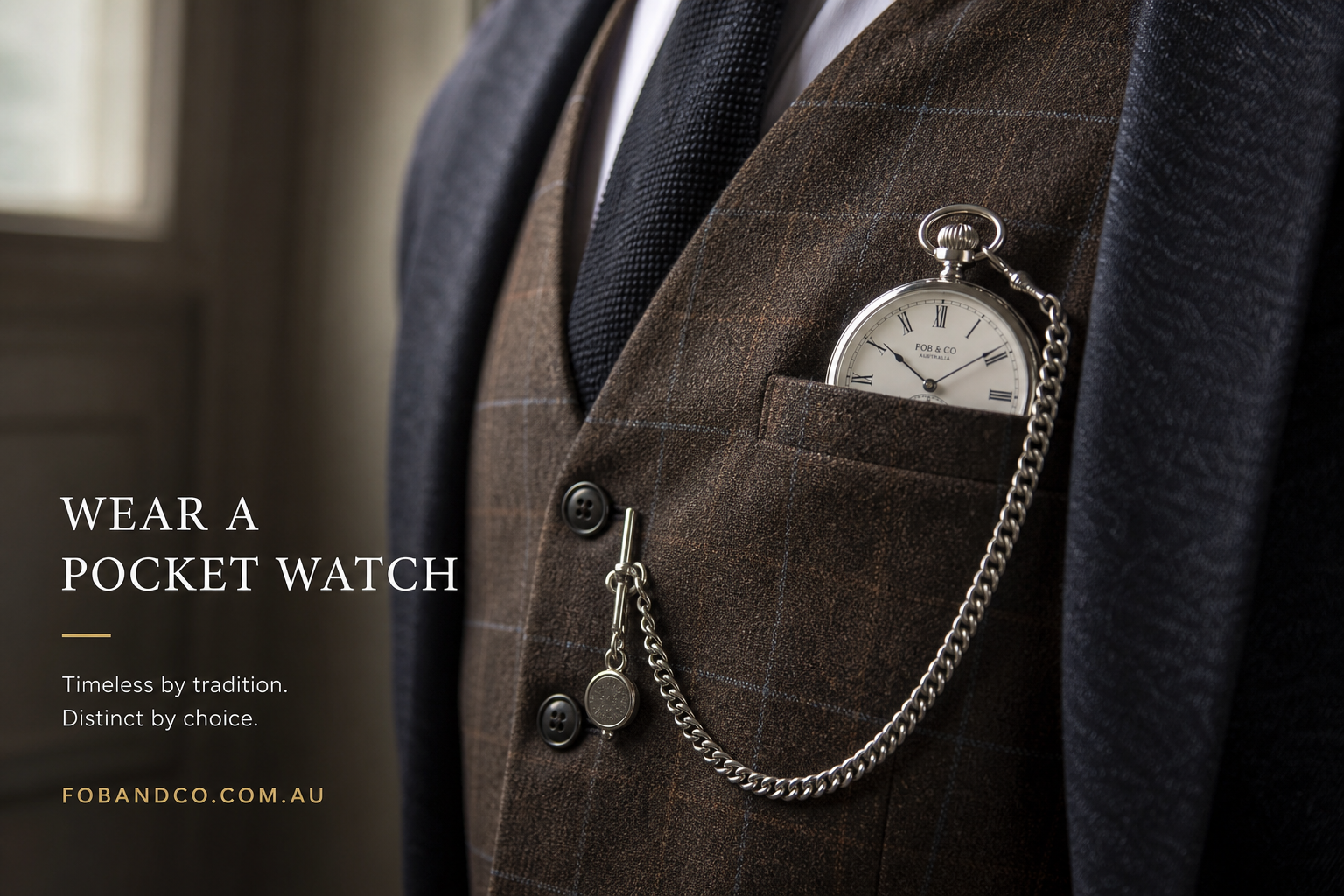
With a waistcoat, the watch itself sits in the small waistcoat pocket (usually the right-hand one), the chain crosses the front, and the far end clips to a buttonhole with a T-bar or a lobster clasp. With a suit and no waistcoat, you’re working with a trouser pocket instead, and the chain either loops through a belt loop or attaches to a lapel via a chain clip. Both are correct. Which one you use depends on what you’re wearing underneath the jacket.
The reason this matters for a wedding, a race day or even a smart work event is that a pocket watch is one of the few accessories left that people actually notice and ask about. Get it right and it reads as considered. Get it wrong, chain swinging loose, watch bulging awkwardly against the fabric, and it reads as a costume piece rather than something you actually wear.
Choosing the Right Pocket Watch
Start with the case size. Most pocket watches sit between 40mm and 55mm across. Anything under 45mm reads elegant and understated under a waistcoat; anything over 50mm is a statement piece that suits a full hunter case or a heavier chain. If this is your first pocket watch, 44-48mm is the safe middle ground, big enough to read easily, small enough not to look like you’re carrying a small clock.
Next, match the metal to what you’re already wearing. If your cufflinks, belt buckle or wedding ring are gold-toned, a gold pocket watch keeps everything consistent. If you’re leaning towards darker, more rugged tones (tweed waistcoats, brown leather), a bronze pocket watch or a brass pocket watch sits better than polished silver. For a black-tie or formal dark suit, a black pocket watch case reads modern and sharp without competing with the rest of the outfit.
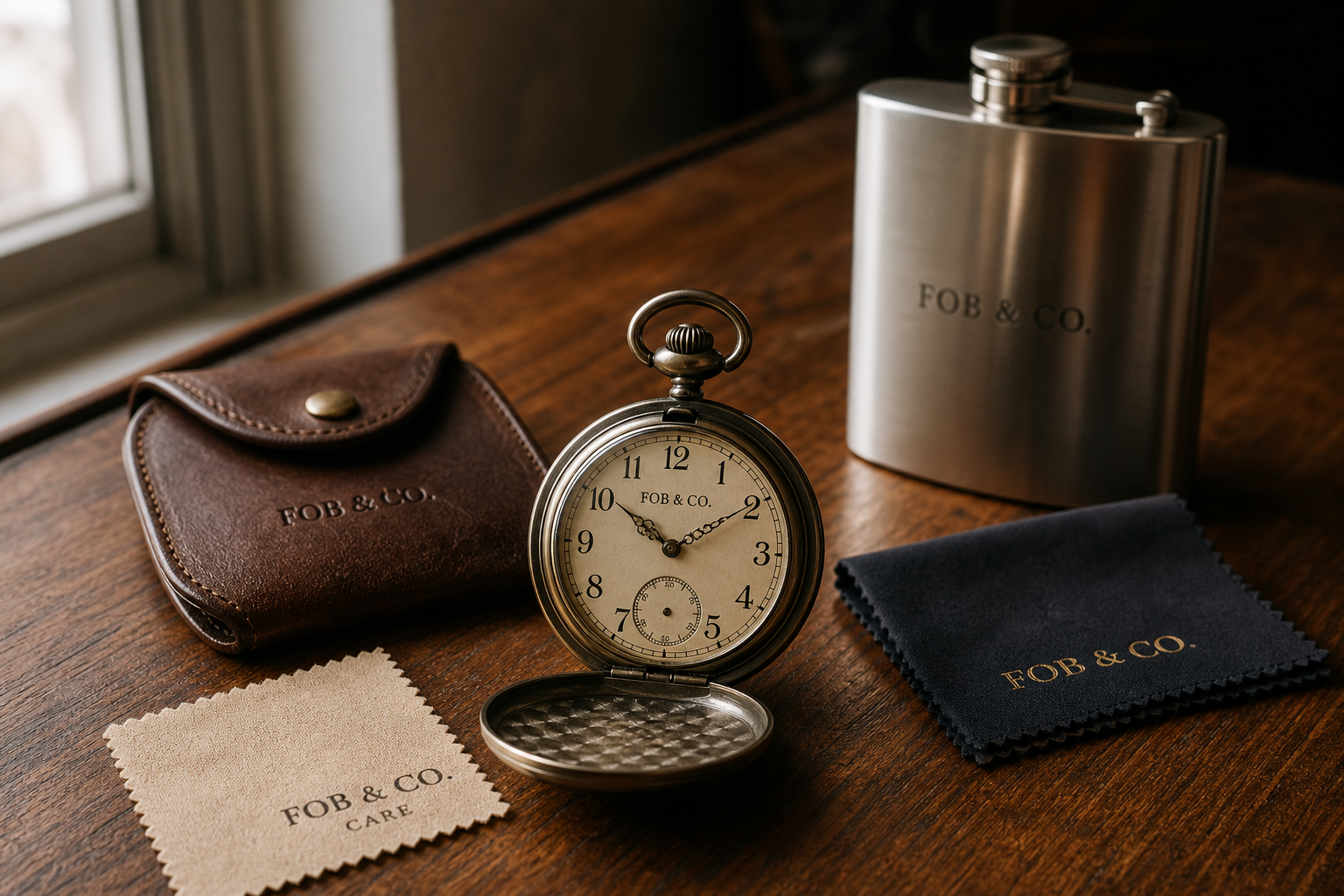
Then there’s the case type itself. An open-face case shows the dial straight away when you flip it out, which is quicker and a little more casual. A hunter case has a hinged cover that snaps shut over the glass, protecting it and adding a small ceremonial moment when you open it, which a lot of blokes find is half the fun of owning one. We’ll go through both properly in the next section.
Top Styles and Options
Full Hunter for Ceremony and Weight
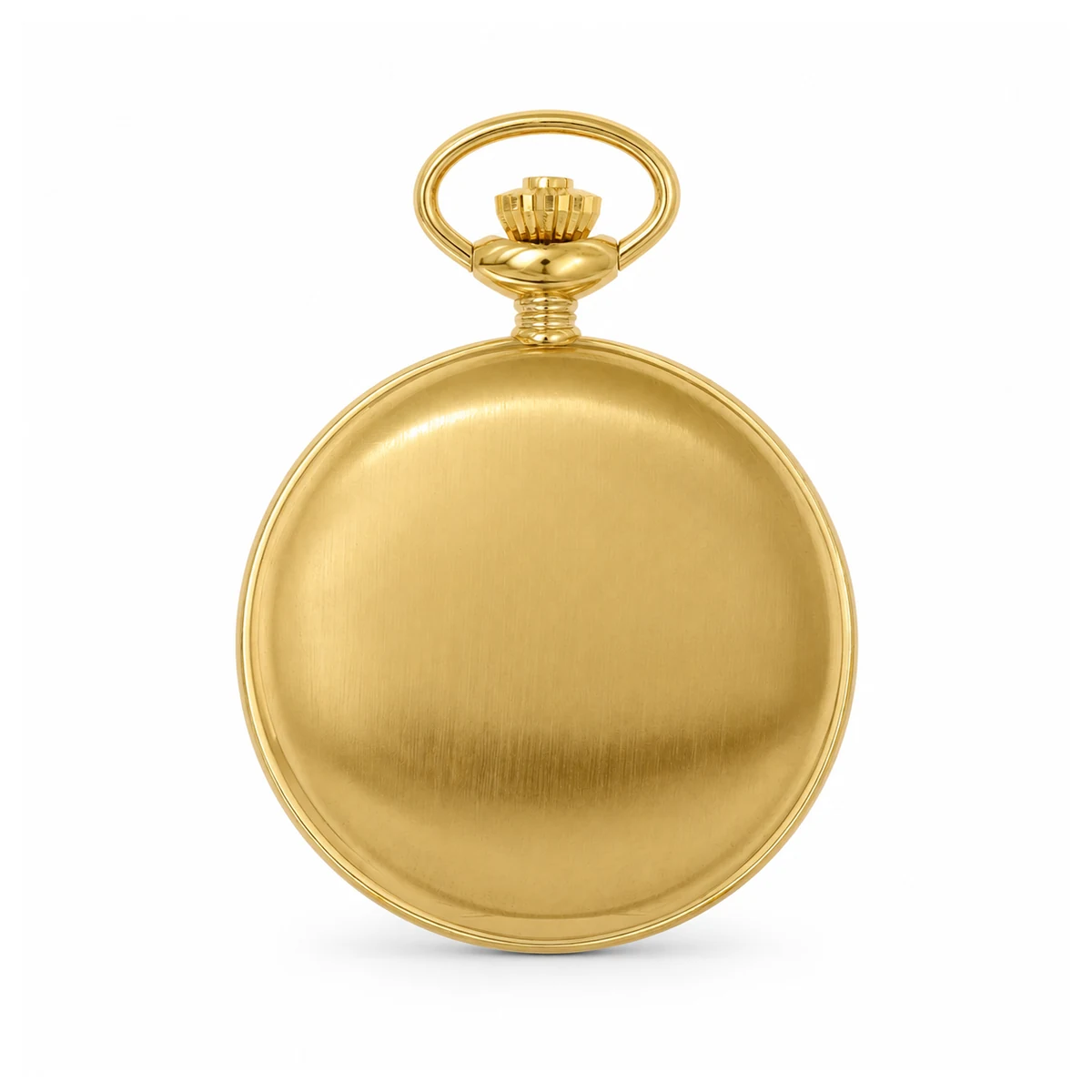
A full hunter pocket watch has a solid metal cover over the dial that you flick open with your thumb. It’s the style most people picture when they think “old-fashioned pocket watch,” and it’s the one that gets the best reaction at a wedding, because there’s a small physical ritual to checking the time rather than just glancing down. The trade-off is a slightly thicker case, so it sits a touch more prominently in a waistcoat pocket.
Classique for Everyday Reliability
If you want something you’ll actually reach for outside of formal events, the classique pocket watch range is built around clean, legible dials and a slimmer profile that doesn’t fight with your trouser or waistcoat pocket. These are the ones we sell most to blokes who want a daily-wear piece rather than a once-a-year prop, and there’s a rotating clearance classique selection if you want a well-made watch without the full retail price.
Engravable for Gifting and Groomsmen
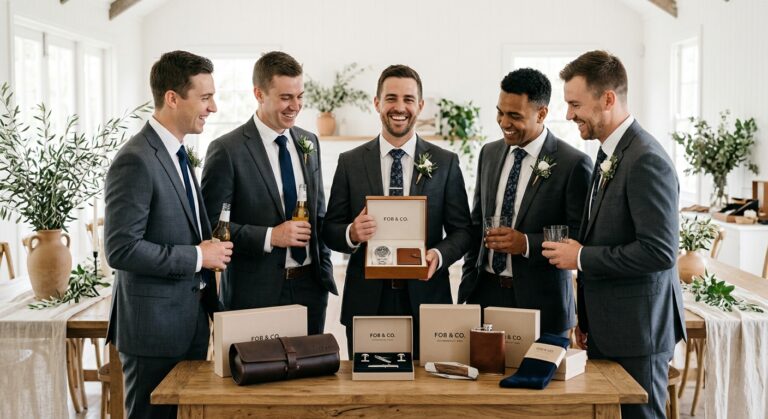
If you’re buying for a groomsmen party or as a gift, look at the engravable pocket watch collection. A name, a date or a short line on the case back turns a nice watch into a kept one, and it’s the single most common request we get from grooms sorting out gifts the week before a wedding.
Nurses Watches for a Practical Take
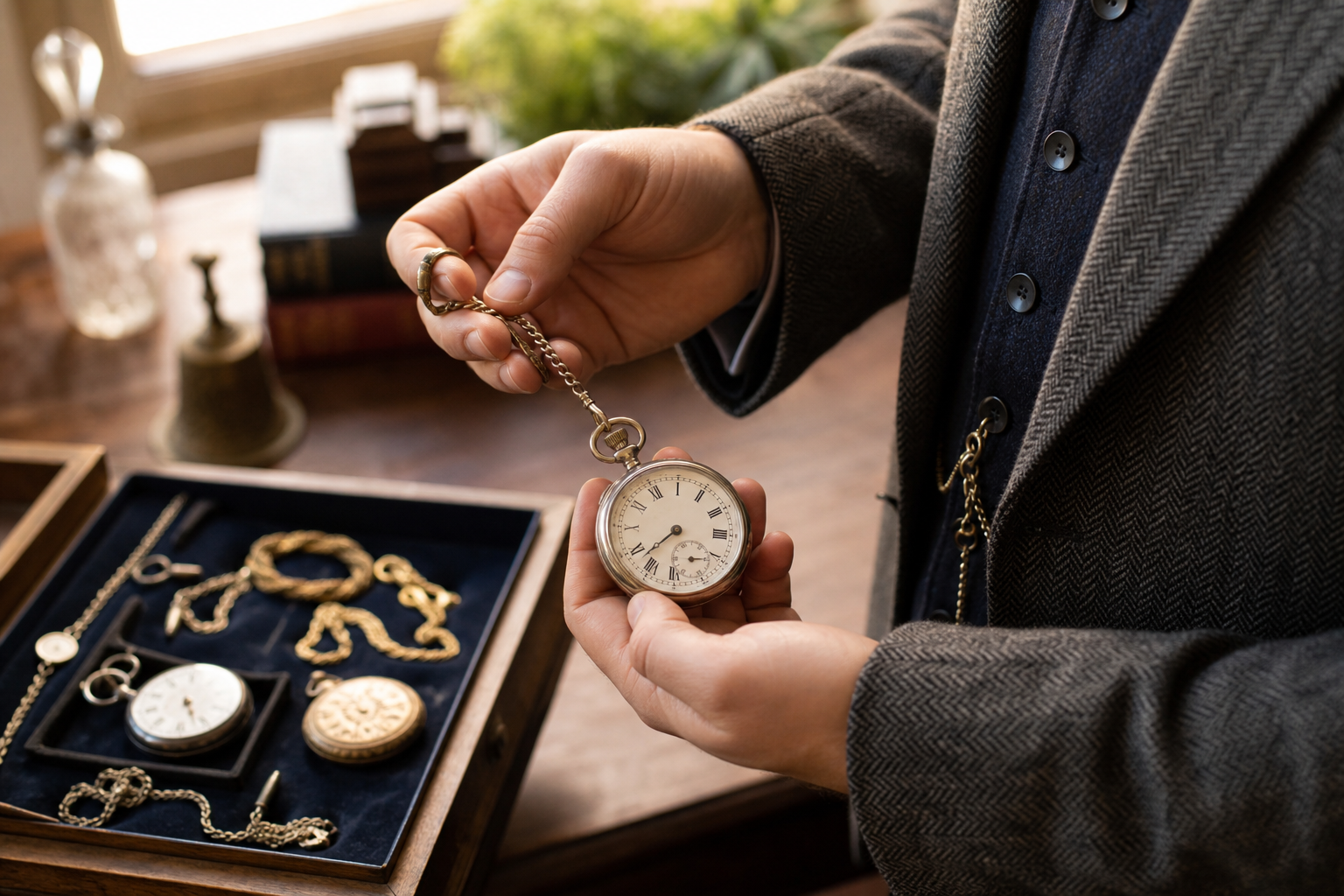
Slightly separate from the formal-wear conversation, but worth a mention: if you or someone in your household needs a watch for shift work rather than styling, the fob watches in our pocket watch and fob watch range use the same fob-and-clip principle but suit a uniform pocket rather than a waistcoat, with a durable case and an easy-read dial.
What to Consider Before You Buy
Chain length is the detail people get wrong most often. A single Albert chain for waistcoat wear should be long enough that it sits with a slight, natural dip across the front, not pulled taut in a straight line and not so loose it hangs below the waistcoat’s bottom button. As a rough guide, measure from one buttonhole across to the pocket you’re using and add about 4cm of slack. Browse our full range of pocket watches and you’ll notice chain length is listed on every product page for exactly this reason.
Second, think about how you’ll actually attach it. A T-bar clip goes through a buttonhole and sits flat against the fabric, which is the classic waistcoat method. A lobster clasp clips onto a belt loop, which works better if you’re wearing a suit without a waistcoat. If you’re not sure which your outfit needs, our pocket watch chains page explains both fittings with photos so you’re not guessing on the day.
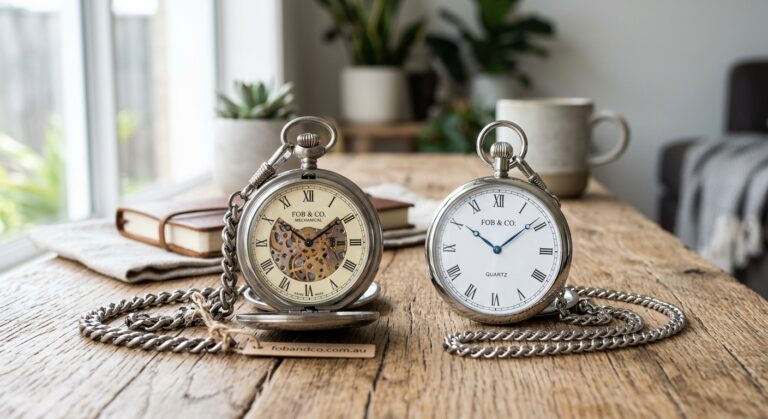
Third, decide on your budget honestly before you start browsing, because pocket watches vary a lot in price depending on movement type (quartz versus mechanical) and case material. If you’re kitting out four or five groomsmen, our clearance range is worth checking first. You’ll still get a proper working watch and chain set, just from a previous season’s stock, and the saving across a full groomsmen party adds up fast.
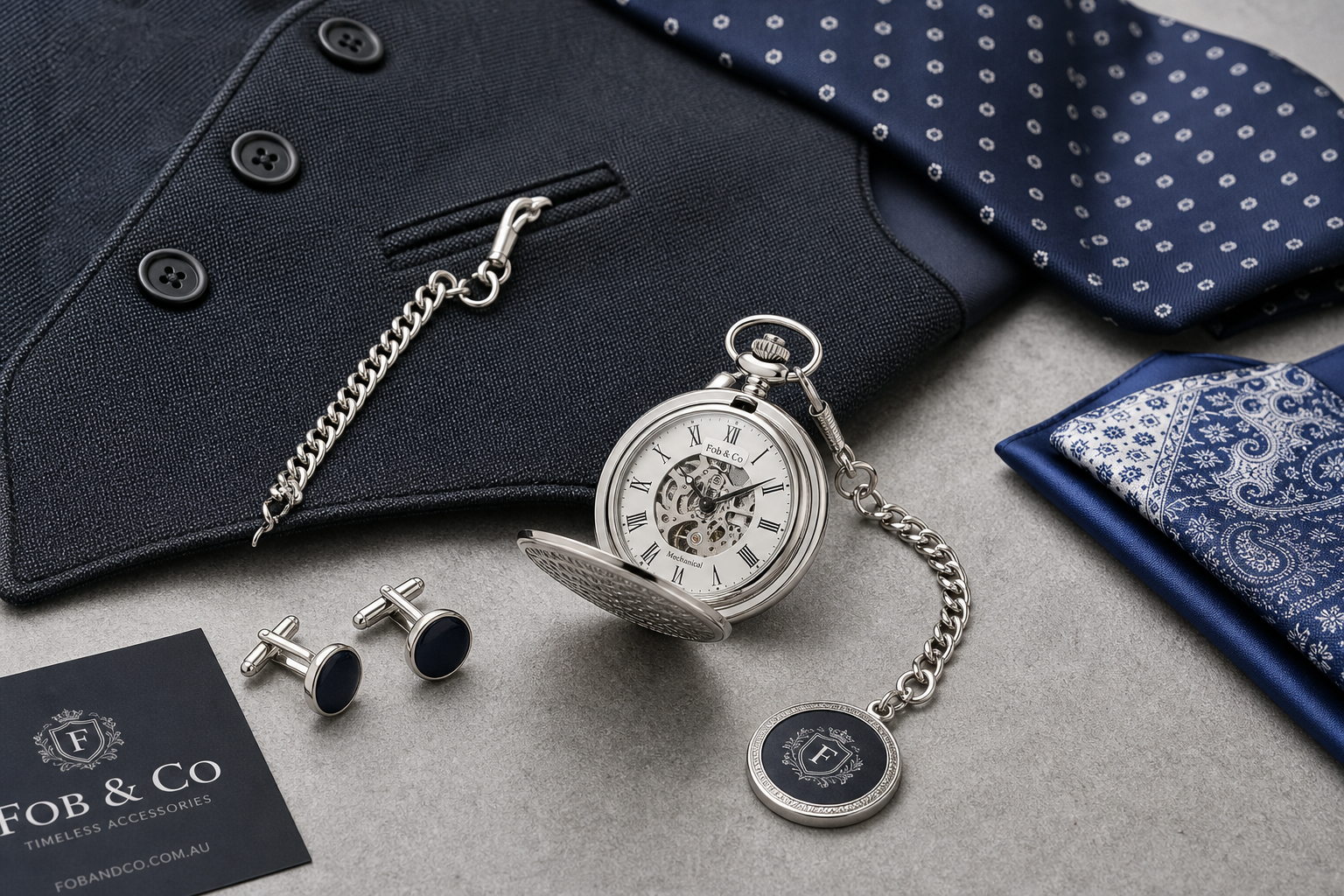
Finally, don’t forget the accessories that finish the look. A watch on its own in a pocket looks unfinished next to cufflinks, a tie bar or a hip flask tucked into a breast pocket. Our accessories range is built to pair with the pocket watches, so the metal tones and finishes actually match rather than clashing.
Tips From the Experts
Practise the draw before you need it in public. Sounds obvious, but the number of grooms who fumble getting a watch out of a waistcoat pocket for the first time in front of 80 guests is higher than you’d think. Do it a few times at home in the mirror so the chain doesn’t tangle and the watch comes out dial-up.
Keep the chain visible but not showy. One or two links of drape between the buttonhole and the pocket is elegant. A long swinging loop that reaches your belt is closer to fancy dress than tailoring, according to most menswear guides on formal accessories (Gentleman’s Gazette).
Match the era, don’t fight it. If your suit is a modern slim cut, a slimmer classique case with a simple single Albert chain looks intentional. Pairing a huge full hunter case and a heavy double Albert with a modern slim-fit suit tends to look like two different outfits collided, and it’s one of the most common styling mismatches menswear writers flag when covering formal wear (GQ).
Wind it, or check the battery, the night before. Nothing kills the moment like pulling out a watch that’s stopped at 3:47 from three weeks ago. Mechanical movements need a manual wind roughly every 24 to 36 hours depending on the calibre, and it’s worth building that into your morning routine the week of an event.
If you’re buying for a full bridal party, order early. Engraving and chain-length adjustments take time, and leaving it to the week before means you’re choosing from whatever’s left in stock rather than what actually suits each groomsman.
FAQ
What is the best way to wear a pocket watch?
With a waistcoat, keep the watch in the small right-hand pocket, run the chain across the front with a slight dip, and clip the T-bar through a buttonhole. Without a waistcoat, a trouser pocket with the chain clipped to a belt loop works just as well and looks equally deliberate.
How do I know which pocket watch is right for me?
Match the case metal to your other accessories (gold, bronze, brass or black), pick a size between 44 and 48mm if it’s your first one, and decide between an open-face case for quick reads or a hunter case for a bit more ceremony. If you want something for daily wear rather than occasion-only, the classique range is built for exactly that.
What should I look for when buying a pocket watch?
Check the chain length is listed and matches your outfit, confirm whether the fitting is a T-bar (buttonhole) or lobster clasp (belt loop), and check whether the movement is quartz or mechanical since that affects how often you’ll need to reset or wind it. If it’s a gift, check whether the case back can be engraved.
Are there budget-friendly pocket watch options?
Yes. Our clearance range carries proper working pocket watches and chains from previous seasons at a reduced price, which is particularly useful if you’re outfitting a whole groomsmen party. The clearance classique watches specifically are a good starting point if you want quality without paying full retail on five or six pieces at once.