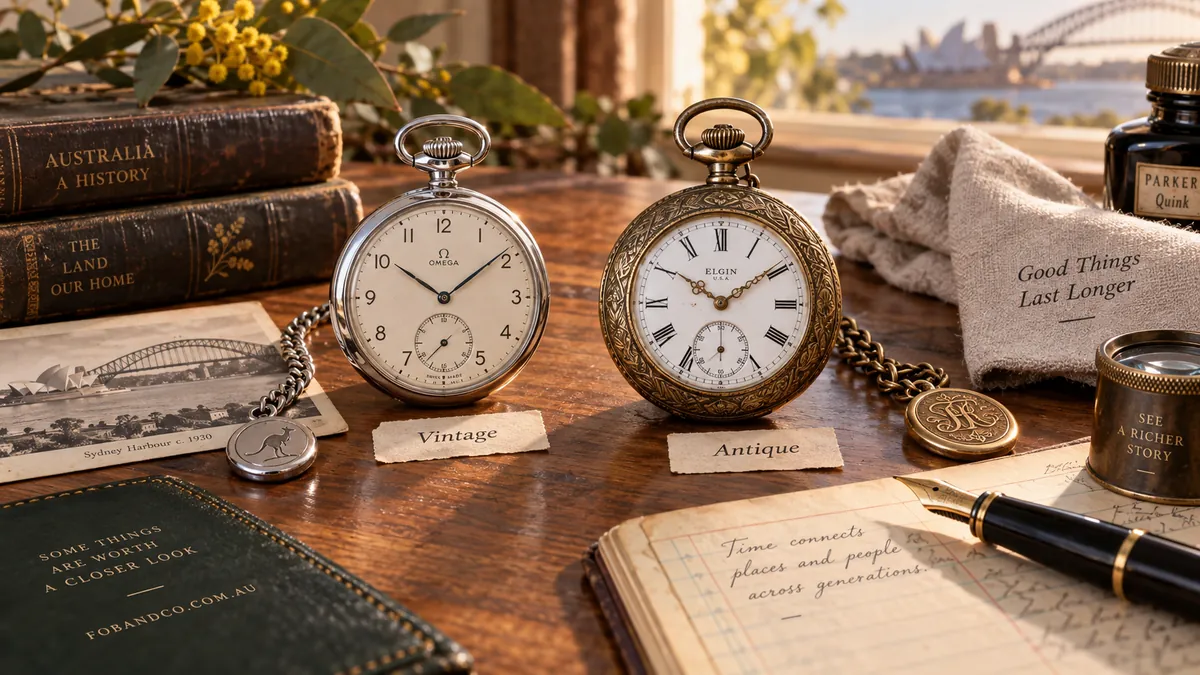

Pocket Watch Size Guide: How to Choose the Right Case Diameter
Why Pocket Watch Size Matters
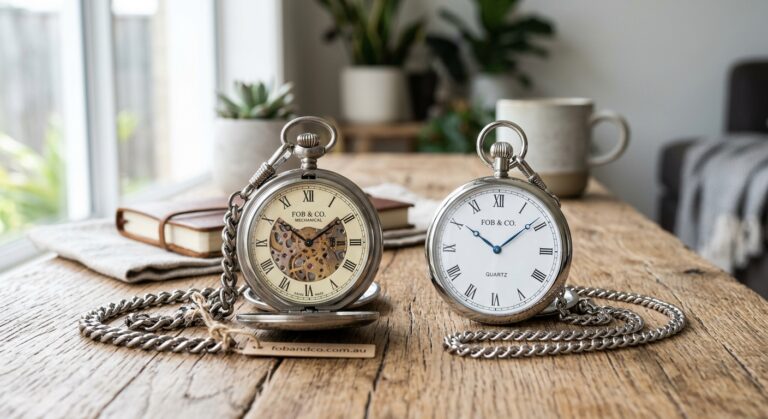
A pocket watch size guide is simply a way to compare the diameter of the watch case before you buy. Unlike a wristwatch, which is seen against a wrist, a pocket watch is held in the hand, tucked into a waistcoat pocket or worn from a belt loop. That changes how size feels. A 50 mm pocket watch is only 6 mm wider than a 44 mm model, yet in the hand it can feel noticeably heavier and more present.
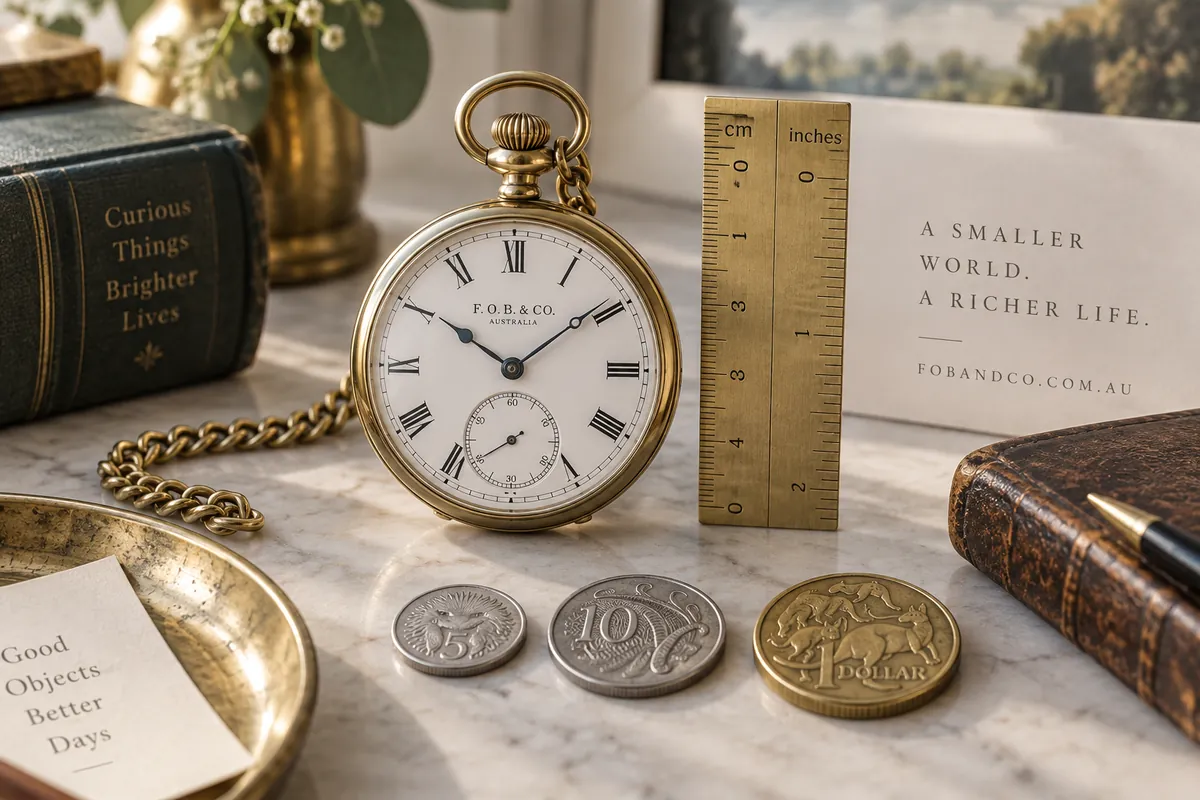
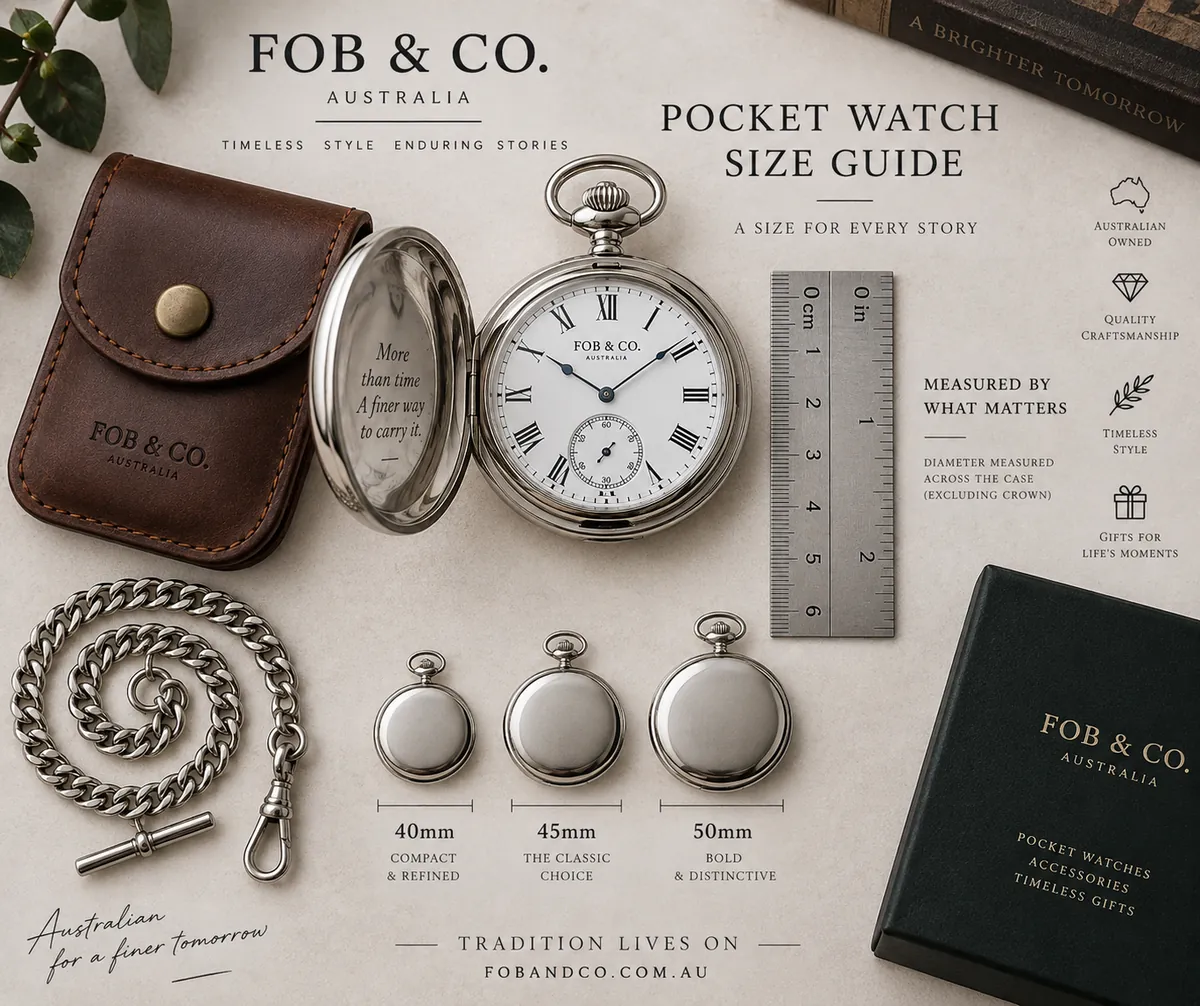
Case diameter is measured across the widest part of the round case, excluding the crown and bow at the top. It is usually listed in millimetres. If a product description says 45 mm, that is the body of the watch, not the full height from the base to the bow. This is worth knowing before judging a watch from product photos, where there is rarely a ruler nearby to keep things honest.
For most people, 45–47 mm is the sweet spot. It looks purposeful without dominating a waistcoat pocket, is easy to read at a glance and suits a broad range of hands. Smaller cases feel refined and old-fashioned in the best sense. Larger cases make more of an occasion of themselves, particularly as an engraved wedding gift or retirement present.
The watch’s visual weight is affected by more than its measurement. A slim, open-face 46 mm design can appear lighter than a 44 mm full hunter with a thick lid. A pale dial tends to make a case look larger; a black dial, dark case or ornate engraving can make the same diameter appear denser and more compact. That is why browsing the full pocket watch collection side by side is more useful than relying on a single number.
Pocket watches also carry a long history of being practical personal objects rather than oversized ornaments. The Smithsonian’s watch collection shows how portable timekeeping developed into objects made for daily use, dress and commemoration. Modern pocket watches can be chosen with the same practical eye: pick a size that will be used, not merely admired in its box.
Choosing a Case Diameter
Start with where the watch will live. For a waistcoat pocket, 42–47 mm is generally comfortable. It slips into the pocket without creating a large round outline and leaves room for the chain to sit naturally. For trouser-pocket use, a smaller 40–44 mm watch is often more comfortable, especially if keys and a phone are competing for space. A 48–50 mm model can work well in a coat pocket or as a special-occasion piece.
Small cases: 40–44 mm
This range is best for someone who prefers understated jewellery or has smaller hands. It suits a neat three-piece suit, a formal dinner outfit and anyone who wants a pocket watch to feel traditional rather than theatrical. A compact watch is also a sensible choice for a younger recipient, provided they are old enough to care for it properly. The dial will be smaller, so favour clear Arabic numerals or Roman numerals with good contrast.
Medium cases: 45–47 mm
If you are buying a first pocket watch as a gift, choose this range unless you have a strong reason not to. It is readable, feels satisfying to hold and works with most chains. Many engravable pocket watches sit comfortably in this middle ground because there is enough case-back space for initials, a date or a short message without turning the watch into a dinner plate.
Large cases: 48–50 mm
Large cases suit people who like a definite presence. They work particularly well for milestone gifts, groomsmen presents and watches with skeleton dials, where a larger opening gives the movement more room to be seen. They also suit someone with larger hands who finds a 42 mm case a little fiddly. Just remember that a large hunter watch can be quite thick, and thickness is every bit as relevant as diameter when it is going into a fitted waistcoat pocket.
For a wedding, think about the wearer’s outfit before chasing the biggest case. Brides’ groom style guidance makes the useful point that accessories should support the overall outfit rather than compete with it. A medium-sized watch with a simple chain normally does that job better than an oversized piece with several competing finishes.
Styles and Size Options
The case style changes how diameter reads, so a pocket watch size guide should never be used in isolation. Open-face, full hunter and half hunter watches can share a 46 mm diameter but offer three quite different experiences.
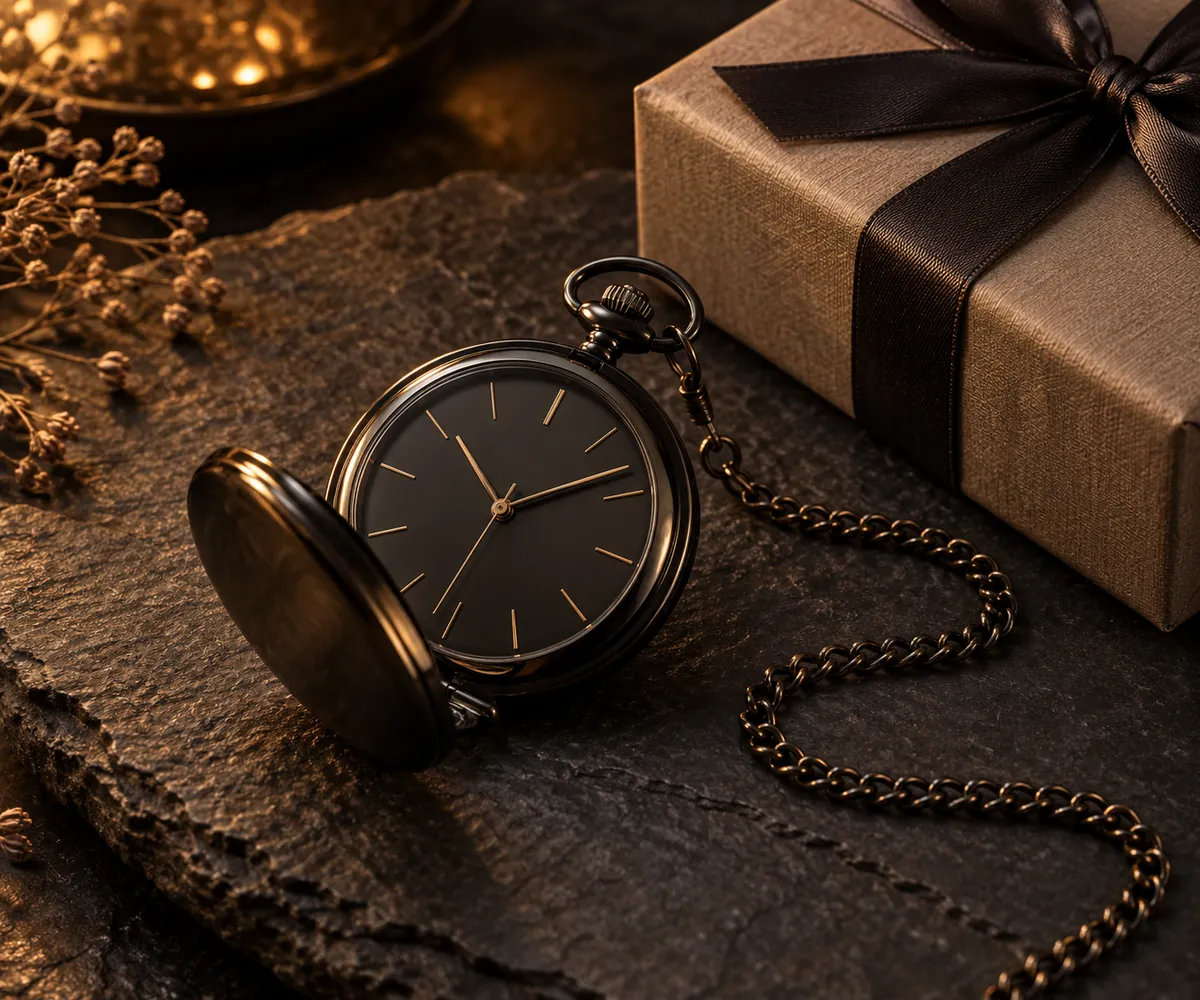
An open-face watch has no protective front lid. It is the simplest format, with the dial immediately visible when the watch is drawn from a pocket. At 40–46 mm, open-face watches tend to feel clean and light. They are a good fit for someone who values quick readability and a less formal look. A dark finish can make an open-face watch feel contemporary; the available black pocket watches are useful examples of how colour can change the apparent scale.
A full hunter has a lid that closes over the dial. The lid adds protection and ceremony: open it, read the time, close it again. Because it adds visual depth, a 44 mm full hunter can feel as substantial as a 47 mm open-face design. Browse full hunter pocket watches if the recipient likes a classic object with a little ritual built in.
A half hunter sits between the two. Its lid has a small window, allowing the time to be read while closed, often with hour markers around the opening. This format is excellent for formal wear because it looks detailed without requiring a particularly large case. A 45–47 mm half hunter usually has enough dial presence while remaining easy to carry. The half hunter range is a sensible place to compare this format against an open-face alternative.
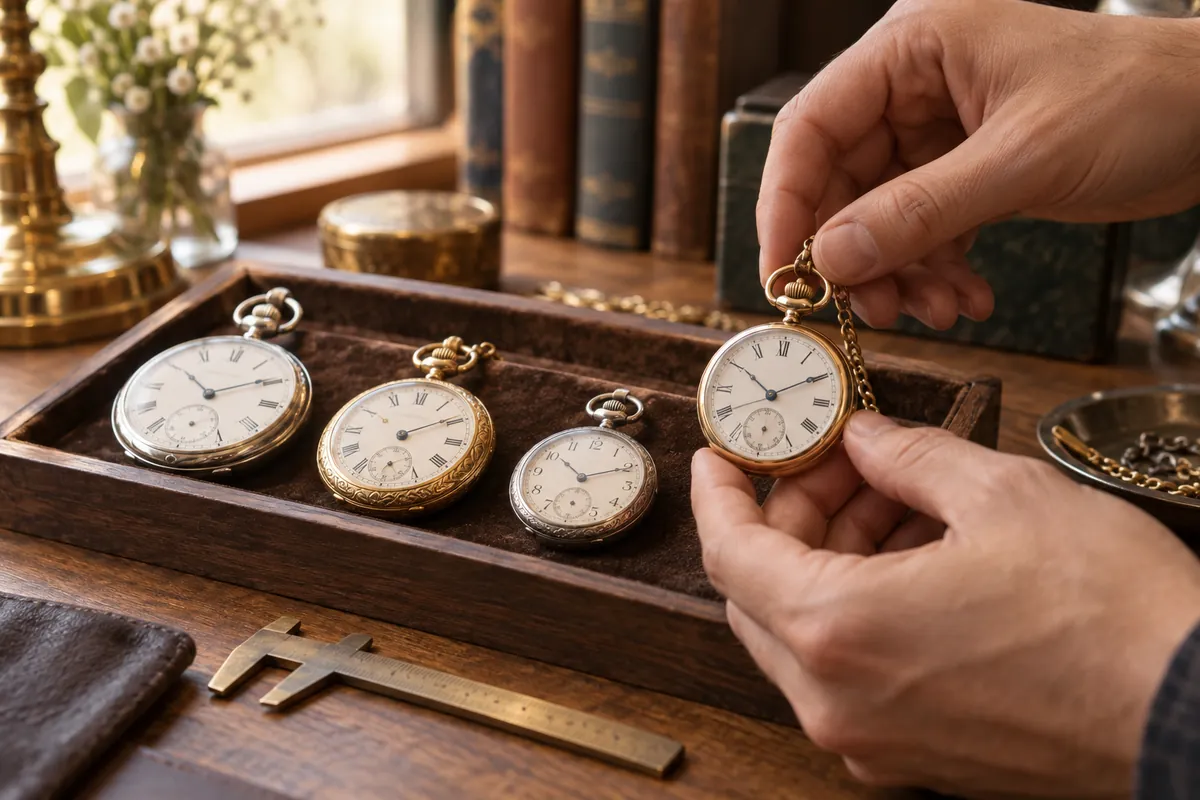
Finish matters too. Brass and gold-tone cases reflect more light and can appear larger than a black or silver-tone watch of the same size. A warm brass case has an old-world feel, especially with Roman numerals and a traditional chain. See the brass pocket watch selection if that warmer, heritage look is the aim. Gold-tone models can look especially effective with navy, charcoal and black tailoring, but choose the chain finish to match.
Before You Buy
Before settling on a diameter, check four things: case thickness, dial legibility, chain attachment and intended use. These details prevent the common mistake of buying a visually appealing watch that does not suit the person who will carry it.
Thickness is often overlooked. A slim 45 mm open-face watch may disappear neatly into a waistcoat pocket. A 45 mm hunter case, especially one with a raised crystal and lid, has more depth. Neither is better; the point is to picture it in the intended pocket. If the wearer will use a slim vest pocket, medium diameter and moderate thickness are usually the safest combination.
Dial legibility matters more with smaller cases. A detailed skeleton dial may be striking at 50 mm, but at 40 mm the visible mechanics and minute markers can become busy. For daily reading, choose strong contrast between hands and dial, distinct hour markers and a design that still makes sense at arm’s length. People often decide based on a close-up photo, then discover that the real test is a quick glance during a speech or at a reception.
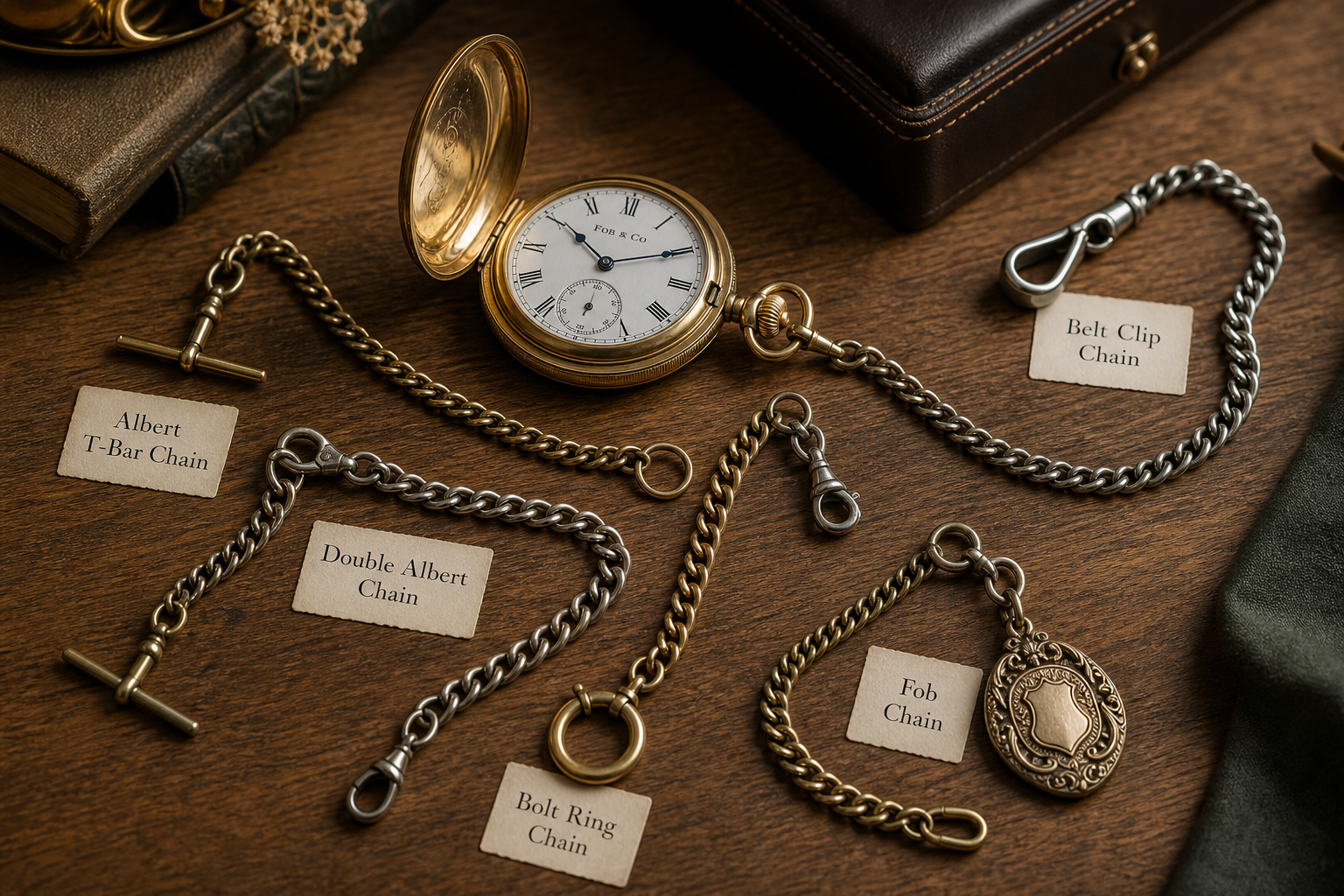
The chain is part of the fit. A watch carried in a waistcoat needs enough chain length to reach the buttonhole or pocket opening comfortably, with a little relaxed curve rather than a taut line. A belt-loop attachment needs a different arrangement. The dedicated pocket watch chains range helps you match the attachment and finish to the watch rather than treating the chain as an afterthought.
Finally, buy for the occasion and the person. A smaller traditional case may suit a father who wears tailored clothing occasionally. A larger, engraved case might better suit a groom receiving a keepsake on the wedding morning. For father-focused gifts, the Dad pocket watch collection gives a useful starting point. If your budget is tight, browse clearance pocket watches, but still check the diameter and style rather than buying solely on price.
Wedding etiquette sources such as Martha Stewart’s groom accessory guide consistently favour a considered, coordinated finish. For a pocket watch, that means one well-chosen case, one suitable chain and a finish that belongs with the outfit. It does not mean piling on every possible accessory.
Tips From Pocket Watch Experts
Use a ruler before ordering. Cut a circle from paper at 42 mm, 46 mm and 50 mm, then hold each one in your hand and against a waistcoat pocket. It sounds almost too basic, but it immediately shows why 4 mm can make a difference. If the watch is a surprise gift, use this method with the recipient’s usual jacket or vest if you can do so quietly.
For a first pocket watch, I would choose a 45–47 mm case with a clear dial and a straightforward chain. It is the least risky choice for comfort, readability and styling. Go smaller only if the person is known to prefer discreet accessories. Go larger when the watch is intended as a statement gift, or when a skeleton dial or engraving needs more room.
Do not confuse case diameter with quality. A carefully finished 42 mm watch can feel more special than a bulky 50 mm design. Look at the alignment of the dial, clarity of the crystal, action of the crown, solidity of the bow and the finish around the hinge if it has a lid. These are the details a recipient notices after the novelty of opening the box has passed.
For engraving, leave room in the message as well as on the case back. Initials, a date, a set of coordinates or six to twelve well-chosen words usually read better than a long paragraph in miniature. A medium or larger case can provide a more comfortable surface, though the available engraving area depends on the design, not diameter alone.
One final practical point: keep the watch and chain in proportion. A compact 40 mm case can look lost on an oversized, heavy chain. A 50 mm hunter can look underdone with a very fine chain. Matching metal colour is the easiest route, but mixed finishes can work if they appear elsewhere in the outfit, such as brass buttons or a gold-tone tie bar.
FAQ
What is the best pocket watch size guide?
The most useful guide divides cases into 40–44 mm, 45–47 mm and 48–50 mm. For most adults and most gift occasions, a 45–47 mm pocket watch offers the best balance of readability, comfort and traditional proportion.
How do I know which pocket watch size guide is right for me?
Consider where you will carry the watch, the size of your hands and whether you prefer a subtle or substantial accessory. A paper circle cut to the listed diameter is a quick, reliable way to compare 42 mm, 46 mm and 50 mm before buying.
What should I look for when buying pocket watch size guide?
Check the stated case diameter, case thickness, lid style, dial clarity and chain attachment. Also consider whether the watch is intended for a waistcoat, trouser pocket, coat pocket or a formal occasion where a hunter case may feel more appropriate.
Are there budget-friendly pocket watch size guide options?
Yes. A budget-friendly watch can still be well proportioned and enjoyable to use, particularly in the versatile 45–47 mm range. Focus on a clear dial, dependable case finish and a chain that suits the intended carrying style before adding decorative extras.