
Pocket Watch Box vs Display Case: What’s the Difference and Which Do You Need
Box or Display Case: What’s the Difference?
We get this question a lot from customers who’ve just bought their first pocket watch, or inherited one from a grandparent and have no idea how to look after it properly. The short answer: a box and a display case solve two different problems, and most collectors eventually end up owning both.
A pocket watch box is a closed, padded container designed to keep a watch safe when it’s not on your person. Think lined interiors (velvet, suede or microfibre), a hinged lid that shuts tight, and usually a single-watch footprint. It’s the equivalent of a jewellery box: function over flash. You open it, take the watch out, wear it, put it back, close the lid. Dust, light and knocks never get near the movement.
A display case, on the other hand, is built for visibility. It’s typically got a glass or acrylic front (sometimes a full dome), sits upright or at an angle, and holds multiple watches in individual slots or cushions. You’re not meant to touch the watches in a display case every day; you’re meant to look at them. Collectors who’ve built up a run of full hunter pocket watches or a mix of half hunter styles tend to gravitate toward display cases because the whole point of owning six or seven beautiful pieces is being able to see them without digging through a drawer.
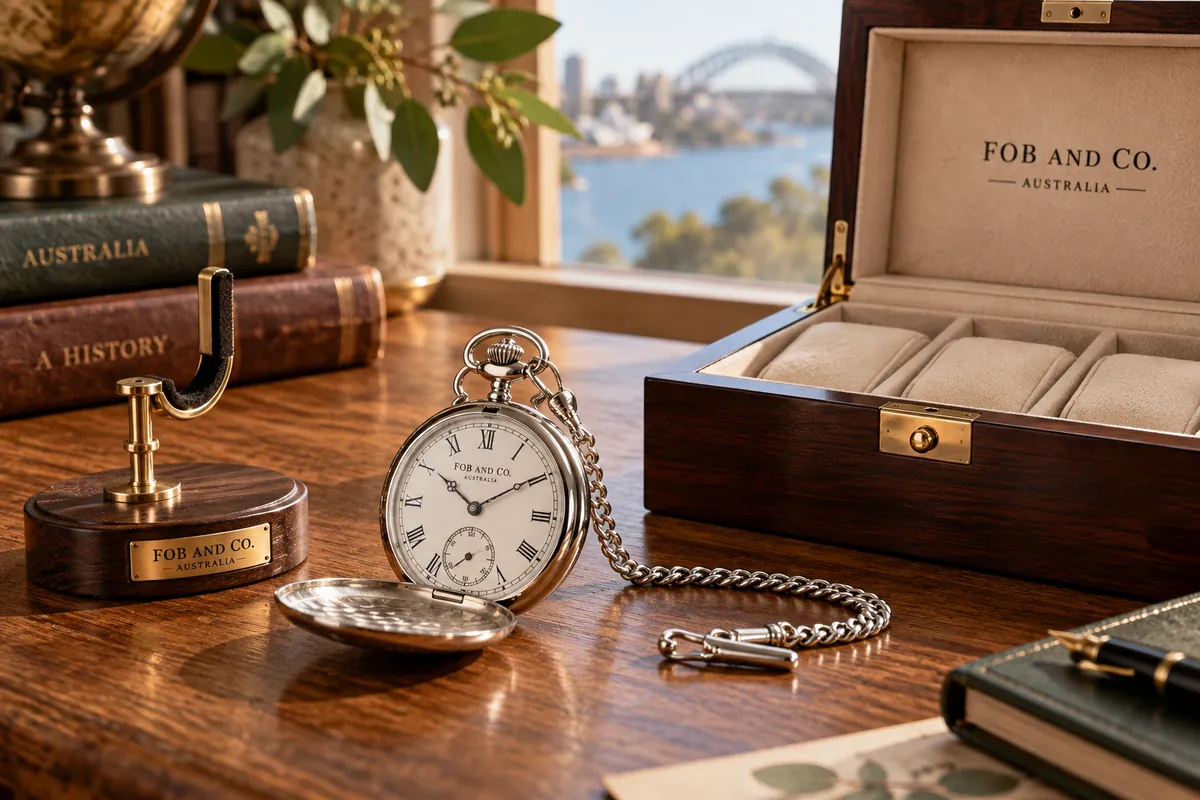
The practical difference boils down to exposure. A box protects against everything: dust, UV light, humidity swings, accidental drops when you’re rummaging around. A display case protects against dust and knocks but accepts a trade-off on light exposure, because the whole idea is that the watch is visible. That trade-off matters more than people think, and we’ll get into why in a minute.
How to Choose the Right One for You
Start with how you actually use the watch. If you wear it most days (say, a dad’s pocket watch that’s become a daily carry piece), a box near your front door or dresser makes more sense than a case gathering dust across the room. You want quick access, not ceremony.
If the watch (or watches) are more about the collection than the wearing, a display case wins. We’ve had plenty of customers tell us they bought their first pocket watch to wear once at a wedding, then got hooked and ended up with eight or nine pieces across brass, gold and black-finish cases. At that point a box doesn’t cut it anymore; you need something that lets you see the whole lineup at a glance, and a case with individual slots does that properly.
There’s also a middle ground worth mentioning: some boxes have a glass lid instead of a solid one, which gives you a bit of both worlds. It’s not as flashy as a proper display cabinet but it’s a smart compromise if you’ve only got one or two watches and don’t want to commit to wall space for a full case.
Budget plays a part too. A single-watch box is usually the cheapest entry point, and it’s worth checking our clearance range if you’re kitting out storage on a tight budget alongside a new watch purchase. Multi-slot display cases cost more because of the glass, the hinges and the extra joinery, but they scale better if you know you’re going to keep adding pieces.
Top Styles and Options to Consider
Within “box” and “display case” there’s a surprising amount of variety, and the right pick depends on what’s actually going inside it.
Single Watch Boxes
These are the most common and the easiest decision. Look for a snug cushion insert so the watch doesn’t rattle, and a lid that closes flush. If your watch is an engravable piece you’re planning to hand down, a solid wood box with a soft lining protects the engraving from scuffing against other metal over time.
Multi-Slot Travel Rolls
Less of a “box” in the traditional sense, these are soft rolls with individual pockets, good for travelling with two or three watches without them knocking together in a suitcase. Not a long-term storage solution, but handy for groomsmen trips or weekends away.
Tiered Display Cases
These hold anywhere from six to twenty watches on raised cushions or hooks, usually behind a hinged glass front. If you’re the type who’s collected across styles, say a double hunter alongside a couple of half hunters and something from the Classique range, a tiered case lets you arrange them by finish or style so the whole shelf looks intentional rather than cluttered.
Wall-Mounted Cases
Good for smaller rooms or offices where shelf space is tight. These mount flush to a wall and usually hold fewer watches (four to eight) but free up your desk or sideboard entirely.
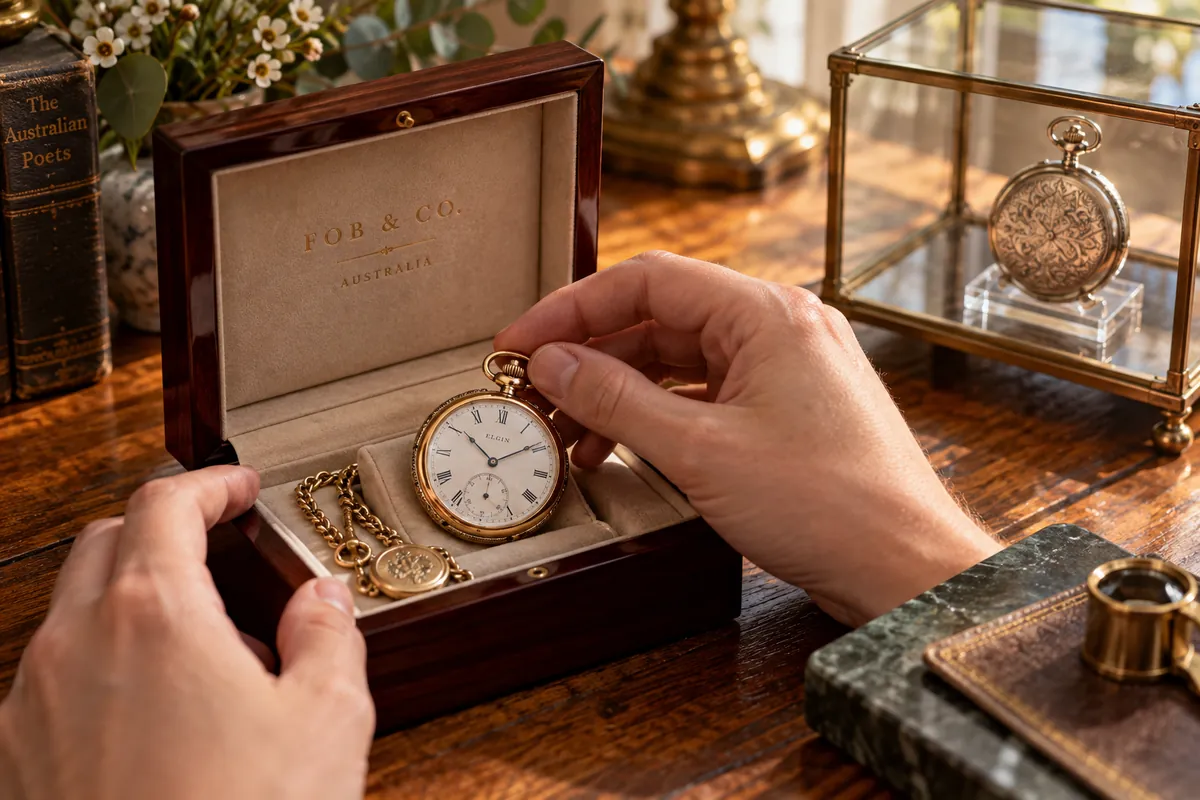
One thing we always tell customers browsing our full pocket watch range: buy the storage to suit the watch, not the other way around. A delicate engraved case deserves a lined box over a bare display hook, while a robust brass piece can handle sitting in an open case without much fuss.
What to Consider Before You Buy
A few things trip people up, and they’re worth sorting out before you spend money.
Light Exposure
This is the big one and it’s genuinely underrated. UV and even strong indoor light can fade dial finishes and discolour leather straps or chain cords over months and years. The Victoria and Albert Museum’s conservation guidance on timepieces notes that prolonged light exposure is one of the leading causes of material degradation in displayed objects, which is exactly why museum display cases use UV-filtered glass rather than standard glass[1]. If your display case is going near a window that gets afternoon sun, that’s a problem worth solving before it starts, not after you notice fading.
Humidity and Material Stability
Wood and metal both respond to humidity swings, pocket watches included. The National Association of Watch and Clock Collectors recommends stable humidity (roughly 40–55%) for stored timepieces to avoid condensation inside the case back or corrosion on untreated metal parts[2]. A sealed box handles this better than an open display case, so if you live somewhere humid (looking at you, coastal Queensland), factor that into your decision.
Movement and Winding
If your watch is mechanical, it needs winding or at least occasional movement to keep the lubricants distributed through the movement. A display case where you can easily grab and wind the watch is more practical than a box buried in a drawer, if daily or weekly winding is part of your routine.
Security
Glass-fronted display cases advertise what’s inside them. If you’ve got gold pieces or anything of real value, that’s worth weighing up against a closed box kept somewhere less obvious. It’s not a reason to avoid display cases altogether, just something to think about if the case is going somewhere visitors or tradespeople will see it.
Chains and Accessories
Don’t forget the chain. A lot of boxes and cases are sized for the watch itself and leave the chain coiled awkwardly or hanging out the side. If you’ve paired your watch with one of our pocket watch chains, check the storage has enough depth or a side channel to keep the chain tidy rather than tangled against the case.
Tips from the Experts
A few habits we’d pass on to anyone serious about looking after their collection.
First, handle watches by the case, not the crown or the chain, when moving them in and out of storage. The crown and stem are the most fragile part of a pocket watch and they take a surprising amount of wear from being used as a handle.
Second, if you’re using a display case, rotate pieces out occasionally rather than leaving the same watch in direct light for years on end. Even UV-filtered glass isn’t a total shield, it just slows the clock (no pun intended) on fading.
Third, clean the inside of your box or case every few months with a dry microfibre cloth. Dust that settles on velvet or suede linings can transfer onto the watch case over time and create fine scratches you won’t notice until the finish looks dull.
Fourth, if you’re storing anything with a leather strap or leather-backed chain, keep a small silica gel packet in the box. Leather and humidity don’t mix well over the long term, and it’s a two-dollar fix for a problem that’s expensive to reverse.
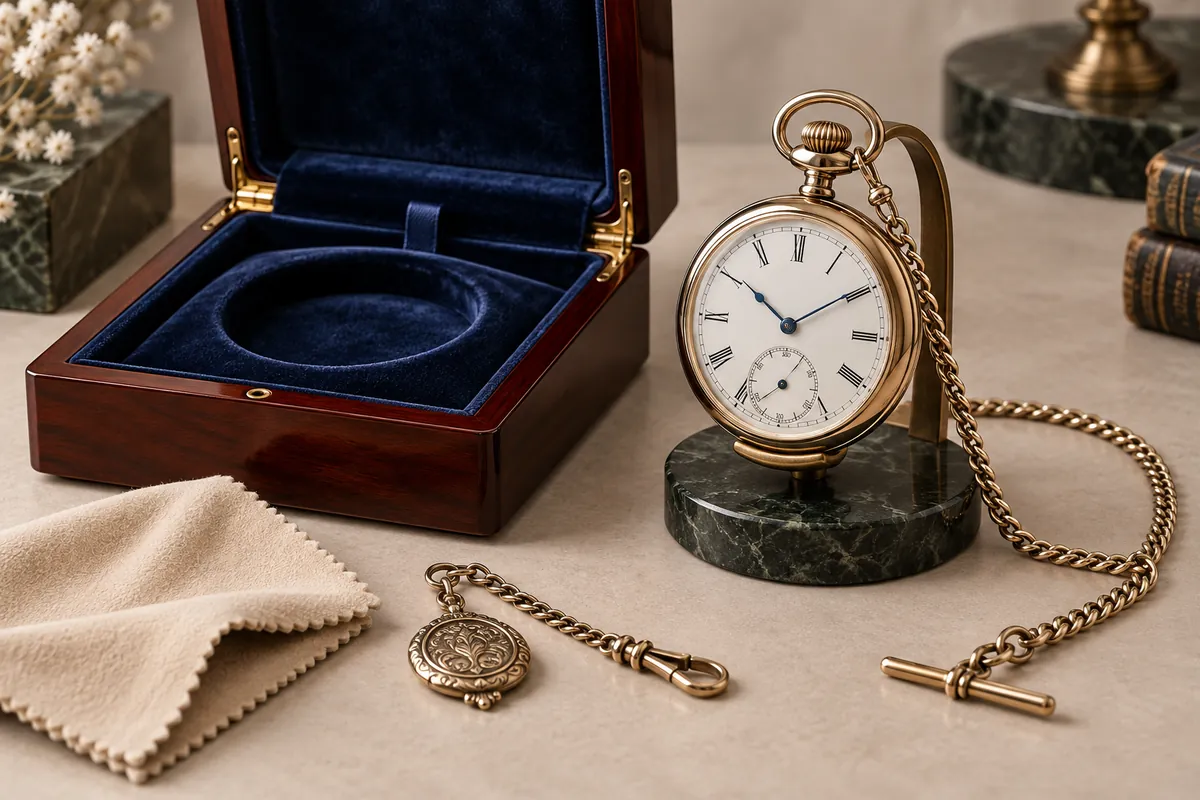
Finally, if you’re buying storage as a gift alongside a watch, for a groomsman or a father on Father’s Day, pair it with something from our Classique clearance range rather than splurging on both the most expensive watch and the most expensive case. A modest watch in a well-chosen box reads as more thoughtful than an expensive watch tossed in a cheap display stand.
Frequently Asked Questions
What is the best pocket watch box vs display case?
There isn’t one “best” option across the board, it depends on whether you’re protecting a single watch you wear often or showing off a growing collection. A padded single box is the better pick for a daily-wear watch, while a multi-slot glass display case suits someone with several pieces they want visible at all times.
Should I choose a watch box or a display case?
Think about how often you actually handle the watch. If you’re pulling it out most days, a box near where you dress is more practical. If the watch mostly stays put and you want to enjoy looking at it, a display case on a shelf or sideboard makes more sense.
What should I look for in a watch box or case?
Check the lining material, how snug the fit is around the watch, and whether the case or box protects against light and dust rather than just looking good on a shelf. For display cases specifically, UV-filtered glass is worth the extra cost if it’s going anywhere near natural light.
Are there budget-friendly boxes and display cases?
Yes, single-watch boxes are generally the most affordable starting point and still do the job properly if you’re only storing one or two pieces. It’s worth checking our clearance range for discounted storage options that pair well with a new watch purchase.