
Pocket Watch Chain Length Guide: How to Choose the Right Length
Why Chain Length Matters
A pocket watch chain is a small detail, but it does a practical job. It keeps the watch connected to you, makes it easier to retrieve, and helps it sit properly rather than vanishing at the bottom of a pocket. Get the length right and the watch feels natural to use. Get it wrong and you may be tugging at the chain, fighting a tight curve, or carrying so much spare chain that it catches on things.
The usual starting point is 30–38 cm. A shorter chain around 30–32 cm suits a waistcoat where the watch and attachment point are close together. A 35–38 cm chain gives more flexibility for a trouser pocket, belt loop or jacket buttonhole. That range is not a rule carved into stone, though. Your height, your clothing and the type of clasp all matter more than a number on a product page.
Think about the route the chain must travel. If the watch sits in a waistcoat pocket and the chain passes through the buttonhole above it, the route is short and mostly vertical. If the watch sits in a trouser pocket and clips to a belt loop, the route is longer and moves every time you sit down. A chain that looks generous on a display card can feel surprisingly brief once it has to make that trip.
There is also the visual side. A modest U-shape across a waistcoat looks neat and classic. A deep loop can look intentional with casual clothing, but on formalwear it can read as untidy. Historical pocket watches were made for use, not merely posing for photographs, and that remains a decent test today. The history of the format is well documented by the Encyclopaedia Britannica’s overview of watches, but your own fit is still the deciding factor.
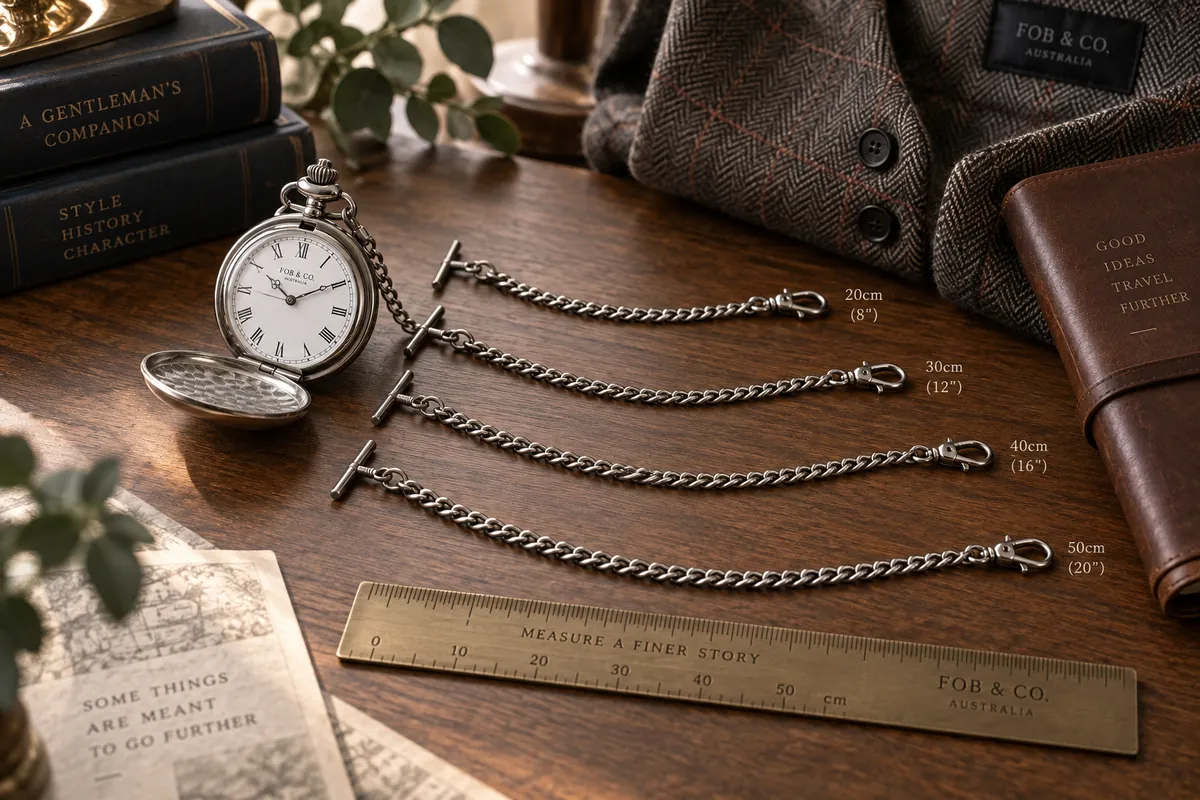
Choosing Your Length
Start with the exact outfit you expect to wear. Lay the watch in its intended pocket, hold a piece of string from the watch bow to the attachment point, and leave a little room for the chain to curve. Mark the string, measure it, then add 2–4 cm for comfortable handling. This simple check beats guessing from height alone.
For a waistcoat pocket
For a traditional waistcoat, 30–34 cm is usually the sweet spot. The watch sits in one pocket, while the chain passes through a centre buttonhole or connects to an adjacent pocket. You want a visible curve, not a taut diagonal line. Test it while standing and sitting. A chain that is perfect while upright may pull at the waistcoat when you sit at dinner, which is the sort of detail people only notice after the event.
For a formal occasion, pair the chain with the watch finish rather than trying to match every metal detail perfectly. A warm-tone chain sits well with gold pocket watches, while dark accessories can suit the restrained look of black pocket watches. The chain length remains the priority. Colour cannot rescue a chain that is pulling across the front of your waistcoat.
For a trouser pocket
A trouser pocket needs more room, particularly if the chain attaches to a belt loop. Start at 35 cm and work upwards if you wear higher-rise trousers or prefer the watch to sit deeper in the pocket. The chain should allow you to lift the watch to read it without leaning forward or yanking it against the attachment.
Clothing movement matters here. Sitting, walking and getting into a car all put different pressure on the chain. If it reaches only while you are standing still, it is too short. If it hangs halfway down your thigh, it is too long for a tidy everyday look. For a watch intended as a regular companion, comfort wins over a dramatic loop every time.
For a jacket pocket
Using an inner jacket pocket can work, but measure carefully. The attachment needs to be secure, usually at a buttonhole or lapel area, and the chain often needs to be closer to 38 cm. Avoid a chain that crosses sharply over the jacket front, especially with lighter fabrics. A subtle loop is more convincing and less likely to snag.
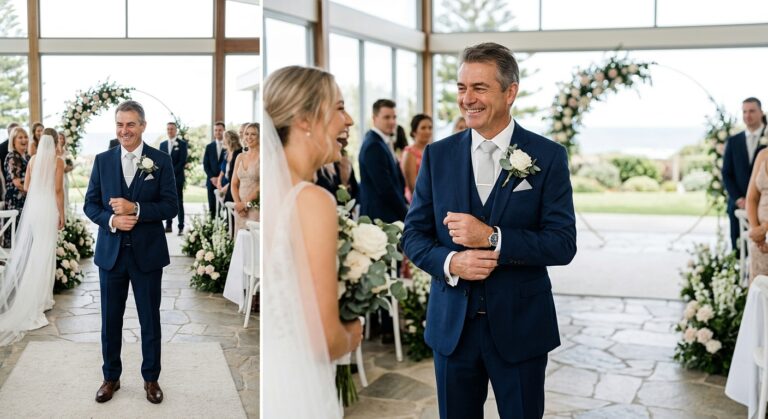
If you are buying for a wedding, have the wearer try the complete outfit during a fitting. Wedding styling resources such as Brides’ groom style advice make the same broad point: accessories should work with the clothing, not compete with it. A pocket watch is personal, which is why it is often chosen from engravable pocket watches, but it still needs to function on the day.
Chain Styles and Fits
Chain style affects perceived length. A fine, narrow chain tends to disappear into the outfit, so a slightly deeper curve is rarely a problem. A broad Albert chain is more noticeable and generally looks better with a shallower, controlled drape. The same 35 cm measurement can look very different depending on the links and fittings.
Single Albert chains
A single Albert has one main chain from the watch to the attachment point, often with a T-bar for a waistcoat buttonhole. It is the straightforward choice for formalwear and suits 30–35 cm in most waistcoat setups. The T-bar should sit securely behind the buttonhole while the visible section makes one even curve across the front.
Double Albert chains
A double Albert includes a second drop, commonly used for a fob, charm or small accessory. It creates a more traditional look, but it needs restraint. The central section should not be so long that both sides sag unevenly. A 35–38 cm chain can work well, provided the waistcoat has room and the watch sits at a sensible depth.
Bolt-ring and clip chains
Bolt-ring, lobster-claw and spring-clip fittings are practical for trouser pockets and casual wear. They are easy to attach to a belt loop, but they need extra length because the belt loop can sit farther from the pocket than a waistcoat buttonhole. Check the clasp opening before ordering, especially if you plan to use a thicker loop or decorative attachment.
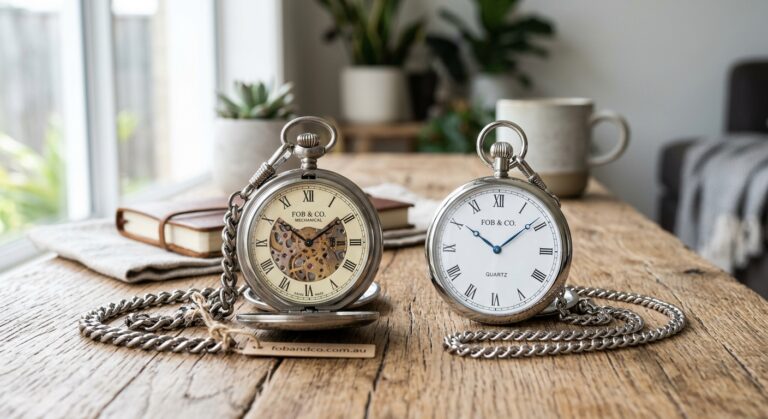
For a closer look at available fittings and chain types, browse the dedicated pocket watch chain collection. It is worth comparing the end fitting with the watch’s bow as well. Most pocket watches accommodate standard chain fittings, but the best result is one that connects cleanly without forcing the clasp.
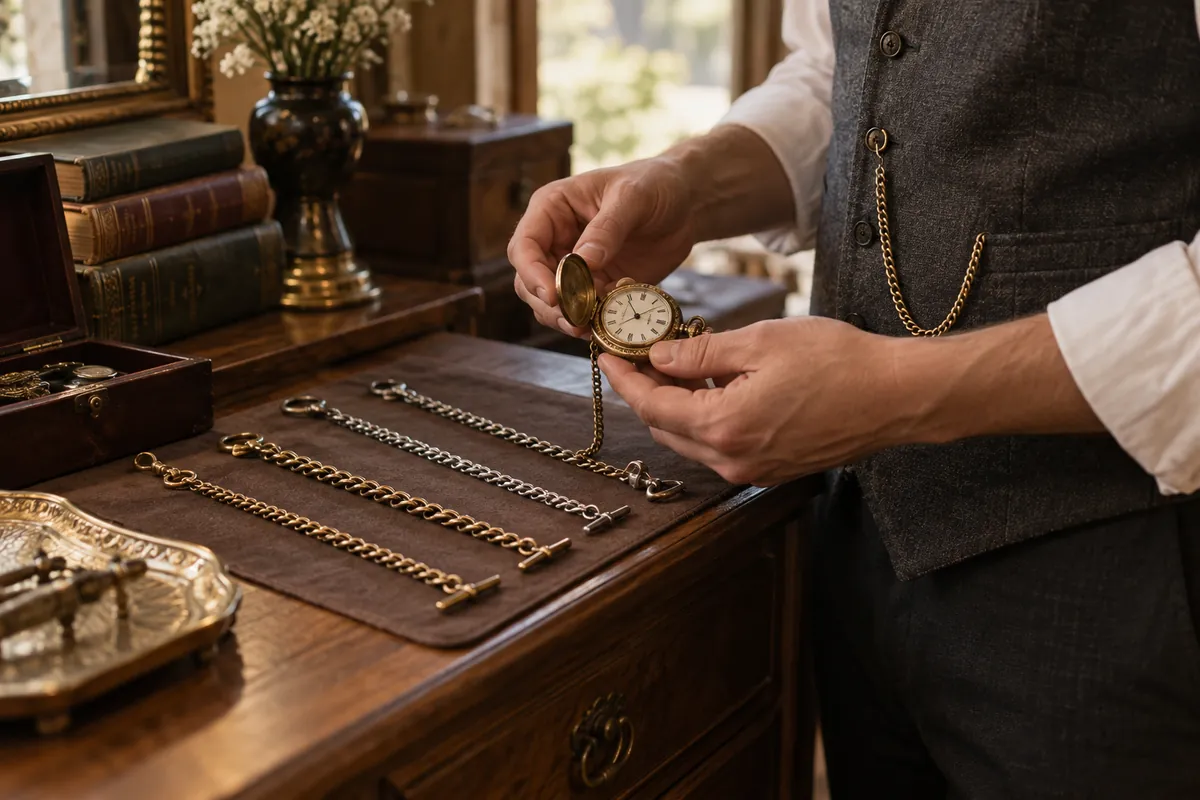
Before You Buy
Measure first, then check four practical details: chain length, attachment type, chain weight and finish. None is difficult, but skipping one can leave you with an accessory that looks right online and feels wrong in use.
Chain weight deserves attention. A larger, heavier pocket watch needs a chain with a secure clasp and links that do not feel flimsy. This does not mean the chain must be bulky. It means the fittings should close confidently and the chain should be suitable for the watch’s weight. If you are choosing a substantial full hunter pocket watch, give its protective case and extra weight some thought when choosing a chain.
Next, consider where the chain will rub. A polished chain against rough denim will pick up wear differently from one used occasionally with a suit. That is not a fault, it is simply the life of an accessory that gets handled. Brass finishes develop character over time, which can suit the warm, traditional feel of brass pocket watches.
For a gift, avoid assuming a one-size-fits-all fit. Ask whether the recipient usually wears a waistcoat, whether they carry items in their trouser pockets, and whether the gift is for a particular occasion. A watch chosen for Dad might be carried very differently from a wedding watch. The range of pocket watches for Dad can help narrow the style, but chain length should still follow how he will wear it.
Budget is not a reason to ignore fit. A well-measured, simple chain will look better than an elaborate chain with a poor drape. If you are comparing options, it can be useful to review the clearance selection after you know the length and attachment type you need. Buy the right configuration first, then choose the decorative details.
Expert Tips
Use the “two-finger test” before committing. With the watch in the pocket and the chain attached, you should be able to slip two fingers behind the visible curve without strain. It is not a scientific measurement, but it quickly reveals whether the chain is too tight against the garment.
Check the watch from both sides. Looking straight on tells you whether the curve is balanced. Looking from the side tells you whether the watch is pulling the pocket outward. A pocket watch should settle into the pocket, not hang from the chain like a pendant.
Do a seated test. This is the one people skip. Sit down normally, cross a leg if that is how you sit, and take the watch out. If the chain catches at the hip or goes tight, move up a length. A few centimetres can make a large difference once fabric folds and the body bends.
Keep your chain and watch proportionate. A delicate watch paired with an overly thick chain can look awkward, while a broad case on a feather-light chain can feel unbalanced. The restrained style of half hunter pocket watches often pairs nicely with a medium-weight chain that does not overpower the case.
Finally, practise opening and returning the watch before a formal event. It sounds obvious, but a pocket watch has a rhythm. You release it from the pocket, read it, close it if needed, and return it without twisting the chain. The more natural that movement feels, the more likely you have chosen the right length.
Classic tailoring guides often focus on clean lines and proportion, and that is exactly the right approach here. The FashionBeans guide to men’s accessories is useful reading for keeping accessories purposeful rather than piling them on. One properly fitted pocket watch chain has more presence than three competing details.
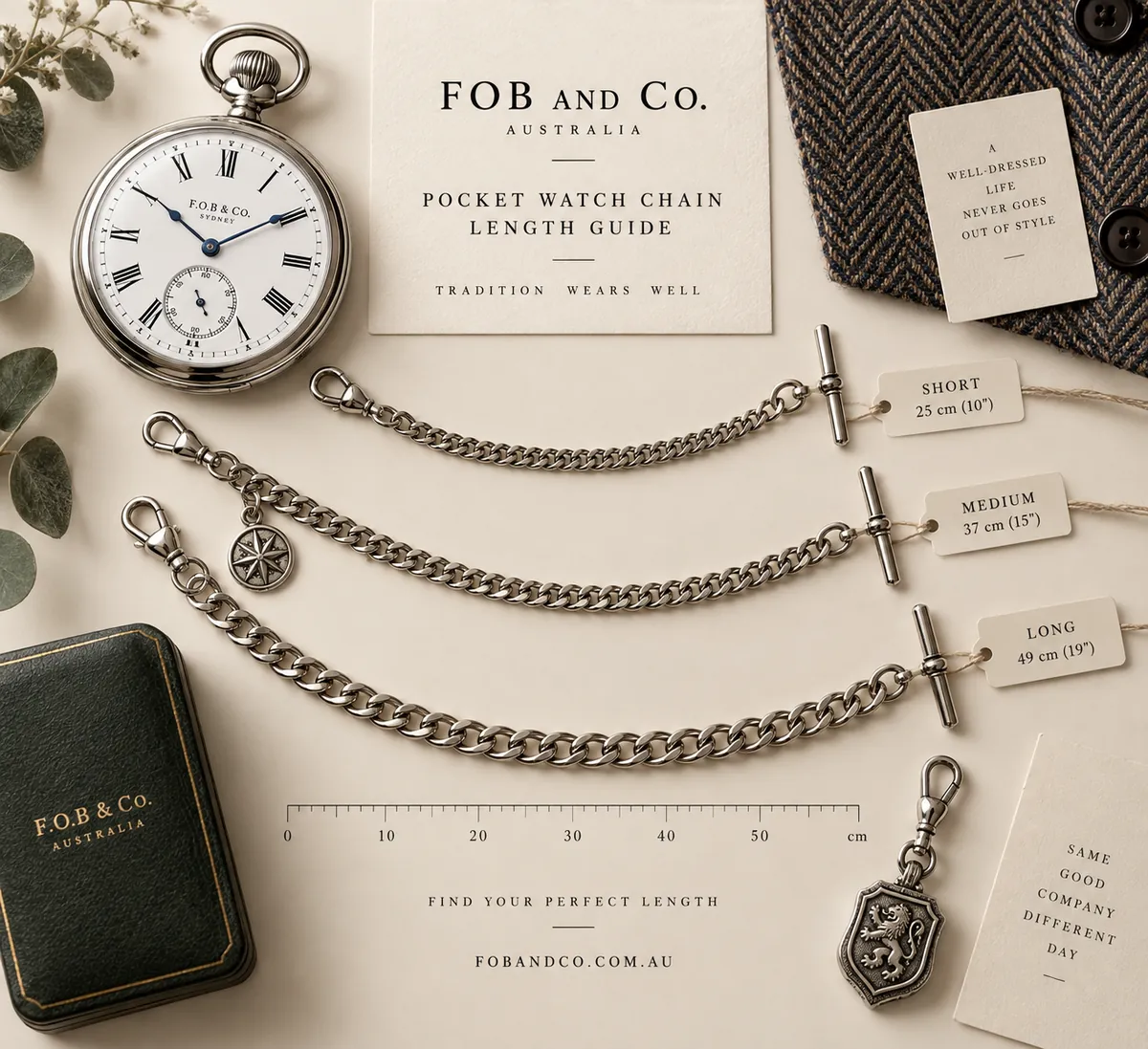
FAQ
What is the best pocket watch chain length guide?
Use 30–34 cm as a starting point for a waistcoat and 35–38 cm for a trouser pocket or belt-loop attachment. The best guide is to measure the actual route from the watch pocket to the attachment point, then allow a few centimetres for a relaxed curve.
How do I know which pocket watch chain length is right for me?
Use string to measure from the watch bow to the buttonhole, belt loop or clip point while wearing the intended clothing. Test the measurement standing and seated, because a chain that is comfortable upright may become tight when you sit down.
What should I look for when buying a pocket watch chain?
Check the chain length, clasp type, link weight and finish before buying. Make sure the clasp suits your watch bow and the intended attachment point, and choose a chain weight that feels appropriate for the watch case.
Are there budget-friendly pocket watch chain options?
Yes. A straightforward chain with the right fit is usually a better buy than a more ornate option that does not suit your outfit or attachment point. Focus on a secure fitting and accurate measurement, then select the finish that suits your watch.